11.17.10
THREE





























xavi
garcia
garcia


adam
fitzgerald
fitzgerald

<< Meet adam >>
11.15.2010
ON WHAT IS NOT
ON WHAT IS NOT

We were born without anthems. Where our forebears converged in arenas, waving white flags, we listened passively.
One month before my fifth birthday, my historian mother forced me to watch CNN as Berlin's citizens destroyed a wall. Not all my peers had such a prescient tutor, but the moment molded our collective memory. As adolescents, we witnessed the collapse of Cold War systems in society and politics. But as war fermented, and a recession festered, we abandoned our duty to history. From a failing hegemony came contested campaigns, moral panic and auto-tune on the airwaves. It was a time of dangerous lullaby.
One month before my fifth birthday, my historian mother forced me to watch CNN as Berlin's citizens destroyed a wall. Not all my peers had such a prescient tutor, but the moment molded our collective memory. As adolescents, we witnessed the collapse of Cold War systems in society and politics. But as war fermented, and a recession festered, we abandoned our duty to history. From a failing hegemony came contested campaigns, moral panic and auto-tune on the airwaves. It was a time of dangerous lullaby.
Then, we connected. Online, we watched together as secret information begat public access. Fortnight Journal documents 14 nascent minds formed in the moment when free information burst open ancient constraints of lucky birth.
Like an anthem, this journal is structured on call and response. Fortnight looks to reconcile precedent and pedagogy to the outspoken tendency of the internet cohort. Each Quarter One contributor seeks humble initiation. Emerging talents—from artisans, to polymaths—they work in common pursuit of rigor and authenticity.
In a post-career world, they have instead elected vocations. Though variant in genre, origin and persuasion, each of our 14 ask to parse lasting value from passing trend. Uniquely, we are a collaborative bunch, but Fortnight is our formal overture for guidance. We are thus blessed that writer, performer and artist Patti Smith serves in this issue as our first luminary mentor.
An "anthem of a generation" too often implies burning self-concern; let us now reclaim a genre intended for tribute.
Yours,
Samantha Hinds
ON WHAT IS NOT
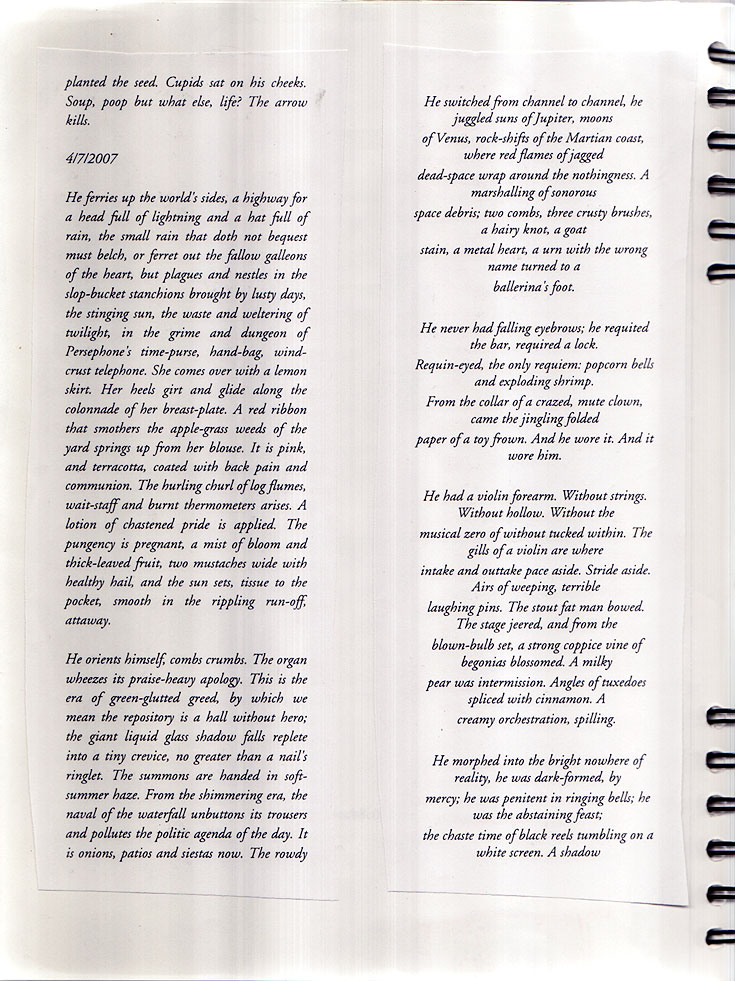
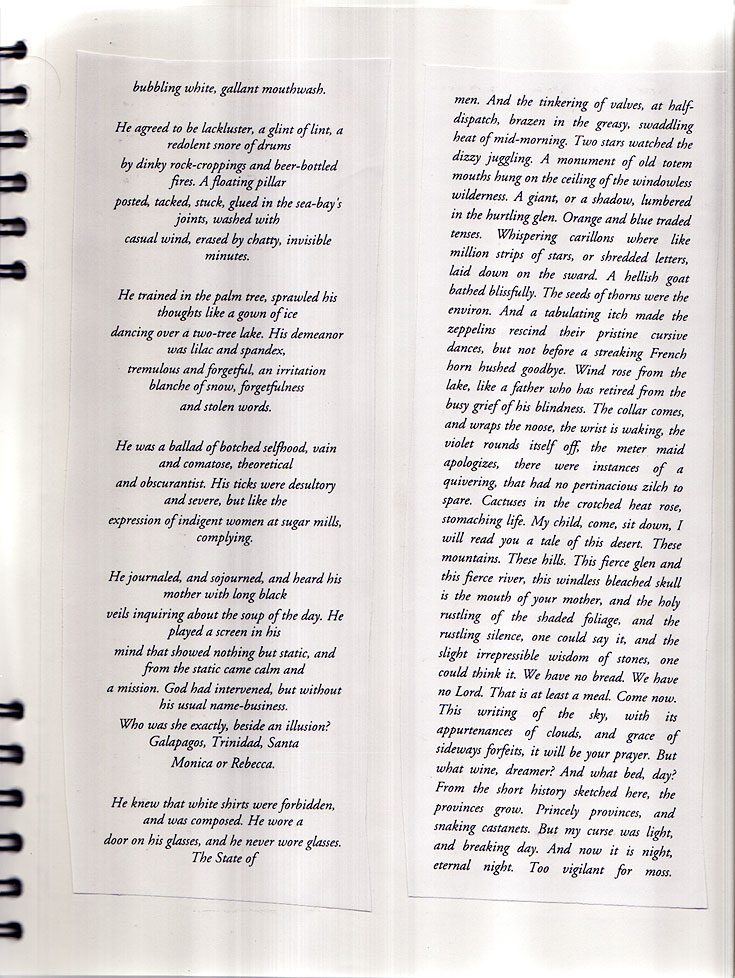
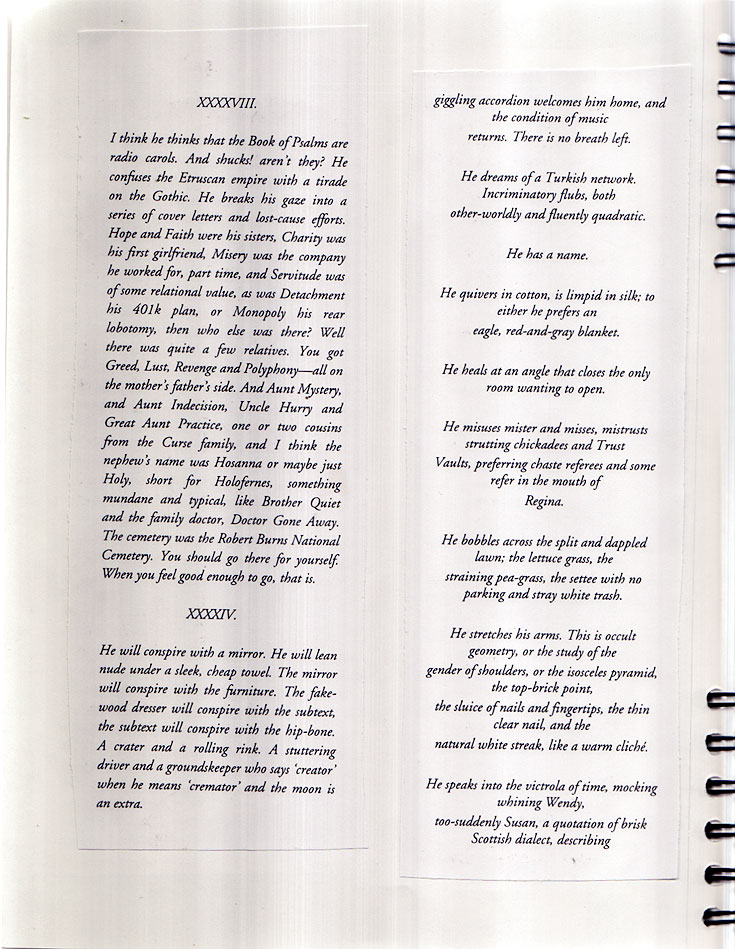
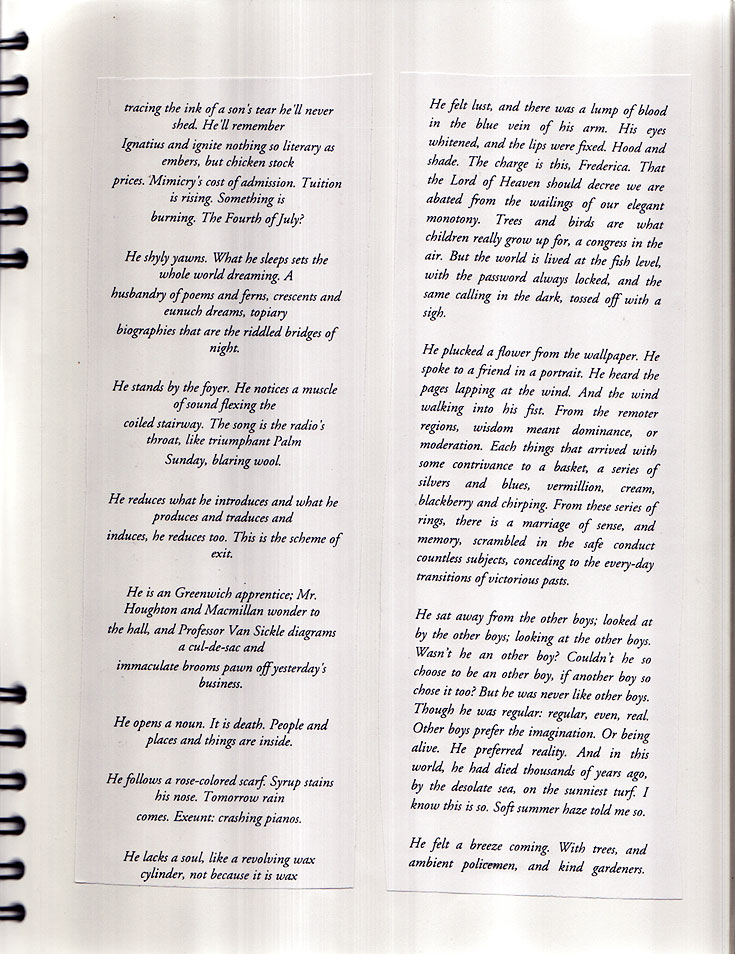
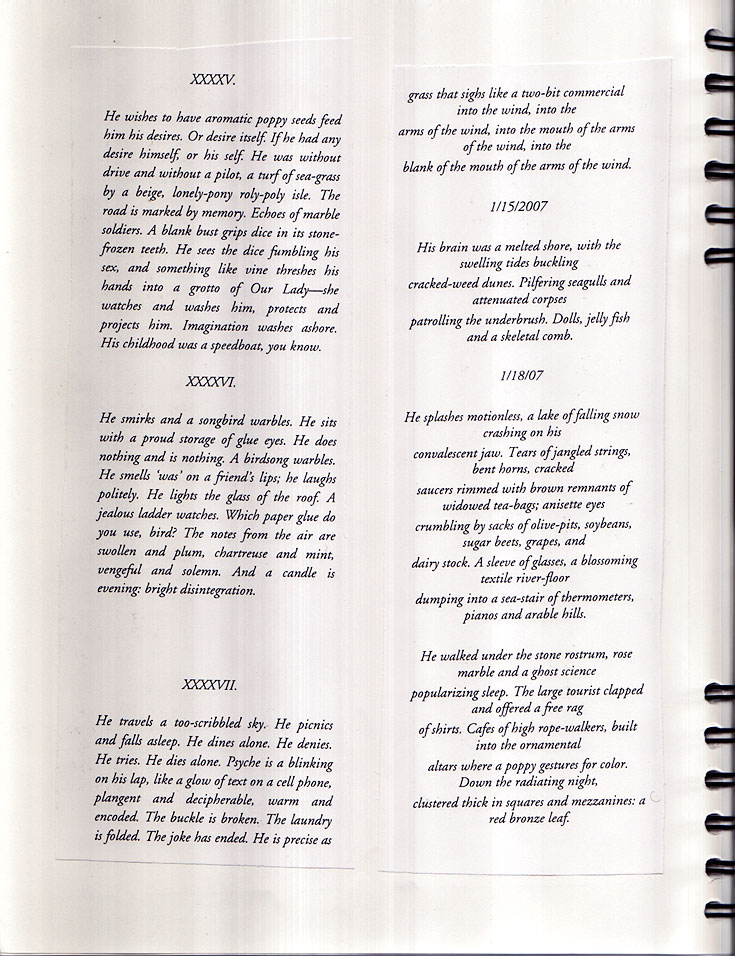
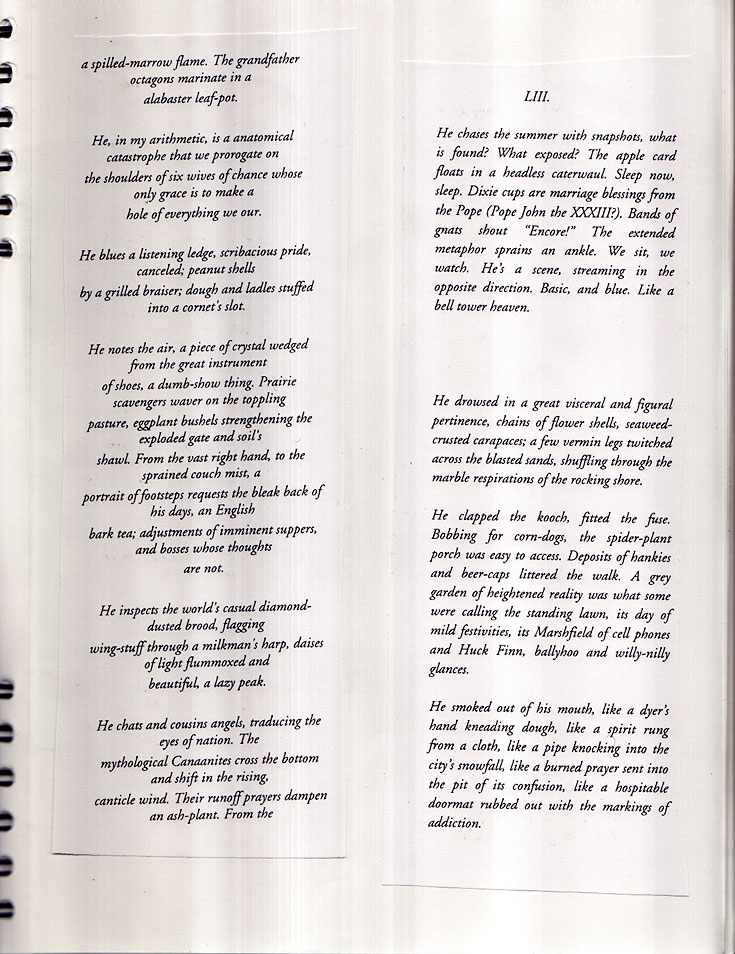
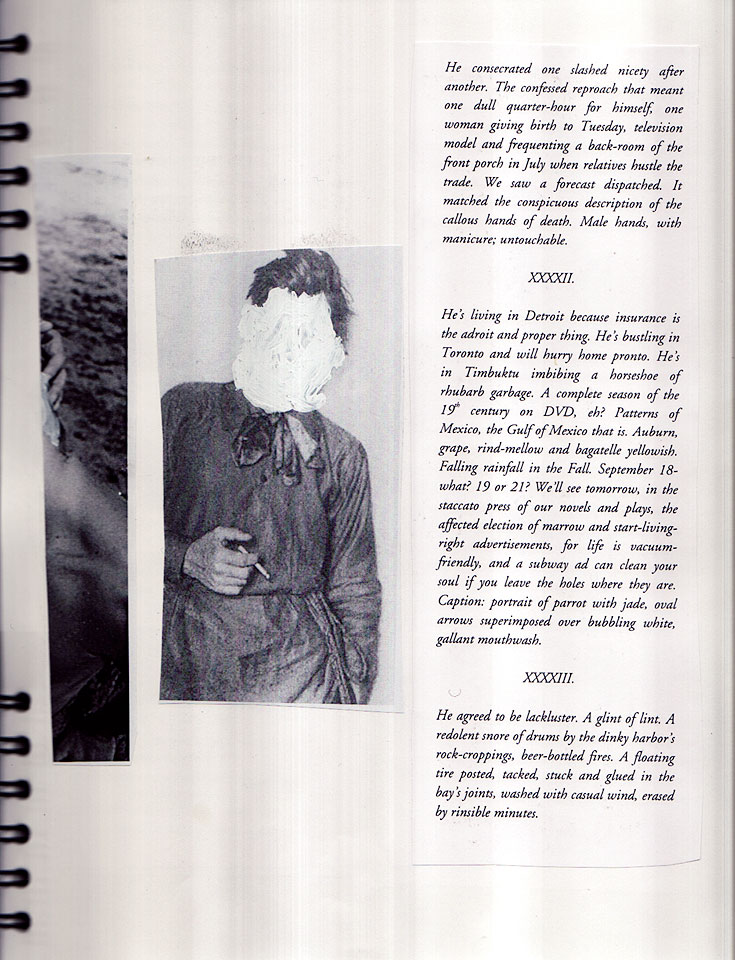
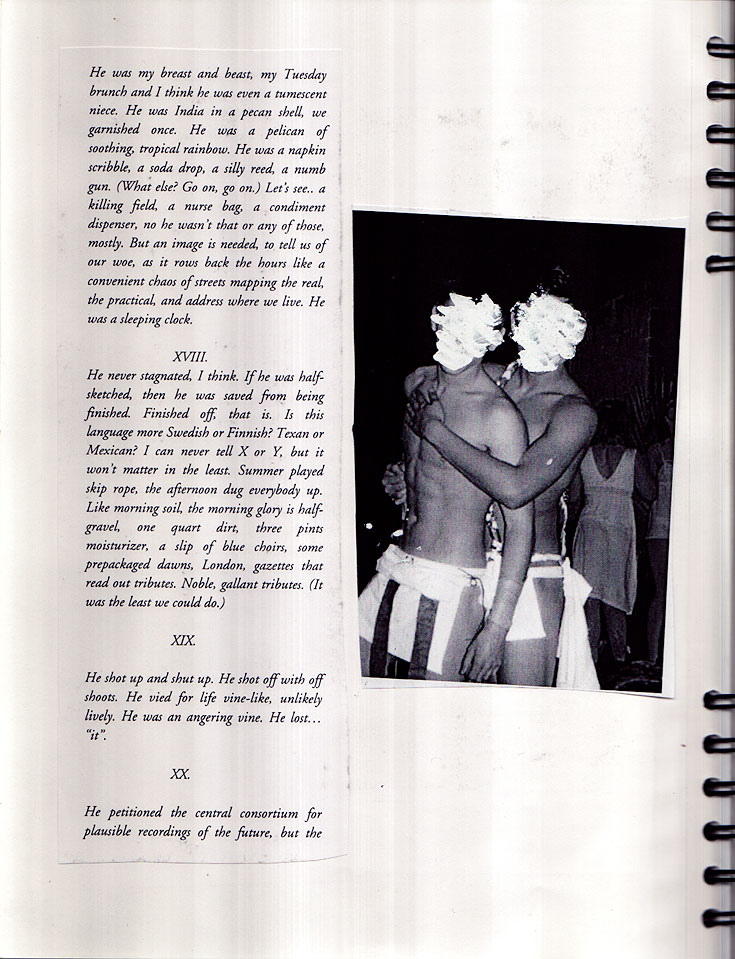
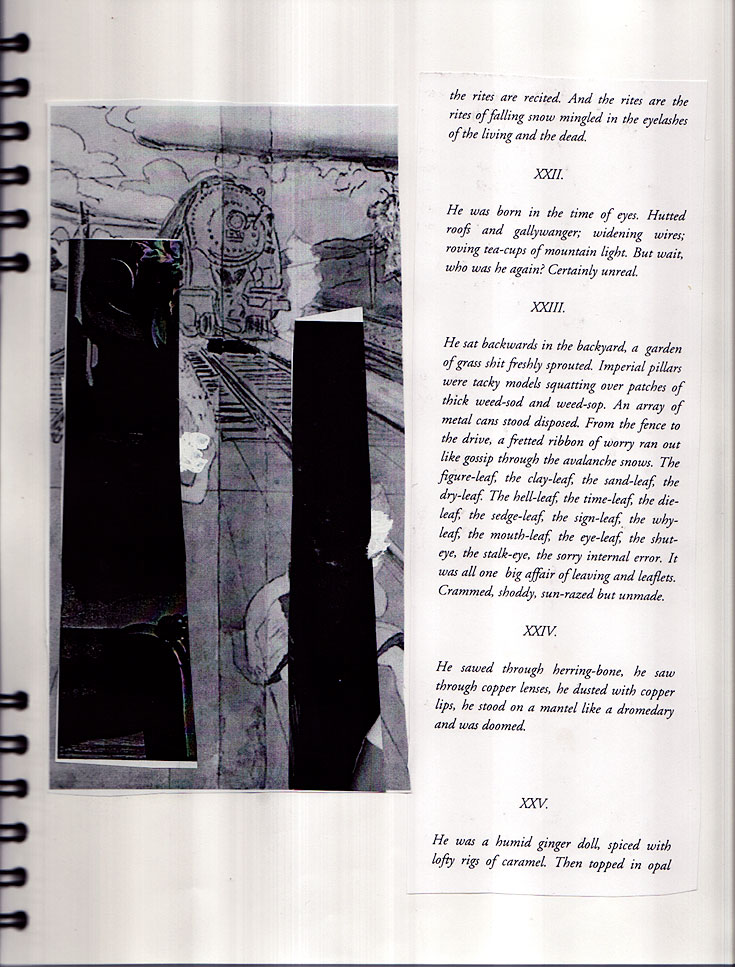
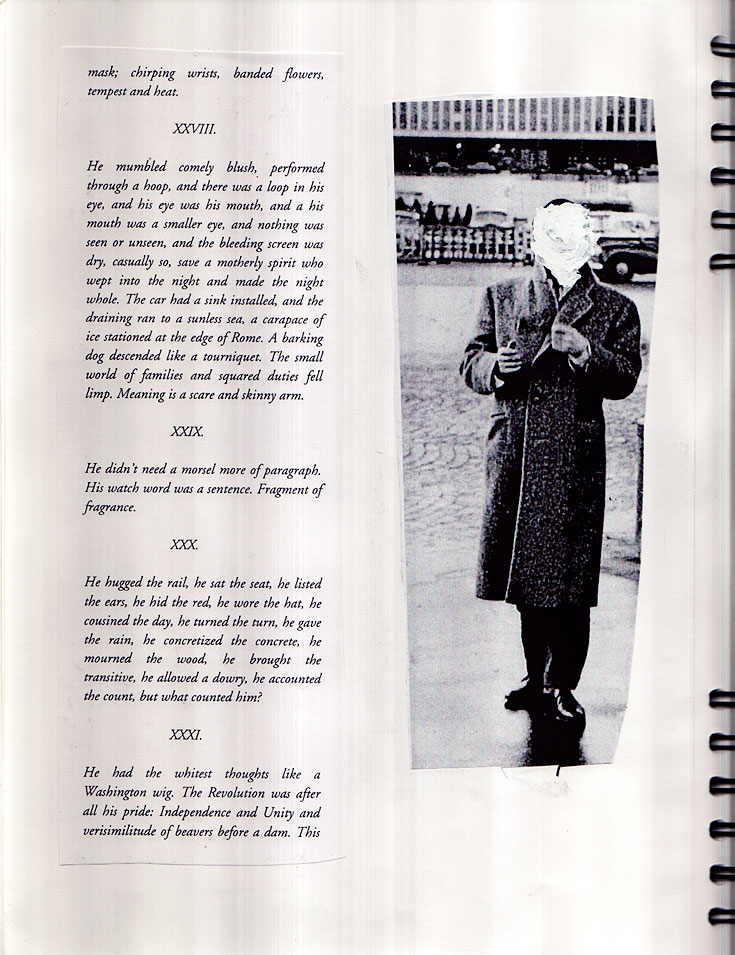
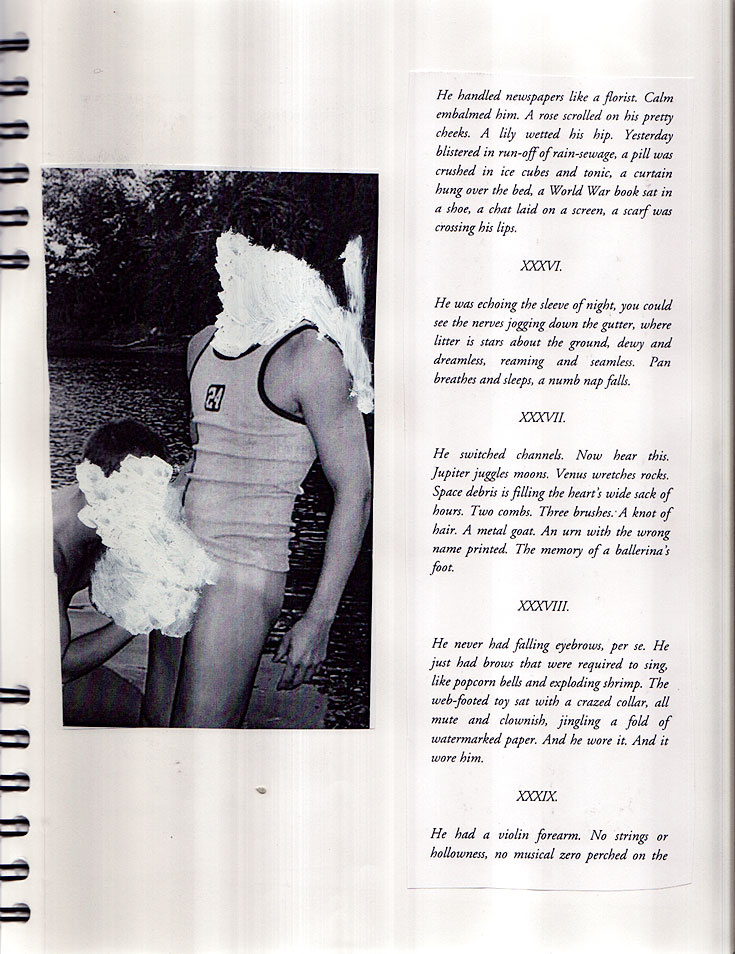
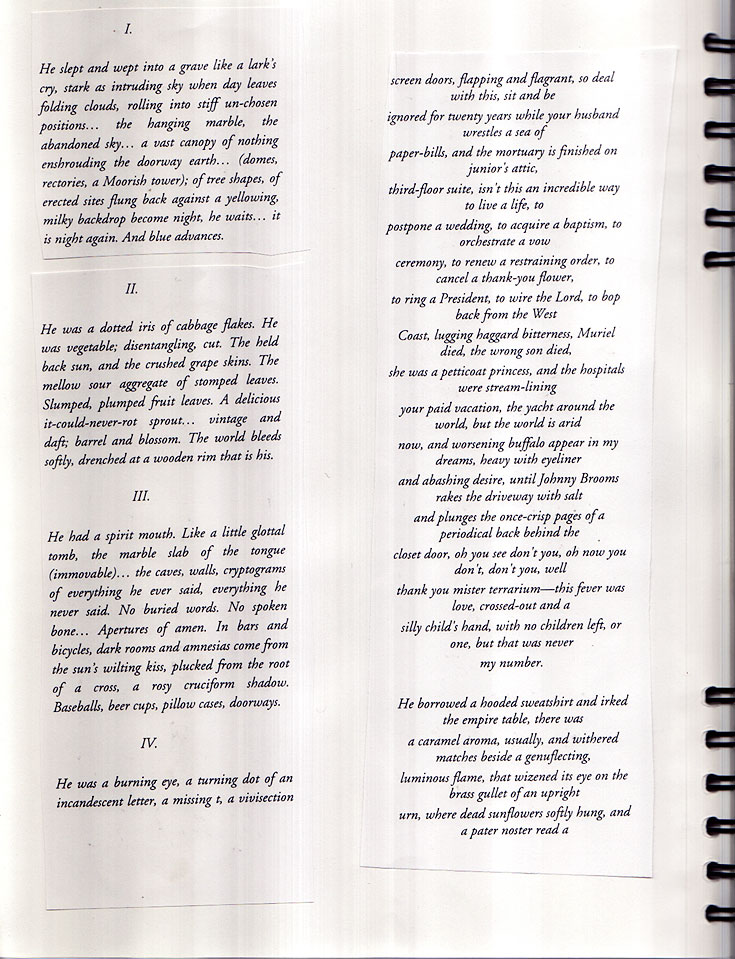
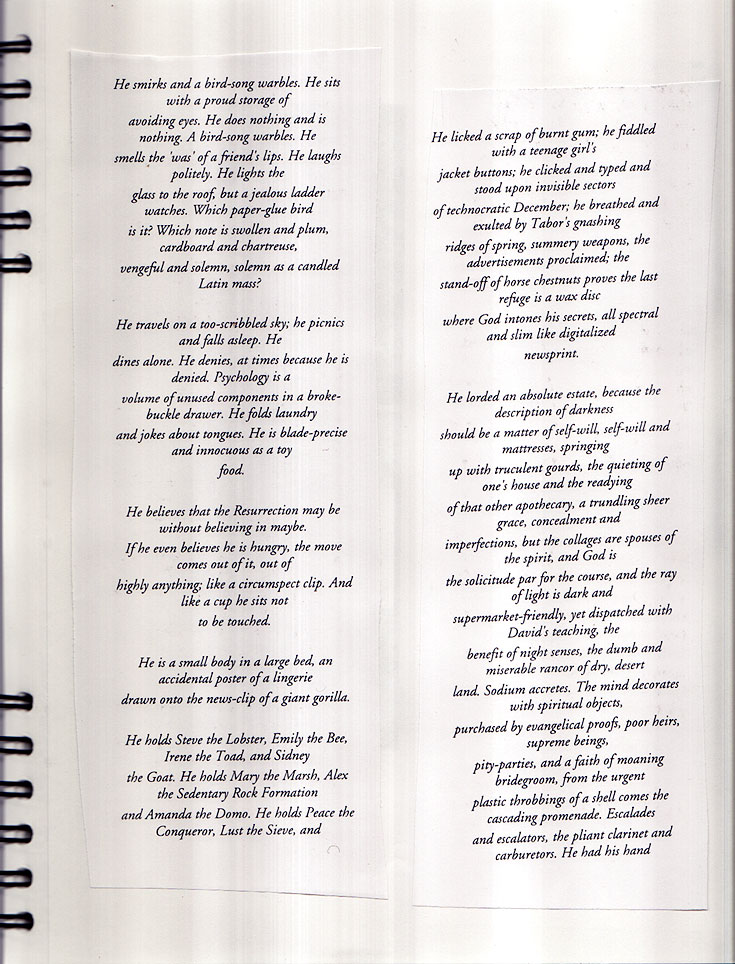
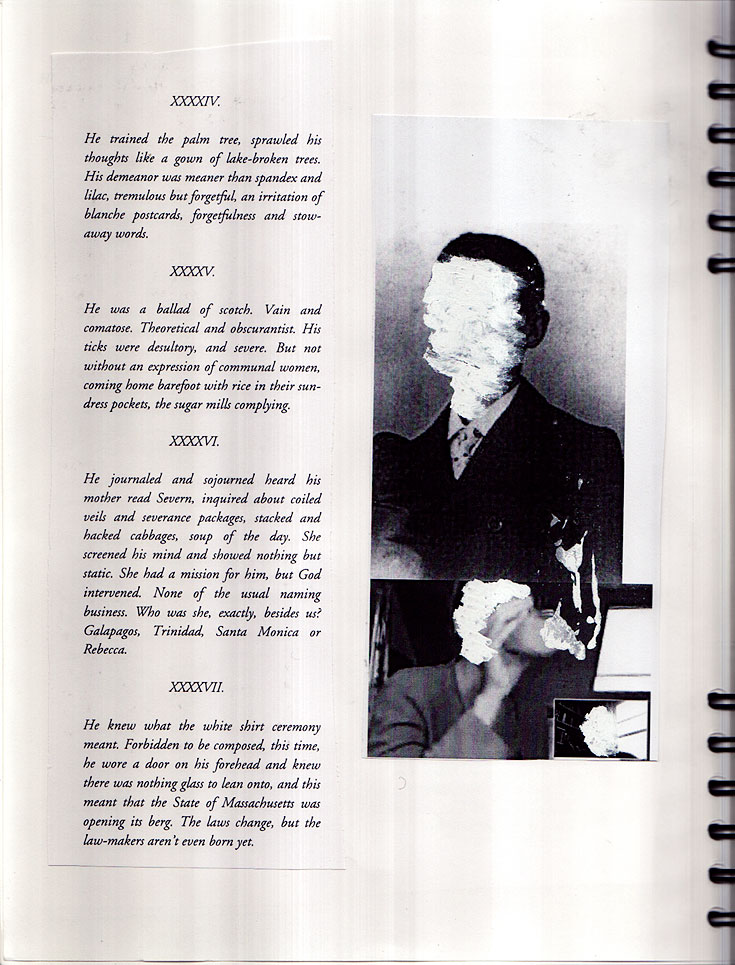
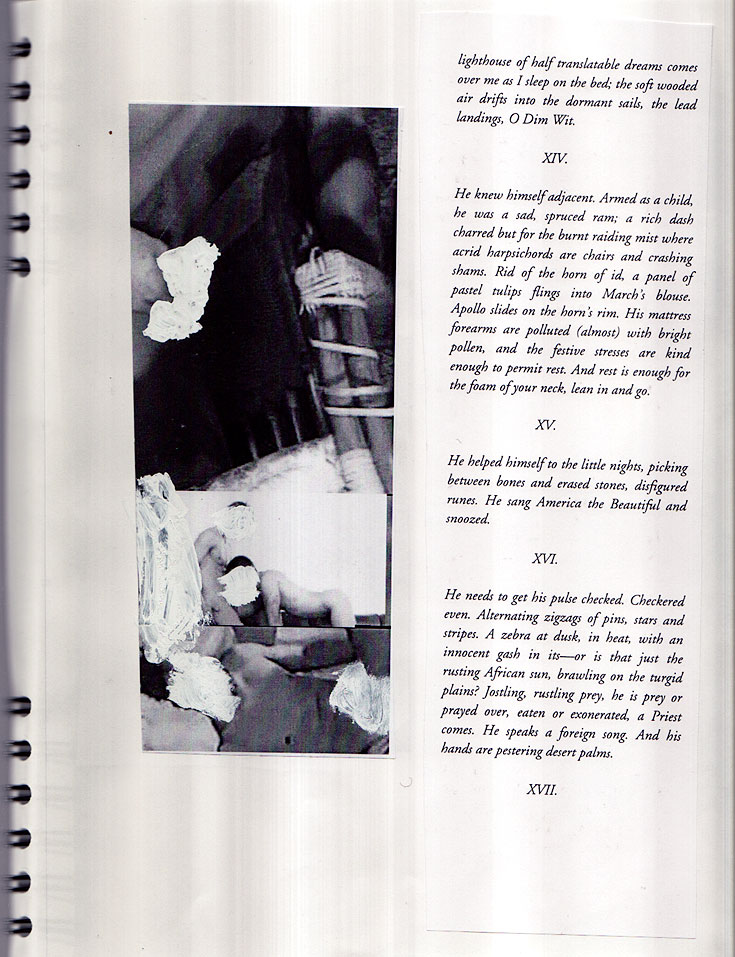
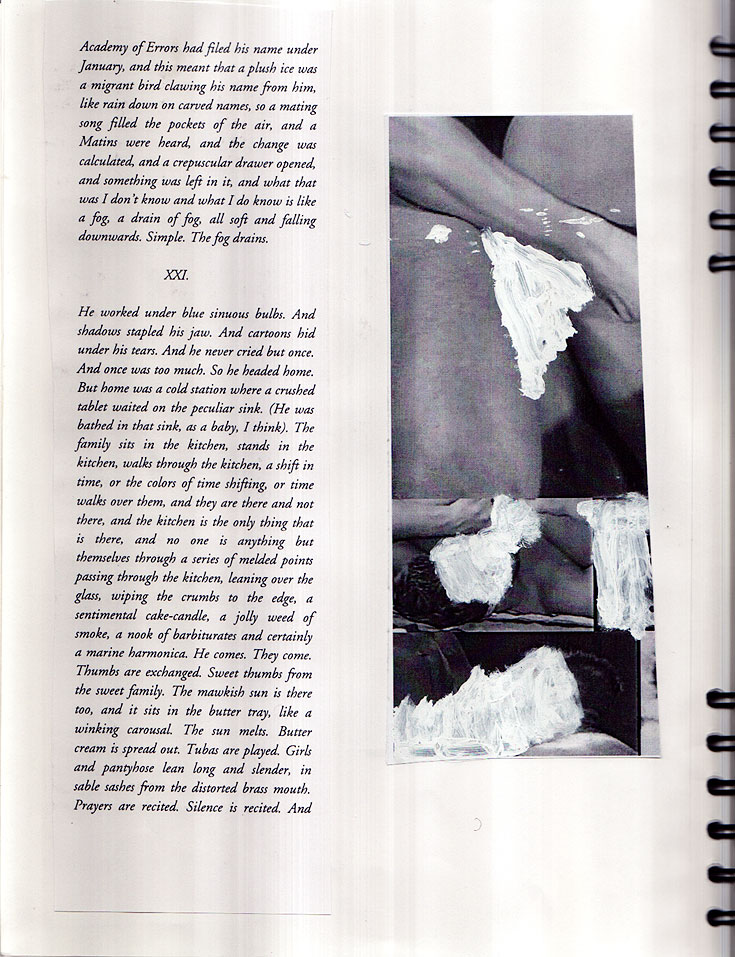
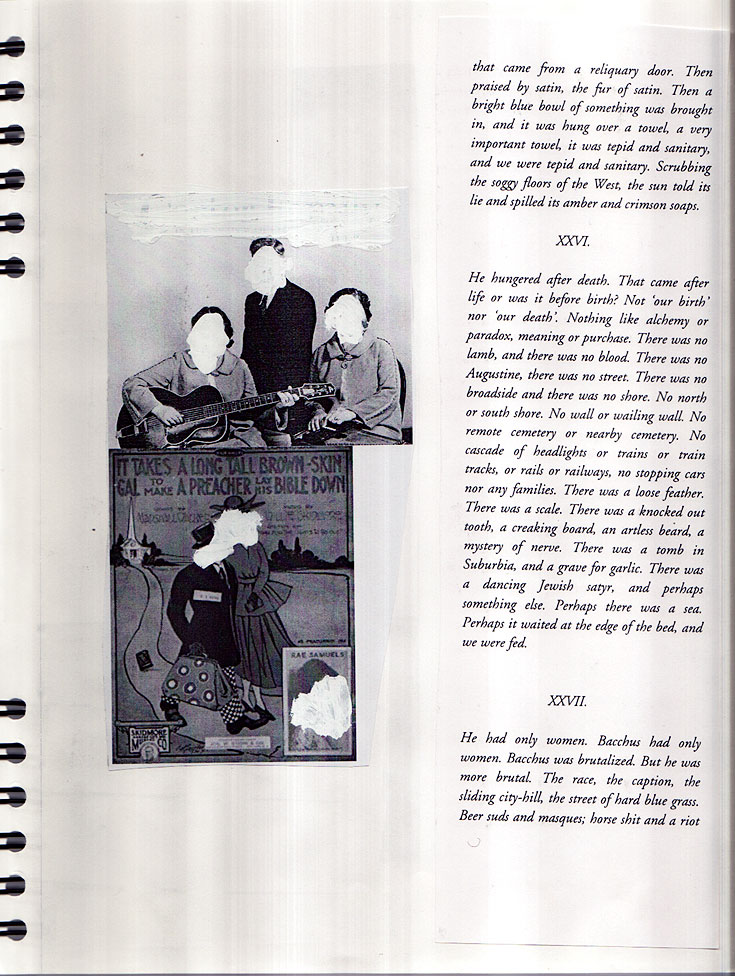
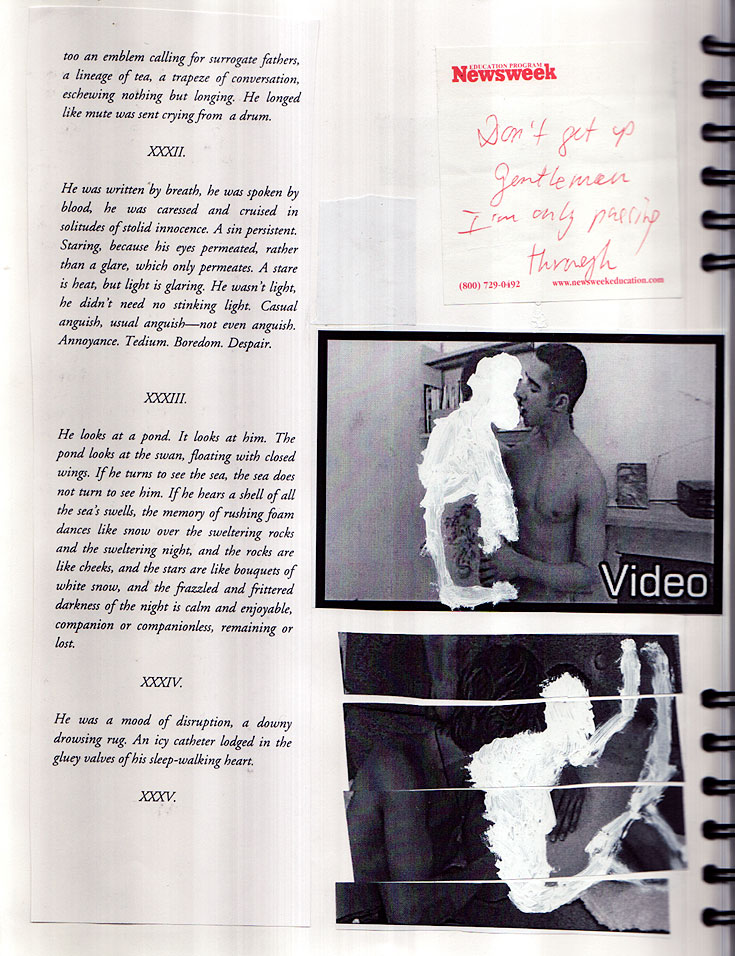
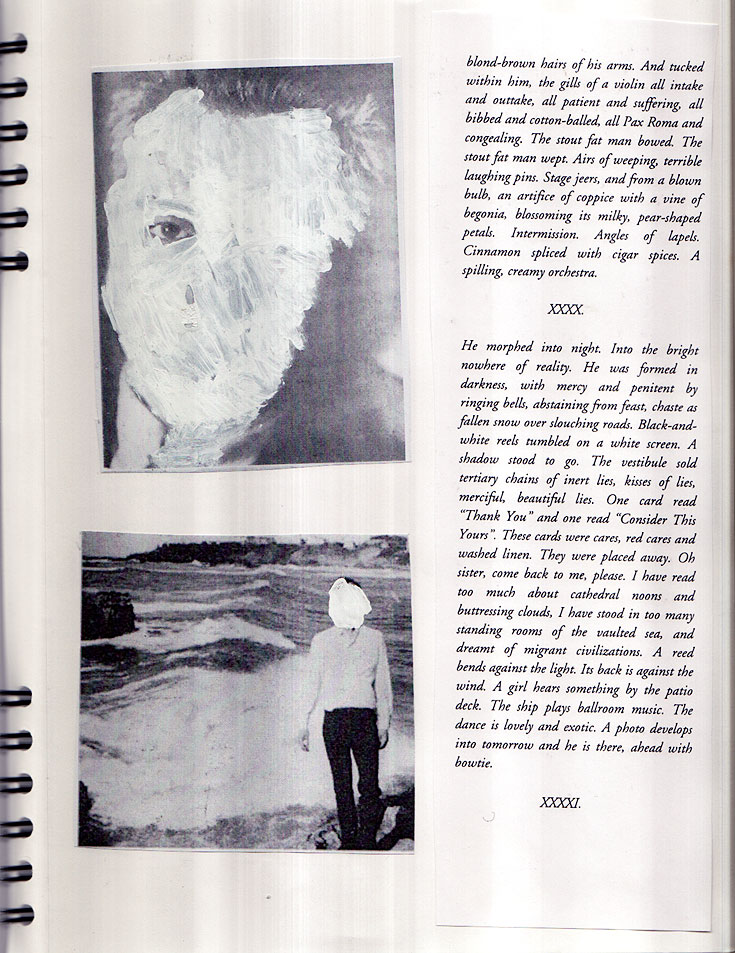
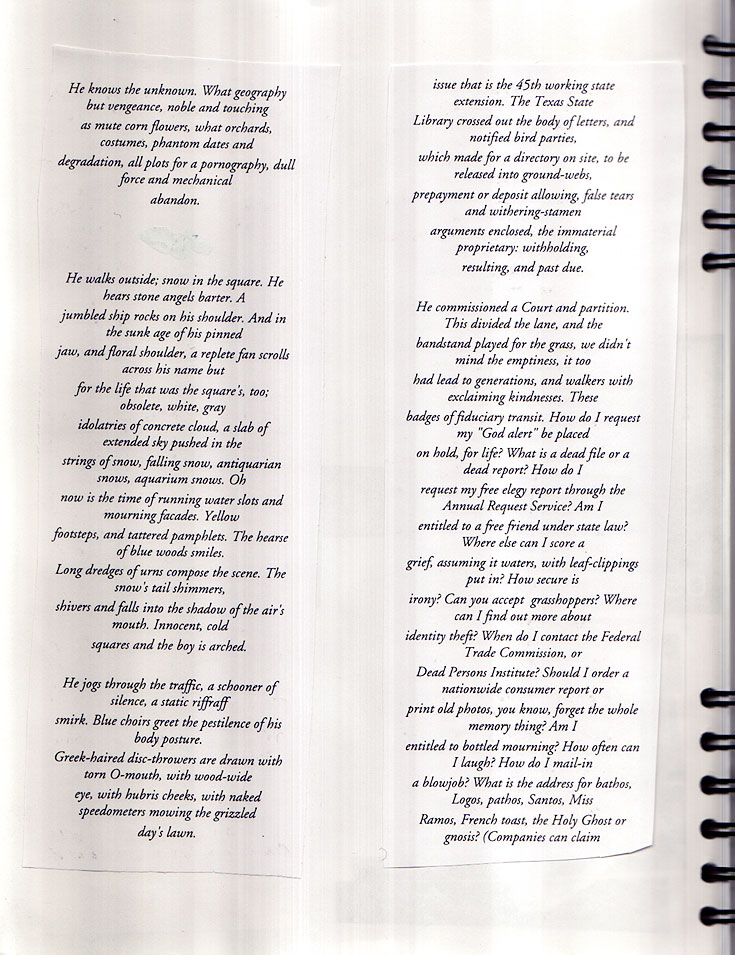
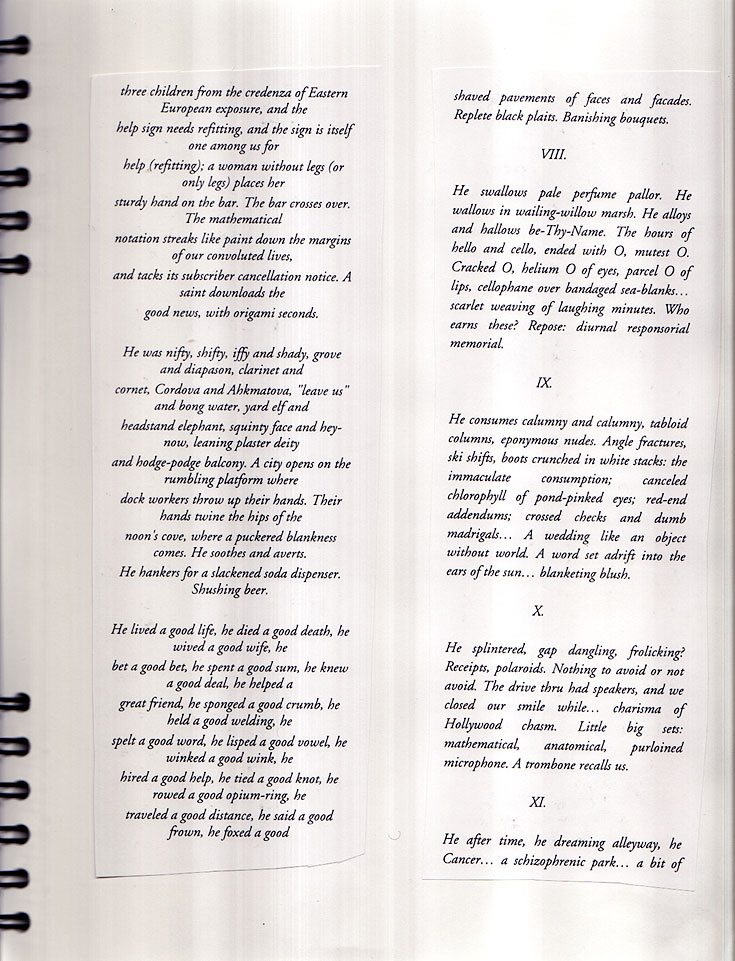
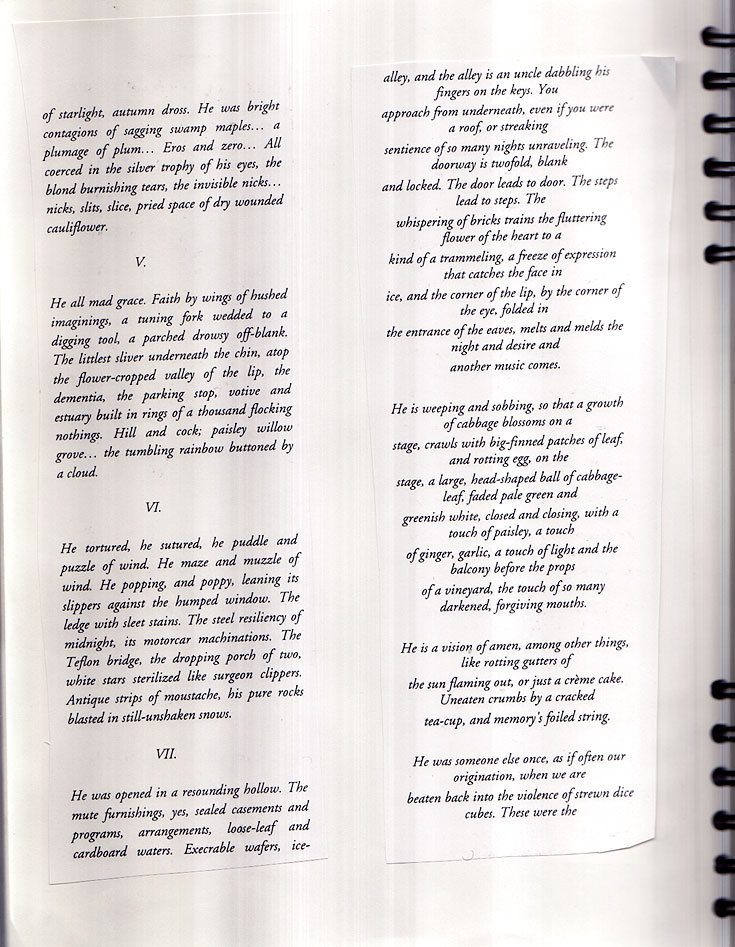
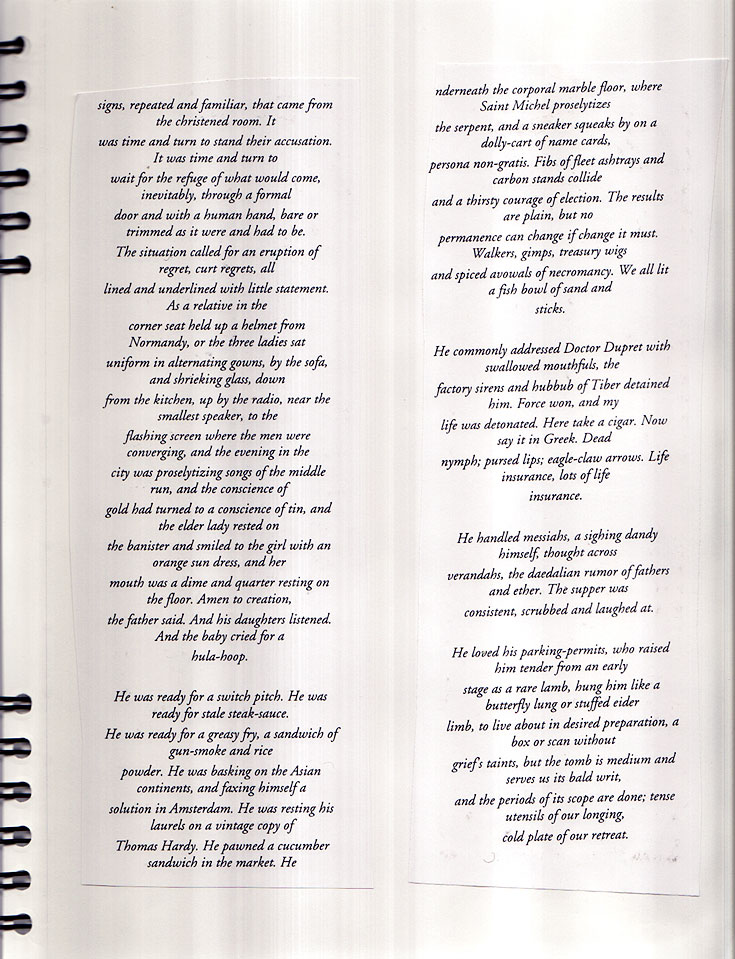
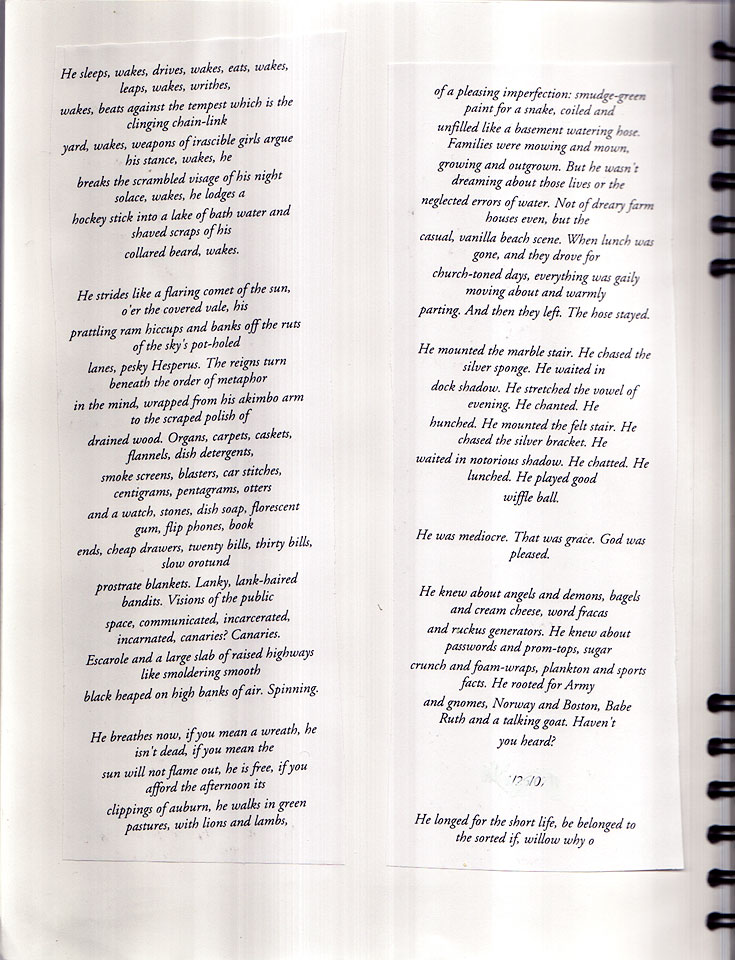
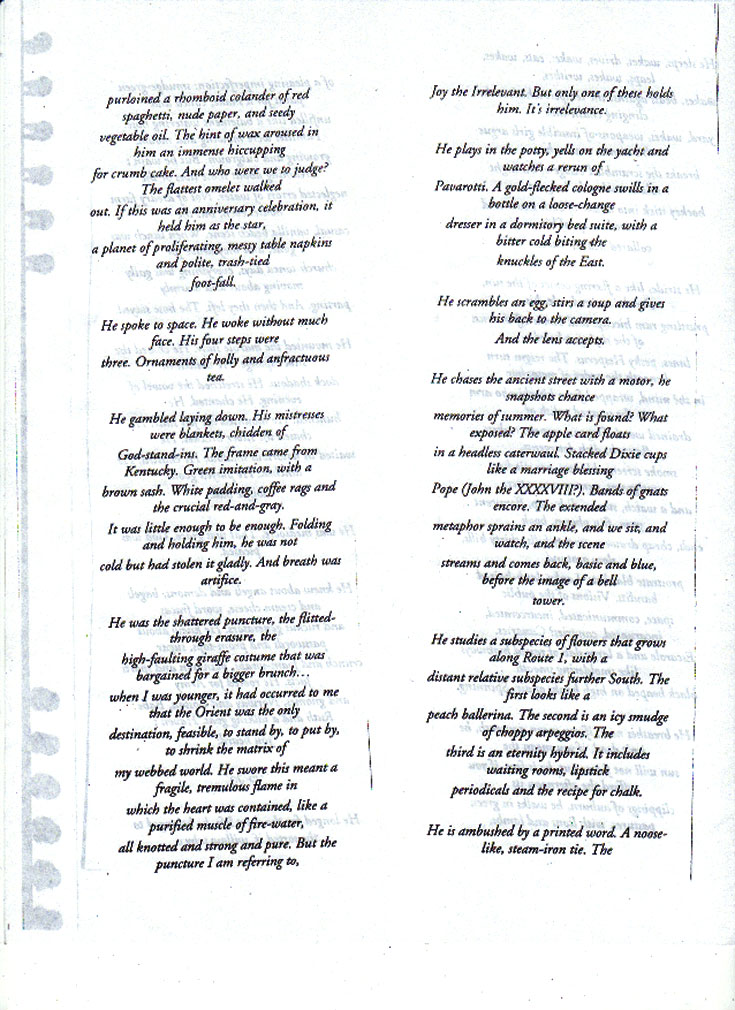
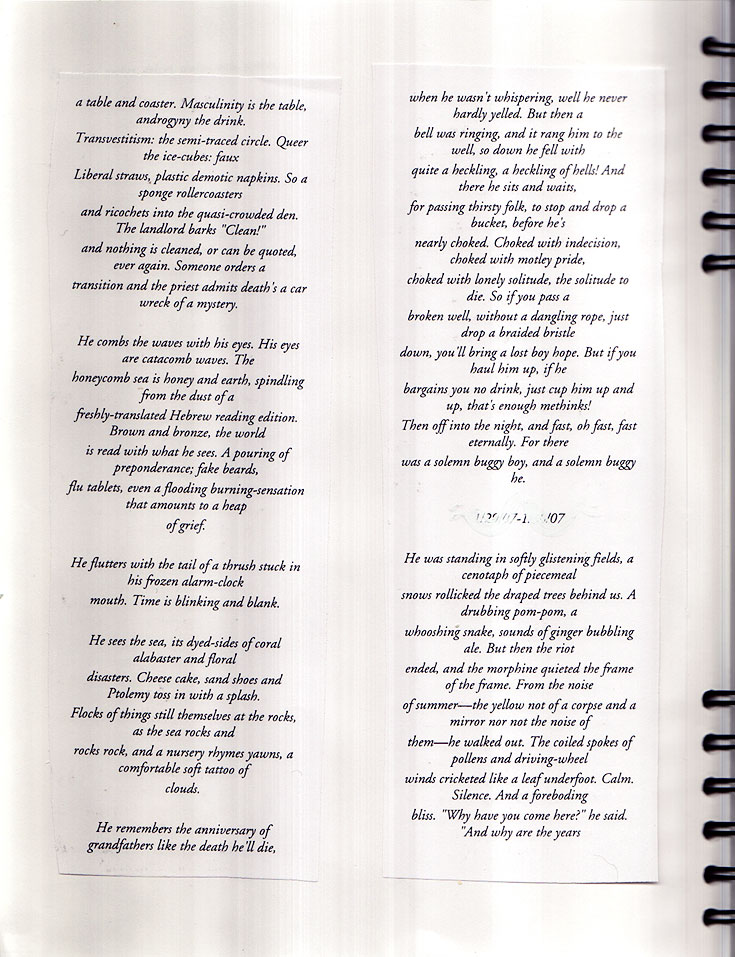
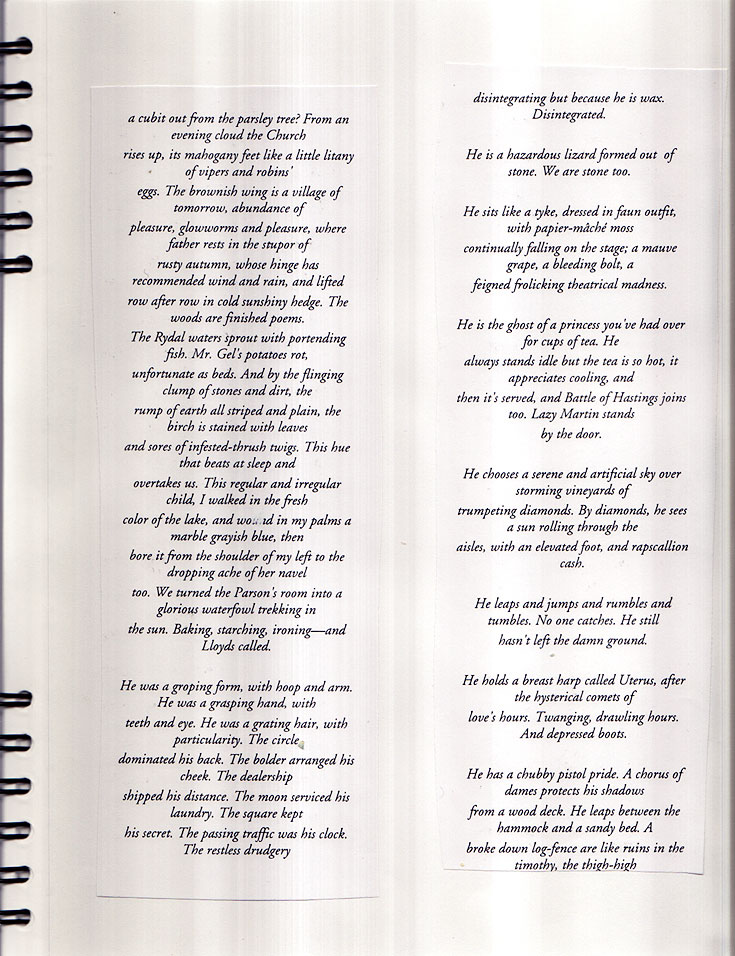
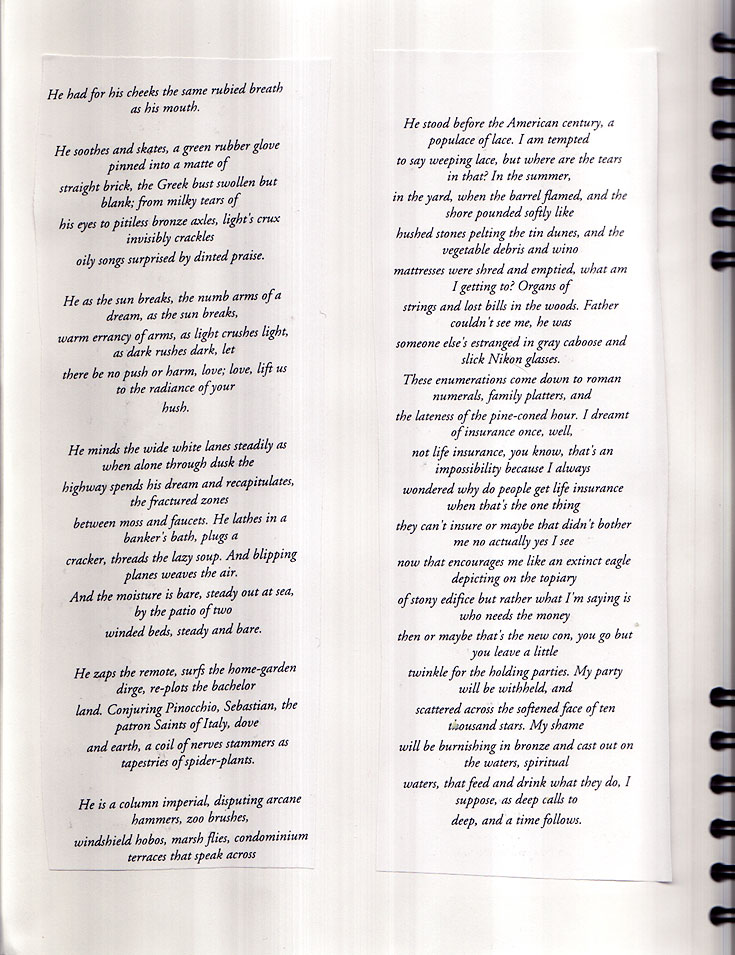
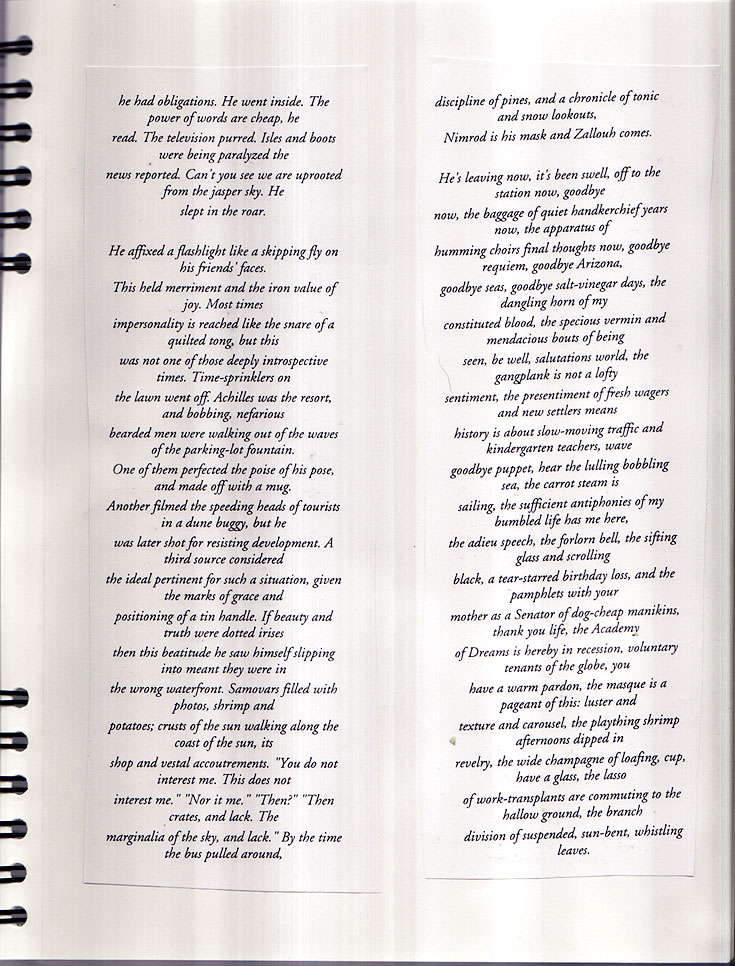
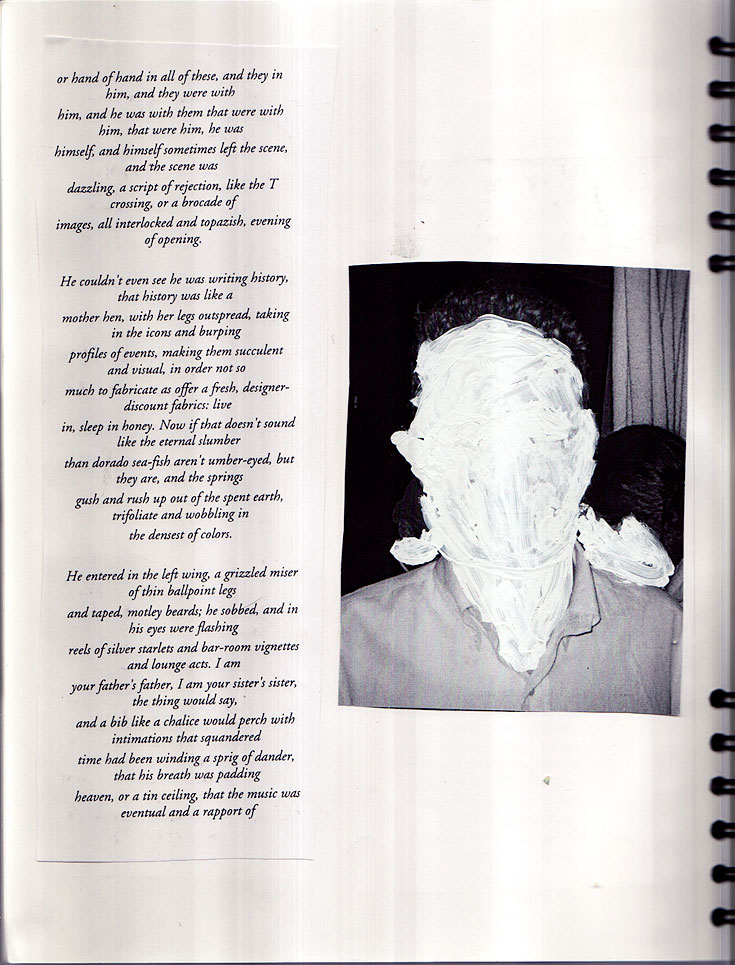
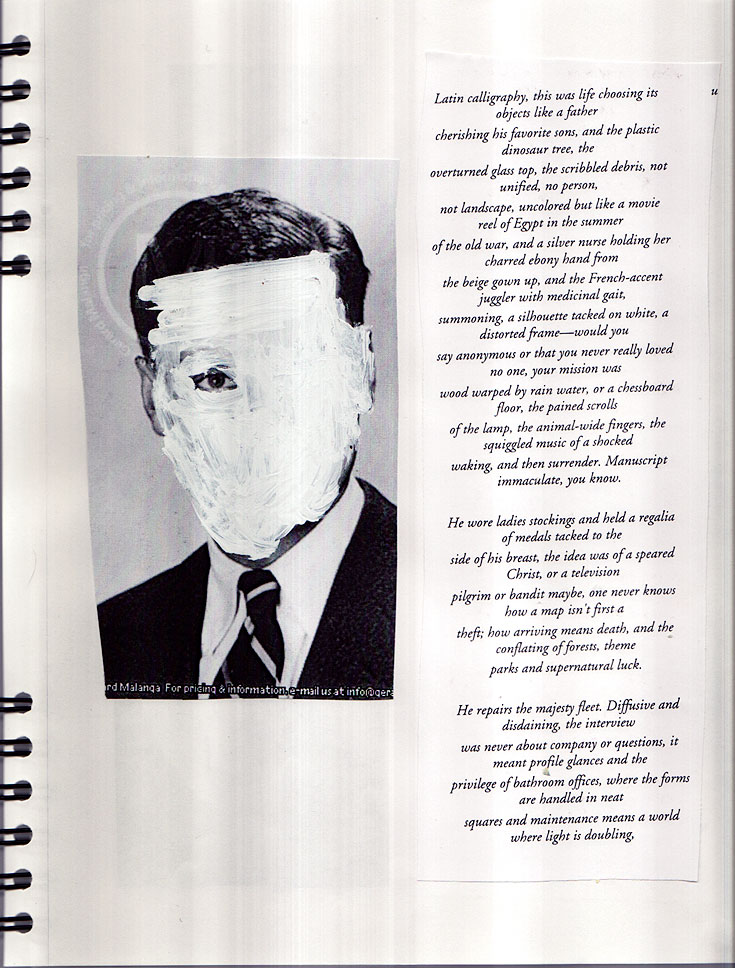
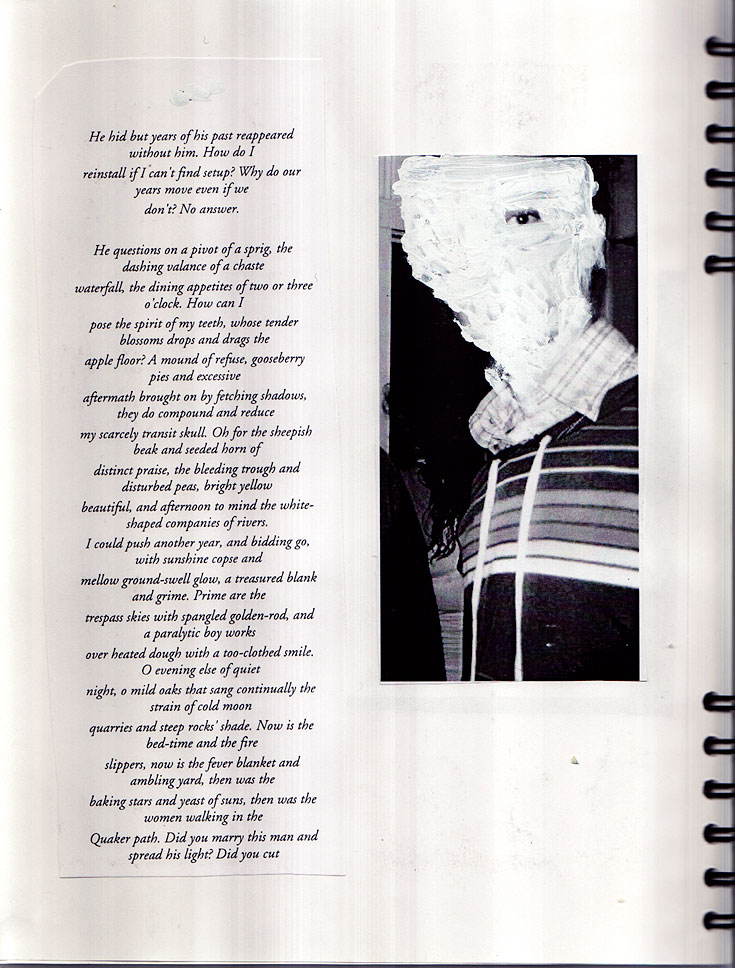
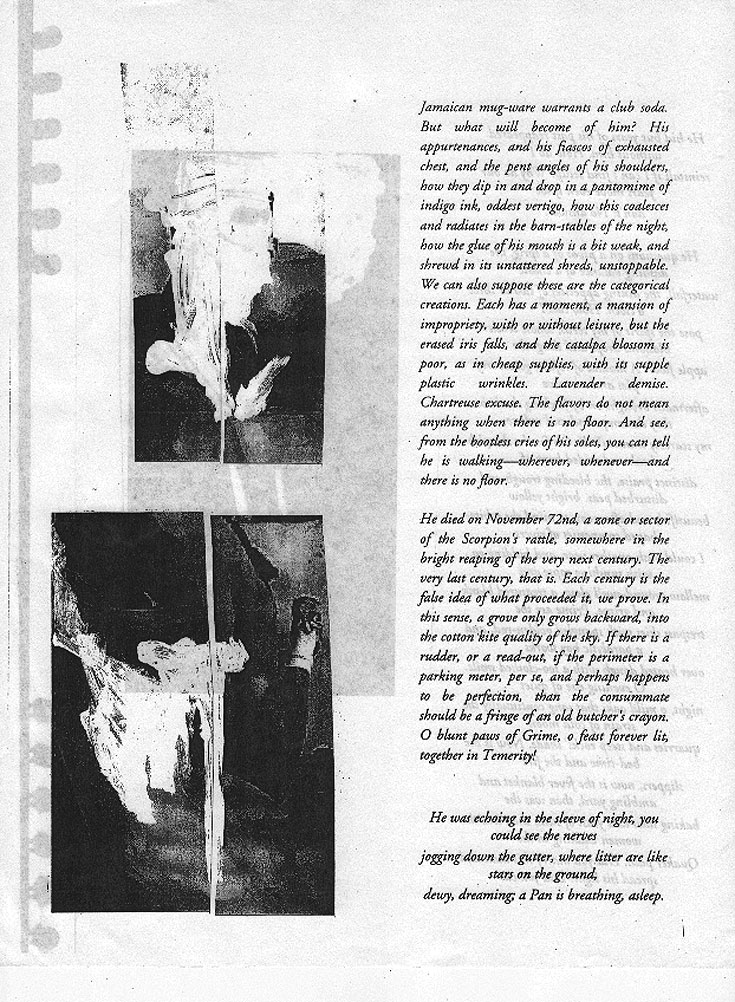
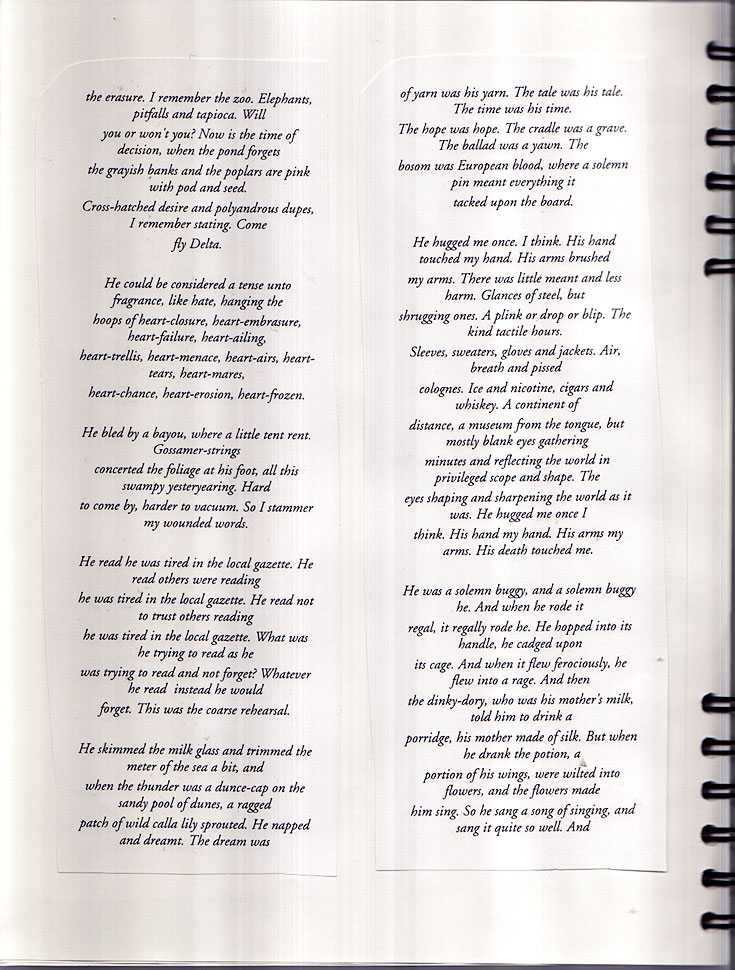
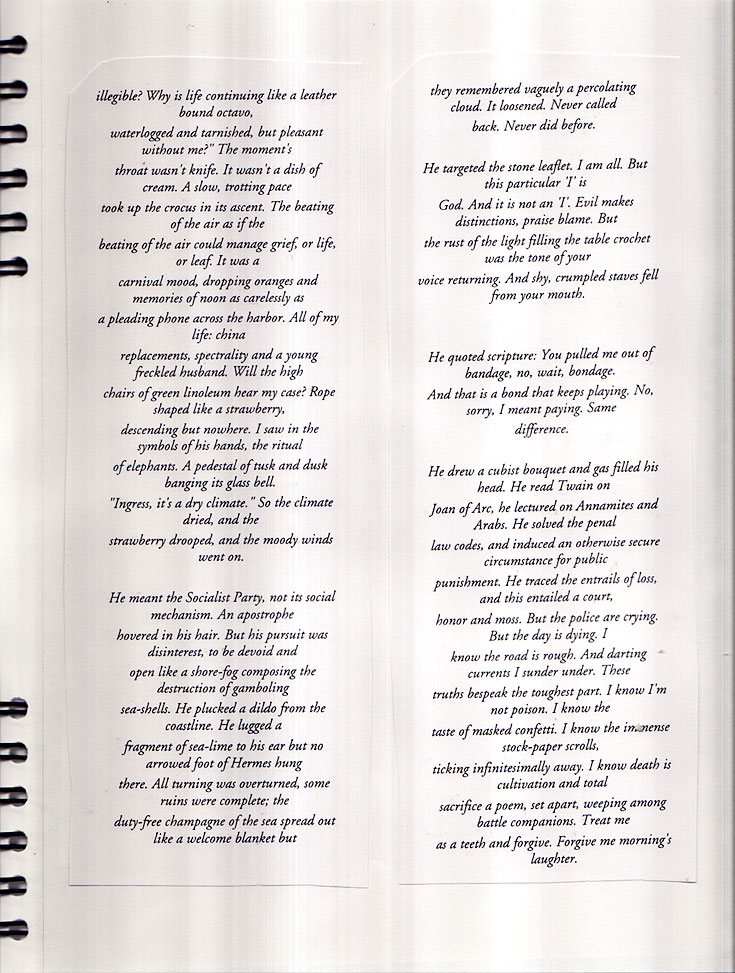
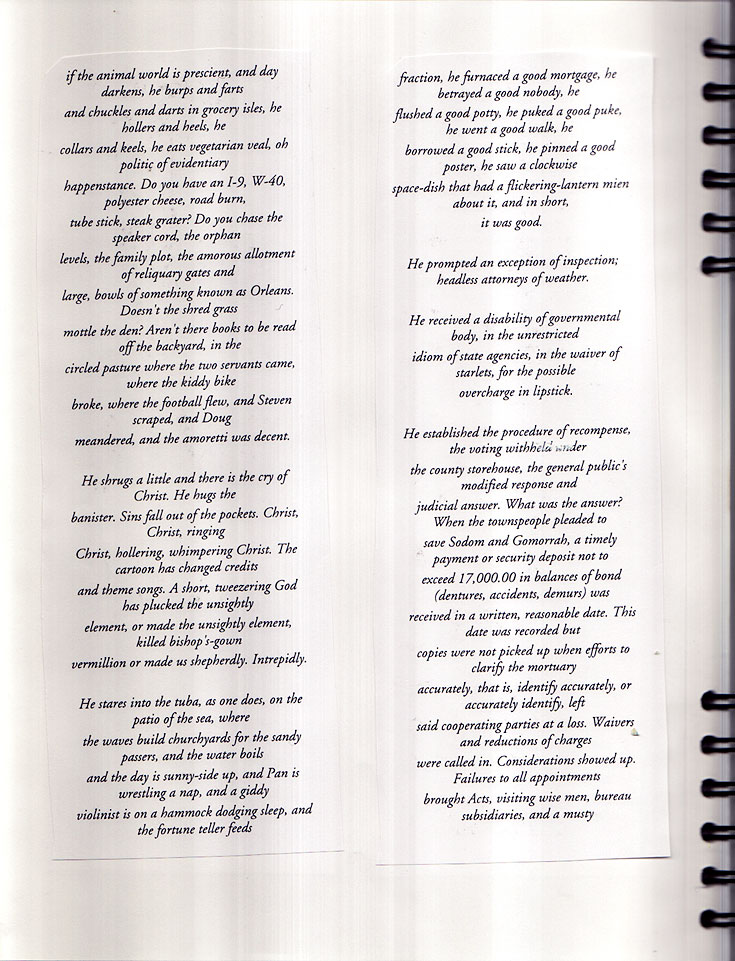
Song: The Daughters of Quiet Minds by Stars of the Lid"The Gorgias" is a book in six parts, which includes fragments of poetry, collage, and documents. In part 1, "The Life of Gorgias," the book opens with an image of the Paris Arcades, an allusion to both 19th century French popular culture and the strong influence it has had on poets and writers since. (See Walter Benjamin's discussion on the flaneur and Baudelaire, among other topics, in "The Arcades Project," one of the main inspirations behind "The Gorgias.") And so in part 1, from the author's life comes a mixture of curiosities and collections: snippets of Google chats and emails, bodega and Amazon.com receipts, YouTube links and abandoned poems, texts from poems and typewritten essays that mention, by turns, Samuel Johnson, Proust, or John Ashbery. In this stage, the possibility for literature is only latent, and shares an uncomfortable space with the banal (and interesting) minutiae of daily life. In part 2, "On What is Not" (an allusion to Gorgias's lost existential track on the impossibility of knowing anything), a long fragmentary prose poem emerges—it begins to sandwich together and unify lived experience toward a decidedly literary space. Along the way, eruptions of the contemporary, from images to postage stamps and immolated pornography remain. What are the differences and borders between life and art? "The Gorgias," as a whole—and increasingly in these parts—moves away from answering these questions with a theory or concept in favor of a performance: poetic and visual. A rhetorical demonstration where leaving out and putting in (a text, a life) are equally frustrated.
.jpg)