


FORTNIGHT ISA MULTIMEDIA DOCUMENTARY PROJECT ON THE MILLENNIAL GENERATION: THE LAST GENERATION TO REMEMBER A TIME WITHOUT THE INTERNET. |

contributorsprofile
TOWARDS THE WHITE LAB COAT

TOWARDS THE WHITE LAB COAT
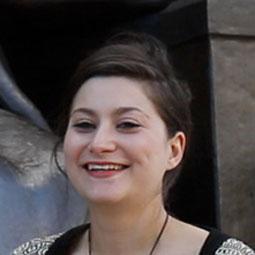
NINA, HERSELF A GENETIC CLONE, EXECUTES EXPERIMENTS
AT A PREMIERE RESEARCH LABORATORY.
read the essay now >>
NINA, HERSELF A GENETIC CLONE, EXECUTES EXPERIMENTS
AT A PREMIERE RESEARCH LABORATORY.
read the essay now >>

|
My sister and I are identical twins, forged from the same, single zygote which inexplicably divided early in embryonic development. It remains unknown in scientific literature why this splitting of the embryo occurs, but I have my own mystical theory on why it happened in regards to my own case. Had our single zygote forged regularly on its usual developmental journey, the single human we would have become would have been too much for the world to handle—too many conflicting interests and ideas to fit within one being. My sister and I shared many things growing up: toys, living space, parental influences, friends, and we even went to the same college (in fact, even now it is difficult for me to refer to my experiences growing up in the singular form; instead of my childhood it is our childhood). Regardless of our shared genes and shared experiences, we have turned out to be two markedly different human beings, arguing that inherited genetic makeup, while important, is not the end all for development. A case in point: our grandmother’s influence led us to pursue divergent interests. While my sister developed Rose’s curatorial love of objects, I was inspired by her retelling of her fondest dream of going to college to study microbiology. She would have matriculated in 1938, long before the |
structure of DNA had been formally published. ...medical biology was changing from subjective ideas on disease epidemiology to those based on rigorous empiric observations in This was an era in which the field of medical biology was changing from subjective ideas on disease epidemiology to those based on rigorous empiric observations in bacteriology and virology. The thought of life in a white lab coat, and visualizing new worlds by way of the microscope, both enchanted her and helped her transcend life in a small town. She wanted to be the next Marie Curie; a selfless female scientist who would sacrifice everything to make tremendous leaps and bounds within the scientific world.bacteriology and virology. But college was reserved for her brothers, and, instead, she was sent to cosmetology school and ran her own beauty parlor for four years during WWII. After that, she married my grandfather —who had returned from the army after touring in the Pacific as an M.D.—and raised my father and his sister. Over the years of hearing this story being retold, I began to imaginarily insert myself into my grandmother’s wonderland of white labcoats, clipboards, and microscopes. |

1/3
|
Two generations down the pipeline, I find myself living my grandmother’s dream: I am doing research in a biomedical/mammalian genetic research lab, in an era when the field of genetics and biomedical science is burgeoning; where advances and breakthroughs are made on a daily basis. Specifically, the lab I work in is interested in genomic instability as it relates to immunodeficiency and cancer: all of the processes we study occur within the nucleus, or genetic matrix, of lymphoid cells. Every day I spend in the lab, I am using scientific techniques and testing concepts that would have baffled scientists of my grandmother’s time. My grandmother herself, who is now 90 years old and has a sharp mind, can barely fathom the experiments I tell her about. Undoubtedly, she is beyond thrilled that I was able to accomplish her dream, and I hope that she can live vicariously through the stories I tell her now. I began to imaginarily insert myself into my grandmother's wonderland of white lab coats, clipboards, and microscopes. My job entails all the empirical dirty work: I am entrenched in the scientific process, testing hypotheses and working through multiple |
experiments, analyzing and assembling the data, and referring these data to my boss (firstly), and to the larger scientific arena through publications. Dealing with experiments, and actually living life in the lab coat every day has taken some of the wonderment out of it, and can make the work almost mundane for me at times. It is only when I physically extract myself from the everyday aspects of my research, and try to explain my experiments to people without a background in science, that I too can become enchanted about those processes. As I am able to describe my work, I am reminded that Rose’s imaginings have become my daily experiences. And we both remain in thrall to the potential of the work I do. Becoming the scientist my grandmother could not is perhaps my largest inspiration to stay committed to my field.  |
2/3
| Nina lives and works in Bangor, Maine. She is a research scientist at Jackson Laboratories, a genetics lab. Fortnight was the first journal to publish her essays on immunology and breeding mice to identify cancerous defects. Nina continues to work at Jackson Laboratories, and has now co-authored papers published in top science journals, such as Nature Immunology. She splits her personality between science and music, as described in her work on Fortnight. Her band, Coke Weed, recently recorded and released their second album and will be opening on tour with The Walkmen. She says of her time with the journal, "I stand for everything the Fortnight mission embodies; I believe that our 'millennial' generation has all the tools to profoundly change our world as we know it. I feel honored to be among the ranks of my fellow fortnight contributors, and hope that my essays will inspire others as they find their own path in this dynamic world." |
3/3




