



FORTNIGHT ISA MULTIMEDIA DOCUMENTARY PROJECT ON THE MILLENNIAL GENERATION: THE LAST GENERATION TO REMEMBER A TIME WITHOUT THE INTERNET. |

contributorsprofile
THE FROG AND THE SQUID

THE FROG AND THE SQUID
FROG LEGS TWITCH UNDER ELECTRIC IMPULSE. SCIENTIST NINA CONNECTS HER MODEL ORGANISMS TO HISTORY.
read the essay now >>
FROG LEGS TWITCH UNDER ELECTRIC IMPULSE. SCIENTIST NINA CONNECTS HER MODEL ORGANISMS TO HISTORY.
read the essay now >>


|
In biological experimental science, the use of model organisms in research has become not only a common occurrence, but a necessity. Due to the conservation of gene pathways throughout evolutionary time, numerous species can be used to model biological processes found in other species--usually humans--where research methods would otherwise be impossible. For example, yeast, the same beneficial organism that gave mankind bread and beer, has also aided our understanding of processes ranging from cell cycle mechanics to lifespan extension. Available established model organisms run the gamut through all taxonomic clades (featuring eukaryotes protists, fungi, plants, and invertebrate and vertebrate animals) and each comes with its own set of pros and cons for researchers. Establishing the proper model organism--one that will fit within proper budget and experimental requirements--is a crucial exercise for any research program. One consideration is securing the physical means to maintain and cultivate the model organism ethically and humanely. Another is having awareness of how accurately the species you use will be able to model the biological phenomenon you study. For instance, most single-celled model organisms are attractive research models because they require very little |
space and time to maintain, and are easily accessible. But if you plan to study a complex human illness, then a more complex, homologous organism model will be necessary. One consideration is securing the physical means to maintain and cultivate the model organism ethically and humanely. A favorite allegory of mine from the history of science about the importance of model organisms in scientific research lies within the work of Luigi Galvani and his adversary, Alessandro Volta. Galvani, a physician and lecturer at the University of Bologna, observed accidentally that the amputated hind legs of frogs would twitch convulsively when struck with an electrical spark from a bi-metallic conductor. After methodically repeating this experiment, Galvani concluded that animal organisms possessed a special electrical property which remained with the parts of the animal even after it had died.Outside influences (i.e. the conductor used to transfer the spark to the tissue) only caused this property to manifest itself. Galvani deemed this property “animal electricity," and published his results and theory in 1791. Initially, Galvani’s paper was well-received by colleagues. |
1/4
|
However, doubts soon rose in the mind of lauded physicist Alessandro Volta as to the true interpretation of Galvani’s phenomenon: Volta drew his ;attention more and more to the metallic components of the experiments. Namely, these comprised the bimetallic conductor (copper and iron) that was used to electrify the frog’s muscles and cause contractions. Volta repeated Galvani’s experiments and began conducting experiments with dissimilar metals. In 1793, Volta submitted a paper to the Royal Society detailing his interpretation of the results: Volta firmly believed that the contractions were a result of the metallic conductors alone. His professional disagreement against Galvani culminated in 1800, when he unveiled his voltaic pile--the earliest electric cell, or battery--and, with it, solidified his theory victorious. It is easy to see how Volta’s theory gained precedent over Galvani’s: Volta’s pile offered the first source of current electricity. All previous charge-generating devices were just the result of friction and static electricity. Personal and social factors also played a part in the scientific community's championing of Volta. Volta came from one discipline––physics––that was already considered the queen |
of all the sciences. Physics, at the time, boasted discoveries that expanded daily. But in Galvani's corner stood a series of disciplines still waiting to take off––like physiology––or that remained strongly empirical or pragmatic. To the public, some of Galvani's research foci seemed spurious and suspect; such as electrical medicine, or even medicine itself. More importantly, Galvani died in 1798; years before Volta's pile discovery was announced to the world. He was not around to refute Volta’s claims. Galvani’s nephew took on the brunt of his uncle’s work, but Galvani’s theory basically died with him. So Volta may have won the battle, but Galvani and his frog would gain proper recognition in the following decades. Today, we know that the “animal electricity” of Galvani originates in a quite different way than “voltaic” (or electrochemical) electricity. The frog experiments really involve both Galvanic and Voltaic theories. In the case of the frog’s legs, or the associated nervous tissue within, the electrical phenomena associated with their actions originate from electrical potential differences across phospholipid membranes. |
2/4
|
Therefore, the frog experiments really involve both Galvanic and Voltaic theories. An animal electricity originates from differential ion transport across membranes in the frog’s leg nerve itself. Coupled with Voltaic electricity--which originates from electrochemistry occurring at the metal’s interfaces, and involves the separation of ions and electrons--this generates a voltage difference across the metal-solution boundary. Galvani’s work was the predecessor of the entire field of electrophysiology: His contribution was cemented by the work of Alan Hodgkin and Andrew Huxley. Hodgkin and Huxley uncovered the mechanism of action potential utilizing the axon of the giant squid in 1952. The large diameter of the giant squid axon presented an experimental advantage, as it allowed voltage electrons to be inserted within the lumen. I've come to regard such research models as more than mere reagents. They are silent but important contributors to the scientific process. It goes without mentioning that the mouse is the research model mascot of the Jackson Laboratory, |
where we investigate models of human diseases and disorders. The mouse is an attractive mammalian model because of its small size and short gestation period. Numerous inbred and genetically modified strains are accessible in this species. In my weekly experiments, I also use E.coli time after time for molecular biology experiments. I’ve come to regard such research models as more than mere reagents. They are silent but important contributors to the scientific process. Although the researchers make the active hypothetical leap to set up the conditions for each experiment, we owe our entire livelihoods to all research models--large and small--without which, there would be no data to collect. In my experience with the scientific process, I aim to give these silent contributors the recognition and praise they deserve.  |
3/4
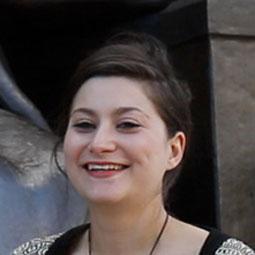
| Nina lives and works in Bangor, Maine. She is a research scientist at Jackson Laboratories, a genetics lab. Fortnight was the first journal to publish her essays on immunology and breeding mice to identify cancerous defects. Nina continues to work at Jackson Laboratories, and has now co-authored papers published in top science journals, such as Nature Immunology. She splits her personality between science and music, as described in her work on Fortnight. Her band, Coke Weed, recently recorded and released their second album and will be opening on tour with The Walkmen. She says of her time with the journal, "I stand for everything the Fortnight mission embodies; I believe that our 'millennial' generation has all the tools to profoundly change our world as we know it. I feel honored to be among the ranks of my fellow fortnight contributors, and hope that my essays will inspire others as they find their own path in this dynamic world." |
4/4




