


FORTNIGHT ISA MULTIMEDIA DOCUMENTARY PROJECT ON THE MILLENNIAL GENERATION: THE LAST GENERATION TO REMEMBER A TIME WITHOUT THE INTERNET. |

contributorsprofile
A HOLY SPACE

A HOLY SPACE
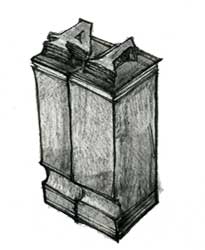
A VETERAN SEARCHES FOR SANCTUARY. DREW MEDITATES ON OUR NEED FOR REVERENCE, WITHIN AND BEYOND WALLS.
read the essay now >>
A VETERAN SEARCHES FOR SANCTUARY. DREW MEDITATES ON OUR NEED FOR REVERENCE, WITHIN AND BEYOND WALLS.
read the essay now >>


|
I’m pretty sure it was sometime in the fall of 1986 that I first remember encountering holy space. I was in the first grade, and my family had just moved into a new house. I was in a new school, and we were in a new church. I grew up in a church where my dad was a minister of music, my mom played the instruments and sang in the choir, and I can’t remember spending a single Sunday morning anywhere but at church. I had probably been instructed about proper reverence and posture in church more times than one could count. But at the age of seven, I finally ran smack into the “holy of holies” in such a way as to earn myself a stern scolding by the pastor—and, later that day, my parents. It seems that in 1986, coloring, talking, and playing with cars were irreverent activities, and not to be carried out in the sanctuary during the holiest of moments, the sermon. Brother Jim stopped somewhere in between his points and poem and said, in a voice that rivaled God’s on Mt. Sinai, “Boys, that’s enough. Sit up straight, and be quiet!” Everyone in the church could hear my little heart pounding through the silence. It seemed as if that moment lasted forever. But, sure enough, he finished his sermon in time for me to receive all that was in store when I got home that Sunday. You see, in 1986, the sanctuary was |
a holy place; sanctified. It was a place set apart from any other manmade structure. Some still called it “God’s house.” Maybe there are some today that still view the church building much in the way the Jerusalemites viewed the Temple as the kabod Yahweh, the very presence and glory of God. Obviously, I would act differently in the presence of a supreme deity. I think most of us would act in some new way if ever we were to encounter the God of the universe. Obviously, I would act differently in the presence of a supreme deity. You see, in 1986, the sanctuary was a holy place; sanctified. It was a place set apart from any other manmade structure. Some still called it “God’s house.” Maybe there are some today that still view the church building much in the way the Jerusalemites viewed the Temple as the kabod Yahweh, the very presence and glory of God. Obviously, I would act differently in the presence of a supreme deity. I think most of us would act in some new way if ever we were to encounter the God of the universe. This summer, I was fortunate enough to be selected to go on a travel seminar to the Middle East. This would be my second trip to the region. |
1/9
|
Seven years ago, I spent time on the Kuwait/Iraq border serving in Operation Iraqi Freedom. This second excursion came just before my final semester of theological education, so I felt that I was prepared for the cultural encounters that were in my future. Before leaving the states, I meditated often on some of the “presence of God” passages of the Old Testament: the Isaiah 6 encounter when Isaiah sees God on the throne, Moses on Mt. Sinai with the burning bush and later receiving the ten commandments, or the Ezekielian idea of the kabod of God spreading out across the land of Palestine and leaving the temple mount in Jerusalem. I wanted to be ready to walk in this land of holy places. I did not want to miss this mysterious God. All of this preparatory meditation is often necessary for a seminary student because of the nature of theological education. You see, my church experience gave me a faith understanding of my religion and religious texts, but my seminary experience counters the faith understanding given in church. In seminary, one learns about all of the human hands that penned the Bible, and how many times it has been changed throughout history. It is with these new insights into the history of religion that one gains both a new distance from, and closeness to |
religious texts. I have a more critical distance from the Bible today than before I began seminary. But I also have a deeper love and appreciation for it as the book of God. Many debate about whether or not the Bible is truly divinely inspired, even though it was written and changed by humans. I, however, believe that the Bible is what we have, for better or for worse, and we must read and interpret it carefully. I really wasn’t sure when I would have another opportunity to visit these places and the last thing I wanted to do was allow my academic skepticism, or my critical distance, to rob me of a divine encounter that would surely come from entering into the holy places of God’s dwellings on Earth. I feel it would cheapen the experience somewhat if, while standing on Mt. Horeb in Jordan—viewing the land promised the Israelites during their years wandering in the wilderness—all I could think about is the lack of archaeological evidence to support such an event ever happening. For many Christians, holy space is a concept without a framework. I guess for some, maybe the baptistery is holy, or maybe the altar in the sanctuary, or the communion table and the Eucharist. But too often we play games in the sanctuary, and for many of us, the sanctuary isn’t the reverent place it was for our parents and |
2/9
|
grandparents when they were our age. Many churches actually meet in multipurpose spaces created for the specific purpose of being used for youth to play basketball, have dances, or other community events. Part of this may stem from the Christian idea of our bodies being the temple of God. God dwells within us, therefore we are holy, and therefore any place can be our holy place. If, as Christians, our physical holy spaces are exchanged for spiritual holy spaces, we begin to lose the desire or need for physical holy space. So Christians arrive to the historic “holy” sites of Christianity and line up as if they are at an amusement park, impatiently shoving their way to the front in order to get their perfect picture with all their friends and get on to the next ancestral place of faith. “We’ve gotta beat the crowds and the traffic!” It seems that other religions are still taking physical holy space seriously, though. Muslims have prescribed rites to perform when visiting their holy spaces. The Jewish people visiting one of their holiest places, the Western Wall, are calculated and prayerful. I get the impression that many Christians have completely lost all sense of reverence for physical holy space on the basis that being holy is superior to honoring a physical holy place. |
This trip to the Middle East would be different though, I thought. I wasn't carrying a weapon, no one (to my knowledge) saw me as a threat to their existence, and the people I was with wouldn't be killed, or suffer the death of relationships with people back home. While in the Middle East, I often thought about the idea of pilgrimage. People told me that my trip would be a sort of Christian pilgrimage, but the more I thought about it, the more I thought: “Christians don’t do pilgrimage.” Muslims do the Hajj, and many of my Jewish friends travel to Israel if they can go to see their ancestral homeland. But while many of my Christian friends would like to travel in the Middle East, they aren’t motivated by a desire for a religious pilgrimage. Rather, they go out of a desire to see and experience foreign people and places.Arriving in Damascus brought a flood of memories back to the surface. I hadn’t been to the Middle East since 2004—And, most of the time, I tried not to think about my previous experiences. It is hard to admit, probably due to some degree of pride, but serving in the military and serving in a war changes a person. I am different than I was before going to Iraq. I react differently to the world around me now because I, like many of my fellow soldiers, have suffered some of the wounds of war: not physical wounds, but |
3/9
|
crippling nonetheless. What makes a person strong in this life, I believe, is when one learns to walk with a limp. Like Jacob, wrestling for a name, we all have experiences of the divine in this world that leave a crippling effect. When we learn to walk with a limp, we can accomplish so much more than the one who fears the leap that may cost the ability to walk. The sights and sounds of Middle Eastern cities are similar. Instantly, my heart sank thinking of the hardships faced by the citizens of the nations we would visit. This trip to the Middle East would be different though, I thought. I wasn’t carrying a weapon, no one (to my knowledge) saw me as a threat to their existence, and the people I was with wouldn’t be killed, or suffer the death of relationships with people back home. This time, on my Middle East travel seminar, I would see people, and let them see me. I would see them in their comfort zone, far removed from mine. One of the most amazing places I visited while in the Middle East was the Umayyad Mosque in Damascus, Syria. The Umayyad mosque is one of the holiest sites in Shia Islam. When I entered the mosque, I was immediately struck by the fervor of the pilgrims making their way through the various shrines and stopping for prayers and recitation of surahs from the Qur’an. |
Unexpectedly, the place was crowded and loud. The prayers were continuous; many wept with a religious fervor that demanded admiration and respect. I thought a lot about what it could be that makes these sites holy. Was it just the fact that someone declared this mosque holy that people treated it so? Maybe it was the fact that there was a community of people coming together in worship that made it holy. If that’s it, then the power to create holy space might be in the hands of ordinary people. I observed these faithful Muslims for a while before continuing on my journey. While in Jerusalem, I made sure to visit the Western Wall of the Temple Mount, otherwise known as the Wailing Wall. This is arguably the holiest site in all of Judaism. It is here where Jews can be seen rocking back and forth bowing and praying, placing letters, written prayers, between the stones in the wall. I could see tears in the eyes of the young and old. Probably the most striking was the young couple. They were dressed in a very modern style, Western. I could tell from their shoes that they had come from the United States. They asked me to take their picture. I did, and then had a conversation with them. They wanted to visit the |
4/9
|
wall before getting married. They didn’t have a theological reason, nor did their family require it as a form of pilgrimage. They just wanted to have that “holy” experience of being where the presence of the God of Abraham, Isaac, and Jacob was said to reside for so many years. I also went to several of the Christian holy sites in Jerusalem. Immediately, I was shocked by the hurried attitude and general lack of reverence in these places. Children were screaming, laughing, playing tag, and parents were yelling at their children. The places were not quiet places filled with the presence of the divine. The noise in these places was not constituted by prayers, praises, or scriptures either. Here, the community experiencing these ancient churches and biblical landmarks were not worshiping. Just like the Umayyad Mosque for Islam, many Christian leaders proclaim these sites to be important holy sites for Christianity. But the posture of the visitors to these sites was so different from the posture of Muslims. Here, it seemed that the people definitely had the ability to turn a holy space into an important landmark, and nothing more. I left those places wondering if there were any Christians left who still understood what holiness was anymore. Another ancient site that I visited was Baalbek, Lebanon. I was struck by the enormity of the |
ancient city. All of the pictures that I had seen did nothing to convince me of the massive size of the columns, walls, altars, and temples. Thousands of years ago, before written communication, at the center of the city, on the highest point, a temple to the divine was erected. Day after day, I was able to witness enormous cities with ancient temples. For the first time I began to reflect on the centrality of the divine to human life. Thousands of years ago, before written communication, at the center of the city, on the highest point, a temple to the divine was erected. Through the ages, the conquering people adapted the temple for “their” god or gods, but the idea, the importance of the spiritual, was still prevalent.I guess I hadn’t really thought about it all that much before, but what an awesome revelation. This divine being, God, that I claim to know, has left enough of a trace of the divine in this world that human beings have always seemed to know about it or at least be curious about it. Of course, human beings haven’t always gotten it right. Some of the acts that have been committed in the names of the divine are unimaginably horrific. But what an encouraging foothold in our faith, that |
5/9
|
that the divine being has imprinted creation with inklings of knowledge and possibly even a slight posturing toward the divine itself. This entire experience served as a lesson to me about community. When asked to define community, we would all come up with similar and satisfactory definitions. As a seminary student I have been taught far too complex a definition of community. Put simply, community is the church, the body of Christ. In true community no one is alone, no one hurts alone, no one is excluded, and everyone is reconciled to their neighbors and ultimately to God. But what does that really mean to me? What does that mean for anybody? This entire experience served as a lesson to me about community. When asked to define community, we would all come up with similar and satisfactory definitions. As a seminary student I have been taught far too complex a definition of community. Put simply, community is the church, the body of Christ. In true community no one is alone, no one hurts alone, no one is excluded, and everyone is reconciled to their neighbors and ultimately to God. But what does that really mean to me? What does that mean for anybody? In Hans Küng’s work on Islam, he talks about the usefulness of a hostile image. He shows that |
formerly the hostile image for the United States was the Communist Soviet Union. Today Küng believes the West’s image of the enemy or hostile image is Islam. He details how one shapes the image through rhetoric and a filtered media exposure. I am reminded about how many in my Baptist tradition treated the “other” during the conservative resurgence: the take-over of the Southern Baptist Convention. I have had professors and ministers on both sides of the conflict demonize the other with their speech. I have long hoped that the battle between conservative and liberal Baptists would die with that generation. But on this trip, with students from several theological backgrounds, I heard the same old arguments of the previous generations. I am sad to say that my hopes may be in vain. I am reminded about how many in my Baptist tradition treated the 'other' during the conservative resurgence: the take-over of the Southern Baptist Convention. One cannot spend any time in the Middle East without encountering the Israeli and Palestinian conflict. It is clear that Israel and Palestine are locked in a no-win conflict with no easy solutions apparent to anyone. Now that I have stated the brutally obvious, follow me for a moment as I try |
6/9
|
to push one small step forward. Early on in the trip, we were presented with a strong anti-Zionist perspective that had many in the group rethinking, or possibly thinking for the first time, about the conflict. I noticed we were all engaging the debate in new ways, with new lenses. I did feel, however, that some of my peers merely swapped their lenses for a new pair. But this paradigm shift can still be good for us especially as we seek to inform our friends, neighbors, and church members about our experience. As we listened to several of what I would call radical anti-Zionist and moderate pro-Israel/pro-Palestine two-state solution perspectives, I was left wanting something more to balance what I was hearing. I really wanted to hear from the radical Zionist. After all, the rhetoric left me with little to be sure of. What I am sure about though, is concrete and it is what I will put forth in my presentation of this experience to my neighbors. First, Palestinians live behind a prison-like wall. The psychological impact of living one’s entire experience behind bars is traumatic and crippling. The Israelis put the wall there and are enforcing it with a mighty swift and strong hand. Second, the career and educational opportunities for Palestinians are heavily influenced by the occupying force, the Israelis. The road leading to community and reconciliation is not an easy road |
and is not without costs. But I firmly believe it is a road worth every bit of the risk. Because of the impediment to community the wall presents, I think that the wall must come down, and Palestinians must gain their freedom. The wall is an obvious obstacle to community apart from all other implications. The wall says to everyone who sees it, “You are the other, you are my enemy.” Christ gave up his life for peace; maybe we should take the first step and sacrifice a little bit of our security for peace. Jesus gave us a model to follow when he broke down the walls his society had set up to keep people apart. In the Gospel of Mark, Jesus touched a woman suffering from a discharge of blood, even when society said the woman was unclean. Jesus healed people on the Sabbath, even though the religious leaders of the day said to do so would be wrong. The example Jesus gives us is to break down the walls that separate us. The wall and the position of the Israeli as occupier make them anti-Christ, because it is clearly putting up a barrier to community. The wall does the exact opposite of what Jesus modeled. For this reason, we must advocate the removal of the wall first, then work for peace. Christ gave up his life for |
7/9
|
peace; maybe we should take the first step and sacrifice a little bit of our security for peace. I understand that this is an easy perspective for me to advocate while sipping my latte, sitting in the safety of my favorite coffee shop. But I do believe it is the right step forward nonetheless. Many of my experiences have not simplified my understanding of cultures and the Middle East, but rather things are now much more complex. While the complexities of the conservative/liberal debate, or the Palestinian/Israeli conflict, or even whether the annunciation from the angel Gabriel to Mary happened at Mary’s house or at a well, all seem to muddy the water a bit and take us further from concrete positions. In my wading through this now-muddied stream, the things I do know become more pastoral. The answers aren’t as easy when we see through a glass darkly. One of these new lessons I am learning is a new understanding of holy space. Maybe holy space isn’t necessarily tied to one specific physical place. Maybe holy space is anywhere community is upheld, any place that is a place of peace and not hate. Perhaps holy space is Israel without a wall. Hopefully each of us will find our holy space when we welcome those whom we have so many times placed in the category of outsider. Holy space is becoming a |
much less concrete place for us now. But hopefully, when we’ve muddied the water or darkened the glass, we are a lot more careful about the judgments we make. Maybe we will begin to recognize that we all have the ability to create holy space every day, wherever we are.  *** For a detailed explanation of Küng’s notion of hostile image and how the image is put forth see, Hans Küng, Islam: Past, Present, and Future. Oxford: One World Publications, 2007. p. 3-8. |
8/9
|
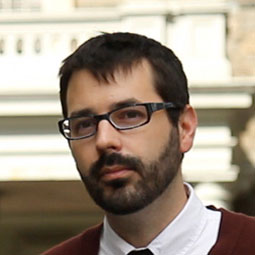
Drew was a seminary student at McAfee in Atlanta, Georgia after returning from service in the United States Army in Iraq. Fortnight published his essays on theology and Middle East politics. As a result, Fortnight drew a large audience from the Bible Belt. Since publishing with Fortnight, Drew was accepted to law school at the University of Washington. Since contributing to Fortnight Journal, Drew collaborated with fellow Fortnight alum Fortnightist 7 in Ramallah, Palestine. He also graduated with a Master of Divinity degree from Mercer University in Atlanta, GA. He writes, "In my last essay of Edition One, I wrote about how my education and faith were working together to challenge my worldview. This shifting of perspective inspired me to pursue a law degree. I’m now in my second year of law school at Seattle University School of Law. I’m focusing my J.D. on immigration and business law. I plan to help immigrant populations gain citizenship and support small businesses in their communities. I am grateful for the opportunity to be a part of Fortnight Journal; the people I met and the relationships formed with other contributors are a blessing and gift that I treasure. Fortnight Journal will continue to be a signpost of the millennial generation to the world." |
9/9




