



FORTNIGHT ISA MULTIMEDIA DOCUMENTARY PROJECT ON THE MILLENNIAL GENERATION: THE LAST GENERATION TO REMEMBER A TIME WITHOUT THE INTERNET. |

contributorsprofile
THE CARETAKER'S ETHIC

THE CARETAKER'S ETHIC

read the essay now >>
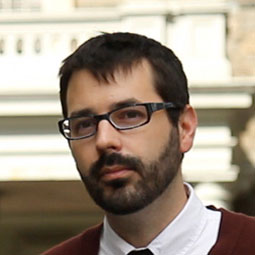
NATURAL RICHES DEMAND CAREFUL ETHICS. DREW, A SEMINARIAN, MEDITATES ON HOW RELIGION DELINEATES MAN'S DOMINION.
read the essay now >>


|
On April 20, 2010, the Deepwater Horizon-operated oil rig in the Gulf of Mexico exploded, resulting in one of the worst oil spills in history. All around the world, people responded by tuning in for live video feeds of gushing oil. On August 5, 2010, 33 men in Chile were trapped 2,300 feet below the surface when the mine they were working in collapsed. The miners were trapped for 69 days before being rescued. These are not new phenomena; human beings have been consuming and demanding more and more from our planet for years. Our pursuit for energy, dominance and superiority has pushed the limits of our fragile earth many times before. Today, hot sulfuric mud is still gushing from the ground. The steaming pool of mud already covers more than 25 square kilometers, and is growing to the size of a dozen Olympic swimming pools every day. In May 2006, gas drilling on the Indonesian island of Java triggered a mud volcano, killing 13 people. Today, hot sulfuric mud is still gushing from the ground. The steaming pool of mud already covers more than 25 square kilometers, and is growing to the size of a dozen Olympic swimming pools every day. Scientists expect the mud volcano to continue erupting for another 30 years. In a desert in Turkmenistan, one can find a hole 328 feet wide. |
The hole has been on fire continuously for 39 years. In 1971, a Soviet drilling rig accidentally punctured an underground natural gas cavern; the rig collapsed into the cavern, and poisonous gas began to fill the air. In an effort to prevent the spread of the harmful fumes, the Soviets set the hole on fire. It still burns today. These are just a few examples of the disasters human beings are capable of inflicting on our planet. I often wonder if futuristic sci-fi movies are accurate in depicting a resource-barren planet with a dark sky, in which the few remaining humans are living in primitive conditions below the earth’s surface to escape the toxic air above. Surely, governments wouldn’t allow our insatiable hunger for resources to go that far… right? Let’s give some thought to this: will a government power slow down mankind’s desire to consume every last drop of energy from this planet? After the Deepwater Horizon oil rig explosion, President Obama declared a moratorium on deep-water drilling in the United States. Apparently he—and Congress—believed that the risks involved were too great. However, today that moratorium has been lifted; the largest oil spill in history is seemingly no longer too risky to pursue. |
1/5
|
As one who has been trained to reflect theologically about world events, the stories above remind me of the primeval history recorded in Genesis... As one who has been trained to reflect theologically about world events, the stories above remind me of the primeval history recorded in Genesis: Then God said, ‘Let us make humankind in our image, according to our likeness; and let them have dominion over the fish of the sea, and over the birds of the air, and over the cattle, and over all the wild animals of the earth, and over every creeping thing that creeps upon the earth.’ God blessed them and God said to them, ‘Be fruitful and multiply, and fill the earth and subdue it; and have dominion over the fish of the sea and over the birds of the air and over every living thing that moves upon the earth.’ (Genesis 1:26, 28 NRSV) This text, sacred for many, seems at the surface to give human beings absolute authority to choose how to use the Earth’s resources. The text seems to put forth the idea that human beings have a responsibility to populate the earth to its capacity. |
It begins to get a little hazy when we start to debate what a “filled” earth looks like. Is seven billion people enough? Before I dive too deeply into the implications of a “fill the earth” ethic, I want to unpack the Hebrew words that are translated in the above passage as domination and submission. The word rendered in many translations meaning “to have dominion over” or “rule over” is yirdu from the root radah. There is often a range of meanings with words, which makes translation difficult at best, especially when the language or document being translated is thousands of years old. Take, for example, the English word “party.” One could attend a party, a gathering of individuals for a celebration; or, one could register for a political party, which is simply an organized group of like-minded politicians and citizens. One could also, upon arrival to a restaurant, be asked how many are in their party, which has nothing to do with a celebration or political ideas. Even this simple word has a range of meaning that, if translated to another language, would require care and context to make sure the proper one is assigned. The Hebrew root radah can mean: to plough, to beat, to flow, to tread, to rule, and to shepherd a flock. If we look at the context of the passage, we understand that this is the creation myth of the |
2/5
|
Old Testament. The ancient Israelites compiled their stories in an attempt to explain why things were. As an oppressed people they—in an effort to establish themselves against the other ancient, near-Eastern peoples—needed to have a history that described who they were, and who their God was. Knowing these things about the context of scripture can help us understand why the Israelites believed God told them to have dominion over, and subdue, the Earth. One possibility is that they were an oppressed people with keen hope of overturning their oppressors. The Israelites therefore needed to understand themselves in the context of a position of authority. To be given authority over the Earth would certainly achieve this. Another possibility for the meaning of this passage is that it serves to extrapolate the overall role of “caretaker” that human beings are given in the Garden of Eden. In this creation myth, it would make sense for the caretaker of the garden to have some kind of authority in the decision-making process of caring for the garden. To 'have dominion' is to step in whenever someone violates the mandate for humans to act on behalf of the earth, and to enforce the laws of care. |
It would then be salient to understand that any caretaker of the garden should have the best interest of the garden in mind, rather than the best interest of the caretaker. When a landowner hires someone to care for the garden, the landowner expects this gardener to act on behalf of the plants first. If we are to properly understand the context of this passage in Genesis, it seems that the responsibility of humanity is to act on behalf of the planet. To subdue is to enact rules that protect the earth. To "have dominion" is to step in whenever someone violates the mandate for humans to act on behalf of the earth, and to enforce the laws of care. In dealing with the second part of this Genesis verse—the one that instructs the community to “be fruitful and multiply” or to “fill the earth"—we need to again keep in mind the idea of care: the idea that human kind is the divinely-appointed caretaker or gardener for the earth. The Hebrew words peru and revu mean “to bear fruit" and "be many.” But, in light of earlier discussion, an earthbound reason emerges for this fixation. The Israelites, an oppressed people, favored the notion of being a large and powerful people. Who wouldn’t want that for their nation? But here again, it would be both risky and reckless of us to stop our study with this sort of overly-simplified explanation. We must be careful not to reject the previous verse in the text, which draws our |
3/5
|
attention back to the primary purpose of human beings: If being a caretaker requires putting the needs of the earth first, then there is an implied limit to how large one family, clan, tribe, nation, or global community should multiply. Clearly, if the population grows too large for the garden, then land and crops will become strained. Unable to produce, this condition will cause famine, disease and death. So what has all of this Genesis stuff have to do with anything today? We are not over-populated, are we? We are not destroying the earth—or at least not all of it—right? The reason he cited was a declining birthrate among Southern Baptists; his solution to the shrinking denomination was to have more children. Recently, a leader for the largest Baptist group in the U.S. mentioned that baptisms were down in their denomination. The reason he cited was a declining birthrate among Southern Baptists; his solution to the shrinking denomination was to have more children. Orphanages are filled with children across this planet. Yet there are religious leaders who advocate that their parishioners have more children, in order to fill the rolls at church. The price of beef is going up in the U.S. because moreand more of the corn that was |
grown to feed cattle is being bought with government grants for higher prices, to make ethanol fuel for automobiles. Resources are being diverted away from feeding the population of the world to instead power their cars… and some think it is a good idea to have more children. Let me be clear: I am not advocating any sort of procreation policy. I do think that these are important factors to reflect on before we make decisions with global implications. As caretakers of the earth, we should be thinking about these things. I am not arguing that we stop looking for energy sources and more efficient means to extract some of the resources from our planet. But I do think we need to take a step back and look at what we are doing. We need to recognize that our hasty attitude in our search for energy is potentially devastating to our planet. Maybe our planet could be better served if we slowed down just a little.  |
4/5
|
Drew was a seminary student at McAfee in Atlanta, Georgia after returning from service in the United States Army in Iraq. Fortnight published his essays on theology and Middle East politics. As a result, Fortnight drew a large audience from the Bible Belt. Since publishing with Fortnight, Drew was accepted to law school at the University of Washington. Since contributing to Fortnight Journal, Drew collaborated with fellow Fortnight alum Fortnightist 7 in Ramallah, Palestine. He also graduated with a Master of Divinity degree from Mercer University in Atlanta, GA. He writes, "In my last essay of Edition One, I wrote about how my education and faith were working together to challenge my worldview. This shifting of perspective inspired me to pursue a law degree. I’m now in my second year of law school at Seattle University School of Law. I’m focusing my J.D. on immigration and business law. I plan to help immigrant populations gain citizenship and support small businesses in their communities. I am grateful for the opportunity to be a part of Fortnight Journal; the people I met and the relationships formed with other contributors are a blessing and gift that I treasure. Fortnight Journal will continue to be a signpost of the millennial generation to the world." |
5/5




