


FORTNIGHT ISA MULTIMEDIA DOCUMENTARY PROJECT ON THE MILLENNIAL GENERATION: THE LAST GENERATION TO REMEMBER A TIME WITHOUT THE INTERNET. |

contributorsprofile
THRESHOLDS

THRESHOLDS
HUMANS PACE GREATNESS ON NEW BEGINNINGS.
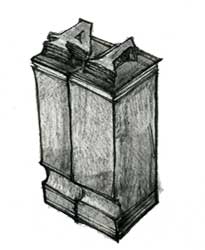
SEMINARIAN DREW EXAMINES HOLY PRECIPICES.
read the essay now >>
HUMANS PACE GREATNESS ON NEW BEGINNINGS.
SEMINARIAN DREW EXAMINES HOLY PRECIPICES.
read the essay now >>


|
Many of my friends make some sort of New Year’s resolution. But I usually don’t nail down an official resolution until the end of January. Mostly, this allows me to be one of the few people who can say I kept my resolution until February. But what is it about a new year that that compels us to make a commitment to be better, or try harder? Why do so many people make and break resolutions every year? I think the key to understanding this human impulse is the threshold principle. You see, the threshold is the symbol of a change, of a new beginning. In my tradition, after marriage, husbands carry their new wives across the threshold of their new home to symbolize the beginning of a new era in which the husband will support and care for the wife. The threshold symbolizes a chance for something new to thrive once old roles and comforts are abandoned. Joseph Campbell writes about the hero’s journey and the model of adventure. We see this model in movies and literature, but rarely do we sit down and apply it to our own lives. Maybe we don’t, because to do so would imply we were calling ourselves "heroes." And that may seem a little egocentric. But I believe it is useful to apply Campbell’s model to our ordinary trajectories because it will underscore the compelling power |
of newness. This power is why we always promise ourselves that once we get our room clean, we will keep it clean. Once we get caught up financially, we will save, rather than over-spend. If we could just lose 15 pounds, then we could keep ourselves healthy. In the absence of heroic opportunity, even small thresholds hold promise. But when we apply Campbell's model, we can easily see the compelling nature of newness. According to this model, each of us will experience a call to adventure in our lifetime. It could be the decision to go away to college, join the military or get married. Each of these choices, once made decisively, place us on a specific path that takes us across what Campbell calls "the threshold of adventure." Along our journey, we will experience tests and be prodded along by helpers. But in my religious studies, threshold transformation has taken on metaphysical as well as literal value. There is a biblical model for such clean slates. In the book of Leviticus, chapters 17-26 contain what is called the Holiness Code. Here, three categories describe a person’s cleanliness before God. The holiest, or innermost category is qadosh; |
1/3
|
one would need to be considered in this category in order to enter the temple. The middle category is tahor; this is where most people spent much of their time. This state is neither holy or unclean. The outer category is tame; an unclean state. A person in the tame designation would not be allowed to participate in the community in any way whatsoever. They would have to follow the certain rites outlined in the holiness code to become clean again. Three thousand years ago, there was a dedicated process designed to give people a clean slate. For Catholics it may be Confirmation. For the young Jewish girl, it is the Bat Mitzvah. In the new testament, Jesus healed people of their life-long illnesses and then called them to change the way they were living. Jesus metaphorically carried lepers and lame persons across a threshold into healthy living, and once they received their new beginning, he showed them a new way to live.Religious traditions continue practicing the principle of thresholds. For Catholics it may be Confirmation. For the young Jewish girl, it is the Bat Mitzvah. For many Protestants, the believer’s baptism is a threshold to symbolize a new beginning. It is clear throughout our human history that we live healthier, happier and fuller lives when we are |
offered the opportunity to cross the threshold into a new, clean-slate beginning. Last semester, I had a professor offer me the option to write one large research paper toward the end of the semester, rather than write several short papers through the term. My workload that semester was front-loaded. I convinced myself that putting off the paper until the end of the semester would be easier in the long run. It turned out that, at the end of the semester, I really wasn’t any less busy than I was at the beginning of the term. I finished the paper without incident. But in the process, I was reminded how we forever convince ourselves that things can be better as we approach a terminal threshold in time. As a student, I get to begin a new semester twice a year. The days before a new semester begins are so exciting, because no assignments are due yet, and the opportunity for success is at its highest point. Close friends of mine who have graduated and find themselves in careers tell me they still long every autumn for the fresh start of a new semester. I think new years give most people the most accessible threshold for action and change. Sure, some people will indeed take bigger steps before 2012--such as changing jobs, moving cities or |
2/3
|
or starting families.But for the bulk of us out there, January 1, 2011, is our clean slate. Now, it’s time for us to get to work. Our internal cleansing must become our realized action. The threshold we crossed as a global community this past week is an opportunity to better the lives of so many across the world. With technological advances and humanitarian efforts at all-time highs, 2011 could be the year that we feed more of the hungry, clothe more of the naked, heal more of the sick and serve more of the poor than ever before. This is 2011, humanity’s clean slate. Let’s start the year off strong.  |
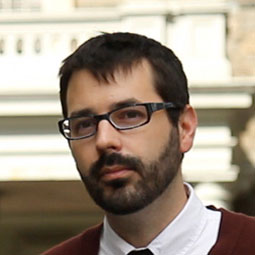
Drew was a seminary student at McAfee in Atlanta, Georgia after returning from service in the United States Army in Iraq. Fortnight published his essays on theology and Middle East politics. As a result, Fortnight drew a large audience from the Bible Belt. Since publishing with Fortnight, Drew was accepted to law school at the University of Washington. Since contributing to Fortnight Journal, Drew collaborated with fellow Fortnight alum Fortnightist 7 in Ramallah, Palestine. He also graduated with a Master of Divinity degree from Mercer University in Atlanta, GA. He writes, "In my last essay of Edition One, I wrote about how my education and faith were working together to challenge my worldview. This shifting of perspective inspired me to pursue a law degree. I’m now in my second year of law school at Seattle University School of Law. I’m focusing my J.D. on immigration and business law. I plan to help immigrant populations gain citizenship and support small businesses in their communities. I am grateful for the opportunity to be a part of Fortnight Journal; the people I met and the relationships formed with other contributors are a blessing and gift that I treasure. Fortnight Journal will continue to be a signpost of the millennial generation to the world." |
3/3

The mythological hero, setting forth from his common day hut or castle, is lured, carried away, or else voluntarily proceeds, to the threshold of adventure. There he encounters a shadow presence that guards the passage. The hero may defeat or conciliate this power and go alive into the kingdom of the dark (brother-battle, dragon-battle; offering, charm), or be slain by the opponent and descend in death (dismemberment, crucifixion).
Beyond the threshold, then, the hero journeys through a world of unfamiliar yet strangely intimate forces, some of which severely threaten him (tests), some of which give magical aid (helpers). When he arrives at the nadir of the mythological round, he undergoes a supreme ordeal and gains his reward. The triumph may be represented as the hero’s sexual union with the goddess-mother of the world (sacred marriage), his recognition by the father-creator (father atonement), his own divinization (apotheosis), or again—if the powers have remained unfriendly to him—his theft of the boon he came to gain (bride-theft, fire-theft); intrinsically it is an expansion of consciousness and therewith of being (illumination, transfiguration, freedom).
The final work is that of the return. If the powers have blessed the hero, he now sets forth under their protection (emissary); if not, he flees and is pursued (transformation flight, obstacle flight). At the return threshold the transcendental powers must remain behind; the hero re-emerges from the kingdom of dread (return, resurrection). The boon that he brings restores the world (elixir).
Beyond the threshold, then, the hero journeys through a world of unfamiliar yet strangely intimate forces, some of which severely threaten him (tests), some of which give magical aid (helpers). When he arrives at the nadir of the mythological round, he undergoes a supreme ordeal and gains his reward. The triumph may be represented as the hero’s sexual union with the goddess-mother of the world (sacred marriage), his recognition by the father-creator (father atonement), his own divinization (apotheosis), or again—if the powers have remained unfriendly to him—his theft of the boon he came to gain (bride-theft, fire-theft); intrinsically it is an expansion of consciousness and therewith of being (illumination, transfiguration, freedom).
The final work is that of the return. If the powers have blessed the hero, he now sets forth under their protection (emissary); if not, he flees and is pursued (transformation flight, obstacle flight). At the return threshold the transcendental powers must remain behind; the hero re-emerges from the kingdom of dread (return, resurrection). The boon that he brings restores the world (elixir).
Joseph Campbell, The Hero With A Thousand Faces, 2nd ed.
(Princeton: Princeton University Press, 1968), 245-246.
(Princeton: Princeton University Press, 1968), 245-246.




