



FORTNIGHT ISA MULTIMEDIA DOCUMENTARY PROJECT ON THE MILLENNIAL GENERATION: THE LAST GENERATION TO REMEMBER A TIME WITHOUT THE INTERNET. |

contributorsprofile
PRESSING ON

PRESSING ON
WORLD AND SPIRIT RECONCILE IN JUSTICE. GRADUATING SEMINARIAN DREW EXPLAINS HIS SUDDEN CALLING TO LAW.
.jpg)
read the essay now >>
WORLD AND SPIRIT RECONCILE IN JUSTICE. GRADUATING SEMINARIAN DREW EXPLAINS HIS SUDDEN CALLING TO LAW.
read the essay now >>

|
This spring, I will graduate with a Master of Divinity degree from McAfee School of Theology at Mercer University. Friends and family are asking me, “What’s next?” Many people seek a theological education from a seminary or divinity school in order to enter full-time vocation ministry as a pastor, missionary, chaplain or other minister. So the answer to their question might seem obvious. But I am instead attending law school. I will not be in the position of other graduating students now, who are full of fear and anxiety about finding a job, paying off student loans and becoming a “fully” responsible member of society during this recession. There is something divine about the A graduate of seminary seeking a law degree may not be the norm. It is important, however, to explain that my decision to go to law school is directly informed by my theological studies.The gospel is a call toward citizenship. For centuries, Christians have debated rather heatedly and at times, through the use of the sword about what "citizenship" means, and to whom or to what this citizenship belongs. Jesus spoke about a kingdom of God; one that he claimed was both already present, and not yet fulfilled. here and now. |
I interpret Jesus to mean that there is something important about this world. There is something divine about the here and now. I don’t think Jesus was talking about some radical theocratic state, or even a global church. I do think that Jesus was referring to some kind of order, system or social network where human beings are central, and rights are universal. Jesus was responding to a place and time where society had classes, the poor were oppressed and the wealthy abused sacrificial systems. Jesus said that he came to announce good news to the poor and oppressed. Often, I have heard the opinion that the good news Jesus proclaimed to the poor and oppressed was that they could have an eternity in paradise. I’ve struggled with this interpretation, though, because it does nothing to alleviate the present concerns of the oppressed. For those who are completely downtrodden, who cannot foresee their next meal, wouldn’t good news speak to that predicament? If Jesus’ good news was purely otherworldly, I think it wouldn’t be much of a comfort to the starved. I spent a few years working as a server in a restaurant to pay bills and save money for school. One of the worst shifts to work was the Sunday lunch crowd. The geographic area where |

1/4
|
I lived is referred to as the “Bible belt.” It is an area of our country where going to church is still the norm on Sunday morning. My fellow servers and I received many tips in the form of Bible witnessing tracts and prayers, rather than actual dollars. This happened so often that I became embarrassed that I went to church. I react against this attitude that what everyone needs most is a Bible verse or a prayer. Jesus teaches us that sometimes, what people need is not a Bible verse or a prayer. Sometimes, people just need a meal. I believe the Bible is a sacred book that tells us the story of God and can offer hope, inspiration, and purpose to many people. I believe when we interpret the Bible and limit it to spiritual significance, we forget what Jesus taught. When Jesus encountered people with physical ailments, he healed them. When the crowds were hungry, he fed them. Jesus teaches us that sometimes, what people need is not a Bible verse or a prayer. Sometimes, people just need a meal. The message of a kingdom being present both already, and not yet leads me to believe that Jesus wanted to teach us how to live peaceably, with dignity. Jesus recognized the reality of evil in the world, and therefore the kingdom Jesus proclaimed was “not |
yet.” But Jesus also saw to the care of widows orphans. Jesus believed and tried to teach that anytime human dignity is affirmed, whenever the hungry were given food, anytime the outcast is restored to the community, that we had moved that much closer to the kingdom of God. I have been trained to be a minister of the gospel of Jesus Christ. It is my belief that Jesus proclaimed a social gospel. If I am to be true to my faith, then I must work to feed the hungry, lift the poor from their poverty, welcome the outsider, and with each act to this end I will help us all to experience the kingdom of God here in this moment and in this place. Some individuals don’t share this vision of the kingdom of God. But other faiths—and some of those who claim no faith at all—share my faith’s vision of a world of peace. We as human beings are continuing our evolution, and we of the millennial generation are working toward this peaceable kingdom. We aren’t doing it the way our parents did, and that is scary for them. We believe differently, trust less, and hope far more than our parents do. We will fail sometimes, but so did our parents. It is just as hard for us to take the torch as it is for them to pass it. I believe that future generations |
2/4
|
will be proud of our progress. Just look at where we have come from: It was barely more than 500 years ago that most people knew the world was flat. 250 years ago, the founders of the United States knew that slaves from Africa were at most two-thirds human. 100 years ago, the churches in my tradition knew that slavery was biblically permissible. Think about all that we used to know. Imagine what we will know tomorrow. Imagine a world where every person believes that the best healthcare available is a basic human right. Imagine what the world will look like when everyone knows that homosexuality isn’t a sin. Imagine a world where every person believes that the best healthcare available is a basic human right. It is now foolishness to argue that slavery is right. I am working for a world where it will be foolishness to deny healthcare to anyone, no matter their financial status.It is the example of Jesus Christ serving the least of these that compels me to pursue further study. I am attending law school because I have the means and the desire to pursue justice for the least of our world. The poor of our world are |
horribly underrepresented and I believe they are the ones that Jesus stood for, even to the point of his death. Whether it is through the artist who crafts beauty from the seemingly ordinary, the urban planner striving for community, the visionary merging tradition and innovation, the performers narrating the deeply personal story we all hear inside our souls, the scientist making leaps and bounds to ease the pain we all feel, the theologian, political theorist, business owner, teacher, journalist or philosopher, we are all here pushing, pulling, trembling, pleading, weeping, screaming, and even holding back at times, but make no mistake, we are taking the reigns and leading toward this better world we all know is our future. I am grateful to Fortnight Journal for being the beacon of promise for this generation. While there were only fourteen of us featured here, we represent countless individuals running headlong toward humanity’s promising future. I pray that the work of Fortnight Journal continues to show the world that it is in good hands. Peace. J. Drew Zimmer, 2011.  |
3/4
|
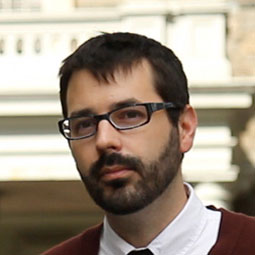
Drew was a seminary student at McAfee in Atlanta, Georgia after returning from service in the United States Army in Iraq. Fortnight published his essays on theology and Middle East politics. As a result, Fortnight drew a large audience from the Bible Belt. Since publishing with Fortnight, Drew was accepted to law school at the University of Washington. Since contributing to Fortnight Journal, Drew collaborated with fellow Fortnight alum Fortnightist 7 in Ramallah, Palestine. He also graduated with a Master of Divinity degree from Mercer University in Atlanta, GA. He writes, "In my last essay of Edition One, I wrote about how my education and faith were working together to challenge my worldview. This shifting of perspective inspired me to pursue a law degree. I’m now in my second year of law school at Seattle University School of Law. I’m focusing my J.D. on immigration and business law. I plan to help immigrant populations gain citizenship and support small businesses in their communities. I am grateful for the opportunity to be a part of Fortnight Journal; the people I met and the relationships formed with other contributors are a blessing and gift that I treasure. Fortnight Journal will continue to be a signpost of the millennial generation to the world." |
4/4

TESTING ANNOTATION FOR PURPOSES OF THE LEARNING FOR MOTHER RUSSIA




