


FORTNIGHT ISA MULTIMEDIA DOCUMENTARY PROJECT ON THE MILLENNIAL GENERATION: THE LAST GENERATION TO REMEMBER A TIME WITHOUT THE INTERNET. |

contributorsprofile
THE TRULY DISADVANTAGED

THE TRULY DISADVANTAGED
GILDED PARACHUTES ONLY SAVE ONE.
A CEO, EARL ASKS THAT MANAGERS OPERATE TO ENABLE LEADERS FROM SUPPORT RANKS.

read the essay now >>
GILDED PARACHUTES ONLY SAVE ONE.
A CEO, EARL ASKS THAT MANAGERS OPERATE TO ENABLE LEADERS FROM SUPPORT RANKS.
read the essay now >>


|
In 2003 two Fortune reporters, Bethany McLean and Peter Elkind, wrote a best-selling book titled Enron: The Smartest Guys in the Room. In this book, they both documented and commented upon the largest corporate corruption and fraud scandal in the United States of America --one which resulted in the failure of Enron in 2001. Enron had overstated its profits somewhere to the tune of one-hundred-and-one billion dollars. This resulted in a rocketing increase in its stock price, and a subsequent fall once investors realized the numbers were inflated. Helped in its deception by a then-prominent accounting firm, Arthur Anderson, Enron’s management had been able to inflate their balance sheets; a manipulation which only fueled the accounting scandal fire. As a President and Chief Executive Officer...I cannot help but wonder: What came of those ninety-seven thousand employees, and what became of their families? The Smartest Guys in the Room makes very little mention of the twenty-two thousand employees that Enron employed worldwide who became jobless by no fault of their own. Very soon after Enron failed, WorldCom, a U.S based telecommunications firm, attempted to go under |
chapter 11 bankruptcy protection due to their own internal corporate accounting fraud, and other management-level misrepresentation. Filed by WorldCom in July 2002, it was, at the time, the largest Chapter 11 protection action ever (only later to be outdone by the filings of Lehman Brothers and Washington Mutual in September of 2008). At the time that WorldCom failed, the company employed seventy-five thousand employees worldwide. Between the failure of Enron and WorldCom, ninety-seven thousand families were affected. As a President and Chief Executive Officer of a privately-held corporation that aspires to one day become public, I cannot help but wonder: What came of those ninety-seven thousand employees, and what became of their families? We know that it was reported by the Associated Press that the pensions and 401ks paid into by many of those unemployed former Enron workers were incorrectly calculated. This error left many with devalued retirement accounts. To compound the crisis, some employees had to repay overpayments to their retirement accounts while in a state of unemployment. Who was writing their narrative, and documenting their experience? |
1/6
|
As a student at Wesleyan University, I spent a significant amount of time studying marginalized groups, and how underrepresented groups within the United States made attempts to eke out a more humane existence—if not for themselves, then for their future kin. In order to fully understand the plight of underrepresented groups within our society, it is important to note that much of the discourse on race and ethnicity originates from positioning these groups in relation to a dominant group. So, for example, in order to discuss Brown v. Wade, there has to be some discussion on the fact that Blacks received a different level of education than Whites did—and, as a result, something needed to be done to reconcile this inconsistency. One key to corporate responsibility in 2010 would be reviving care and consideration for those who have committed themselves to the corporate cause, in hopes of fulfilling the American Dream. At a very basic level, the discussions surrounding opportunity in this country have been directly linked to access to resources. As I reflect on William Julius Wilson’s book, titled The Truly Disadvantaged—and see the corporate scandal and corruption that encircles our economic space—I realize that who constitutes the “truly |
disadvantaged” hasn’t changed too much from 1988. It was then that Wilson wrote the book, which focuses on issues of inner-city unemployment that had originally arisen in the 1960s. However, now there are more members of this “truly disadvantaged” group—and that group has become colorless. It would seem that the one key to corporate responsibility in 2010 would be reviving care and consideration for those who have committed themselves to the corporate cause, in hopes of fulfilling the American Dream, and for others who have been forced to leave their dreams essentially undreamt. Resources once allocated for America’s working class are shrinking. However, profits for corporations are increasing, and are doing so disproportionately to the global economic crisis. For those eager to criticize larger corporations, it may be unrealistic to suggest that their intent would be to have linear growth; however, their substantial profits should not come at the expense of above-adequate benefits for all of those who contribute to their success. For three months in 2010, the world watched as BP exemplified the notion that visions of profitability trump visions of safety, and of the value of human life. 11 lives were lost, but BP quietly returned to profitability just six months after the disastrous Deepwater Horizon oil spill. |
2/6
|
Have we always been a nation that valued corporate ingenuity above human life and human sacrifice? It was my understanding that what made America the great nation that it is, is the belief that sacrifice comes, but never without value and appreciation in turn from those who have benefited from workers’ sacrifices the most: Corporations. I was supposed to have lunch at times that varied from the lunch breaks of those that I managed. We were not to be on the same level... As a manager in the time before I founded my own business, I was taught to be disconnected from my staff. I wasn’t supposed to attend personal functions that they held outside of our office hours. I was supposed to have lunch at times that varied from the lunch breaks of those that I managed. We were not to be on the same level, and all management procedures had been established to make sure this fact was abundantly clear to me and to those that I managed. At first, I did what I was told. But I began to question this idea soon after. How could I effectively manage a team of people who I didn’t really know? How would I know what motivated them? How would I be able to judge not only |
whether or not they had similar views and aspirations to those of the firm, but whether those were aspirations that I could actually manage? It was as if very little time was spent ensuring that the goals of the individual worker would match the goals of the organization. These midlevel employees had no idea what the corporate objectives were, aside of monthly production goals. As a result, they were unaware of what their expectations should be, relative to their current positions. I made it a point to change this notion, and it was very difficult. Once I accepted that my position with the firm was valuable enough to take the risk, I started reaching out to find out what truly motivated the individuals that I managed. It started somewhat modestly, by one of my employees asking me to participate in a Fantasy Football League. This invitation provided me with a particular insight, not only into the individual that gave me the invitation, but insight into a segment of midlevel employees, most of whom were significantly older than me and held interesting prejudices about middle-management. They needed an advocate. My findings were unsurprising, given that these midlevel employees had no idea what the corporate objectives were, aside of monthly production |
3/6
|
goals. As a result, they were unaware of what their expectations should be, relative to their current positions. No one took the time to ask if the corporation could help them achieve some of their goals in return for the corporation reaching its goals. It seemed rather one-sided. This fall, I was invited to my first Annaprashan (rice-eating ceremony), which is a tradition in the Hindu faith which marks a child’s transition from consuming a liquid diet to a solid diet. This is a rite of passage, and a very important event for those of the Hindu faith. At first, I was a bit apprehensive about accepting, merely because in my current role, my employees typically spent a significant amount of time together outside of the office that I did not spend with them. And also, the free time I did have I enjoyed by either spending time with my son, or researching our competition. Unlike my previous employer, I am very in tune with the motivations of my team, and I try to offer myself as a resource to them in terms of advancing their careers with every opportunity that I have. I find that spending time with them allows me to understand not only the corporate pressures that they perceive, but also, who they are as parents, husbands, wives, friends and siblings—and the pressures they experience in those roles. What’s interesting is that it would |
seem that much of the apprehension around connecting with the employee springs from a fear of what may happen if you have to terminate them. That concern is legitimate; however, connecting with my team allows me to establish very clearly where they stand, so if they are terminated, it does not come as a surprise. Fortunately, I have not yet been confronted with the issue of terminating someone with whom I have established a close relationship. He had given me a birds-eye view into not only an important aspect of his life, but also an into the way in which his family views him, and the importance that he plays as a patriarch...How many of these events did Kenneth Lay, Jeffrey Skilling, Andrew Fastow and Bernard Ebbers attend? I got dressed, I wasn’t sure what to wear, but I went business casual. The event started in the evening, so I showed up soon after sunset. I walked into the restaurant, and there was a room filled with friends and family; some dressed in suit and tie, and others in their native Sari. It was beautiful—there were women adorned in such a way that they took me out of Connecticut for a moment. I met cousins, nephews, nieces, in-laws. Everyone that seemed to mean something to my employee, I was fortunate enough to meet. |
4/6
|
Certain stories that he had told I was suddenly able to place with a name and a face. I sat down in my assigned seat, in awe: Despite it being a clearly religious event, women were dancing in saris to Kanye West and Michael Jackson. But more important was the awe I felt for my employee. Because now, I understood him. I felt like he had given me a birds-eye view into not only an important aspect of his life, but also an into the way in which his family views him, and the importance that he plays as a patriarch. I couldn’t help but think: How many of these events did Kenneth Lay, Jeffrey Skilling, Andrew Fastow and Bernard Ebbers attend? Could they have committed the crimes that they did against these families if they knew the lives that were affected by their actions? Corporate responsibility begins at the top, with each executive and middle manager, and ends in the home of each employee. It is the responsibility of corporations in this country to limit the numbers of “truly disadvantaged,” and to empower those who contribute to the vast wealth that many corporations in this country make. The failure of Enron, WorldCom, Lehman Brothers and Washington Mutual, to name a few, magnifies the importance of moral responsibility at an executive level, but also magnifies the importance of understanding shared experiences |
at a very basic level. In doing so, one would hope to thwart the effects that unethical behavior has on the whole of society. We are participating in one of the worst economies this country has ever seen. Juxtapose this with the fact that we are living in one of the greatest, most technologically-advanced societies ever to exist. I believe it is therefore our generations responsibility, through corporate governance, to get our nation back by doing what our forefathers did before us: Accept responsibility for our existence on an individual level, and forge ahead. Henry Ford may have said it best: “A business that makes nothing but money is a poor business.” Generations before us sought to add value to their firms by valuing the intangible characteristics of their customers, their vendors and their employees. We must return to intrinsic value.  |
5/6
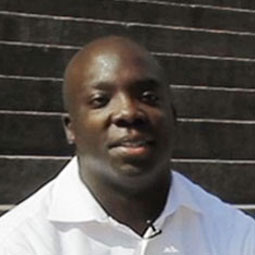
| Earl is the founder, President and CEO of Hybrid Insurance Group in Hartford, Connecticut specializing in commercial insurance. Since publishing with Fortnight, Earl's business has continued to grow as his essays are highly read in the small business community. Earl now partakes in business conferences across the country. |
6/6




