



FORTNIGHT ISA MULTIMEDIA DOCUMENTARY PROJECT ON THE MILLENNIAL GENERATION: THE LAST GENERATION TO REMEMBER A TIME WITHOUT THE INTERNET. |

contributorsprofile
A PAPER LEXICON

A PAPER LEXICON
CENTURIES OF CRAFT SPELL SPECIAL TERMS.
AKEMI REVIEWS THE LANGUAGE OF PAPERMAKING.
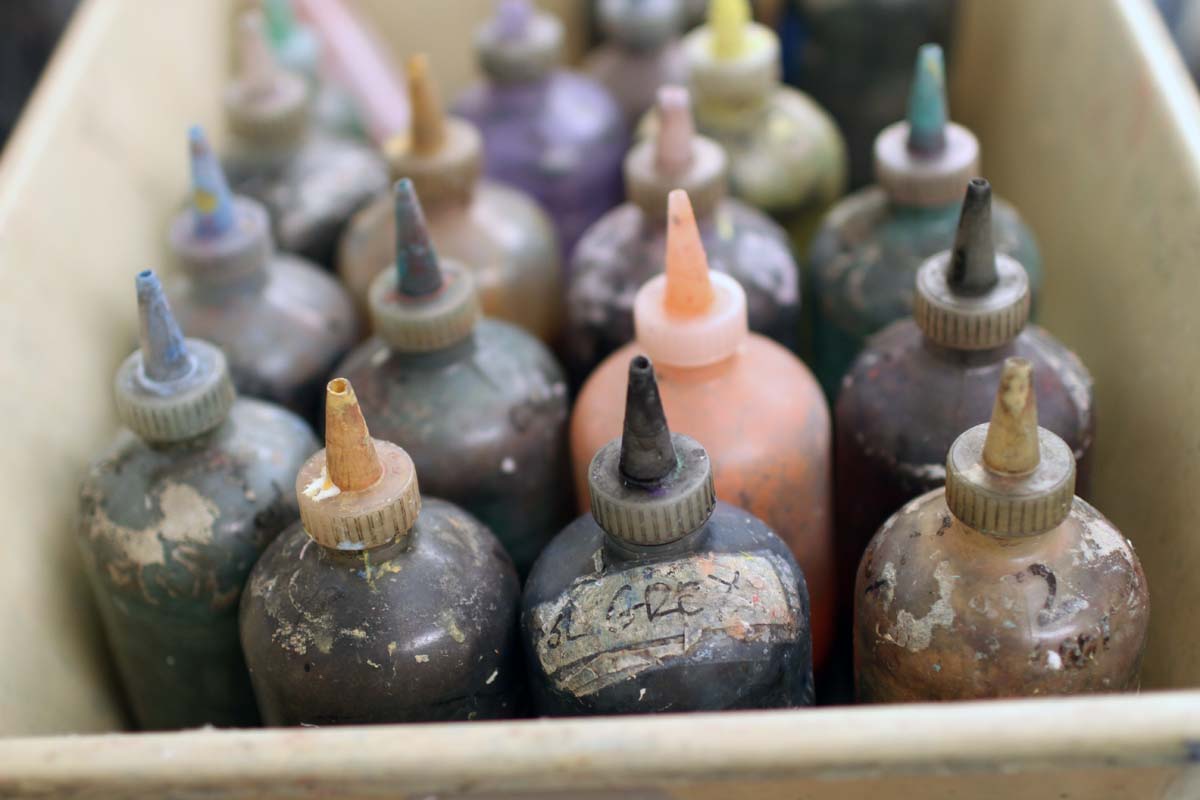
Read the lexicon now >>
CENTURIES OF CRAFT SPELL SPECIAL TERMS.
AKEMI REVIEWS THE LANGUAGE OF PAPERMAKING.
Read the lexicon now >>


 Ass - Also known as a “horn” or “asp”, a wooden strut on which a mould can drain.*** In traditional British mills, the ass was located near the coucher at the end of the bridge opposite the vatman. Depending on the size mould I use, my “ass” can be anything from an extra bucket to simply myself tilting the mould. Beating - The physical or mechanical process that separates fibers, softening and fibrillating them to a usable pulp state.*  A Brooklyn-made Beater. Cellulose - A molecular glucose chain of up to 5,000 units and the most plentiful carbohydrate |
produced by plants. Cotton and linen fibers contain the most generous amounts, which constitutes ideal paper substance.* Charge - Add pulp to a vat to replenish vat stock: “charge” a vat. Couching - The act of transferring the wet layer of pulp from the mould surface to the felt.* French “coucher,“ meaning to lay down, as in “Voulez-vous coucher avec moi”. Deckle - The wood frame that fits on the mould to confine the pulp to its shape when dipped in a vat of pulp.* Deckle edges - The natural, feathery edges created by the deckle on a sheet of paper.* Hydrogen bonding - The electrostatic attraction between hydrogen atoms in water helps to bring fibers together as the sheet is formed. As the final molecules of water leave the sheet during drying, hydrogen bonds form between the fibers. Imperial - 22” x 30,” a common paper size in traditional European mills. This is the largest size I can form by myself. |
1/4
Hog - The act of stirring up the slurry in the vat immediately prior to forming a sheet. The vatman spreads his fingers on both hands and shakes them beneath the surface of the slurry to evenly distribute the fibers that tend to settle. The term comes from a mechanized device called an “agitator” or “hog” used in British mills from 1800 on. The hog or paddle-wheel “keeps the macerated stock in the vat in constant movement and prevents it from settling to the bottom of the vat.” (as observed by a French papermaker, writing about his visit to the Matthias Koops paper mills in Westminister, England in 1803.)** Hogging the vat. Kiss-off - When a sheet of paper which is still on the mould is unsatisfactory, the mould surface is slapped onto the water surface of the vat, causing the pulp to fall back into the vat. |
Mould - The screen and wooden frame upon which paper is formed and drained.* In the Western tradition, the screen is either “wove” (the wires are a woven mesh) or “laid” (the wires lie side by side). Under the Mould. ...Continued on the next page... |
2/4
|
Pellon - Polyester textile interfacing used in place of felts in present day mills. My mother, an avid quilter familiar with this material for its intended purpose, refuses to use the term “Pellon” as it is a brand name. Iʼve never known a papermaker who didnʼt refer to the material as “Pellon.”
|
Post - A pile of wet sheets and felts.* Traditionally in European mills, a post consisted of 144 wet sheets each separated from the next by a piece of felt somewhat larger than the size of the paper. Ream - Traditionally made up of 20 “quires”, or 480 sheets. This term comes from the Arabic word rizmah, meaning a bundle, especially of paper. The term was probably introduced into Spain along with the craft of papermaking in the twelfth century, where the word became rezma or resma. The Middle English term was reme; Old French rayme; French rame. The present day ream consists of 500 sheets.** Rice paper - A misnomer for Asian papers. The actual “rice paper” is a paperlike substance sliced in thin sheets from the pith of the Aracia papyrifera.* Retree - Also known as “second”, consists of 'finished' sheets with slight specks and minor defects. *** “Skinny dip” - When a mould is dipped in a very thin vat of pulp and picks up an almost imperceptible layer of pulp.* I did not know this term until reading through Walter Hamadyʼs Glossary of Terms, and was struck by its |
3/4
|
suggestiveness, especially since I pride myself on my ability to form and couch such sheets. “Vatmanʼs tears” - Imperfections within sheets of paper caused by drips of water onto the delicate surface of a wet sheet resulting in transparent spots in the finished paper. *** * Definitions passed down to me from my boss, Ruth Lingen, who loaned me her “Glossary of Terms for Hand Papermaking” from her graduate studies with Paper-Print-Book extraordinaire, Walter Hamady.** From Papermaking: The History and Technique of an Ancient Craft by Dard Hunter *** From Paper Making by Hand in 1967 by J. Barcham Greene |
4/4

Papermaking Lexicon: One trend in philosophy of language in the last fifty years tends toward the notion that words are not confined by the physical objects or processes they describe—and that definitions are generally flexible and fluctuating, essentially dependent on the point of reference of the individual using them. While generally abstract concepts (such as emotional states) are subject to a variety of definitions, this idea of fluid meaning raises concerns for technical vocabularies. Papermaking, in many ways an art, nevertheless involves precise methods of creation and requires a specific vocabulary.
The importance of a standardized lexicons across disciplines has historically been a preoccupation of artists and scientists alike. When Swedish naturalist Carolus Linnaeus introduced the binomial nomenclature system into the study of the natural world in the 1750s, it revolutionized the way that scientists and naturalists communicated. However, lay people still continued using vernacular names for plants and animals, fostering a wide variation in terminology. For the most part, the lexicon of papermaking is standardized across numerous glossaries and dictionaries—but unlike the system of binomial nomenclature, its terms derive more from vernacular usage. Whereas “ream” has nearly the same meaning for most papermakers, “jazz hands under water” is a charmingly localized term.
Sources: Haque, Usman. “Distributing Concepts: Lexicons of Interactive Art and Architecture”. Architectural Design 77.4 (2007): 24-31. Web. 19 October 2011. Henning Bergenholtz and Sven Tarp. Manual of Specialized
Lexicography: The Preparation of Specialized Dictionaries. John Benjamins Publishing Company, 1995.
Thomas, Keith. “Man and the Natural World”. Oxford University Press: New York, 1983. http://www.britannica.com/EBchecked/topic/417353/nomenclature




