


FORTNIGHT ISA MULTIMEDIA DOCUMENTARY PROJECT ON THE MILLENNIAL GENERATION: THE LAST GENERATION TO REMEMBER A TIME WITHOUT THE INTERNET. |

contributorsprofile
MISTAKE PAPER II
PAPERMAKERS GAIN INSIGHT BY MISHAP.
AKEMI AGAIN NARRATES PAPER ART:
WARPED PULP & RENEGADE FIBER.
Watch the narrated slideshow now >>
PAPERMAKERS GAIN INSIGHT BY MISHAP.
AKEMI AGAIN NARRATES PAPER ART:
WARPED PULP & RENEGADE FIBER.
Watch the narrated slideshow now >>


|
MISTAKE PAPER II


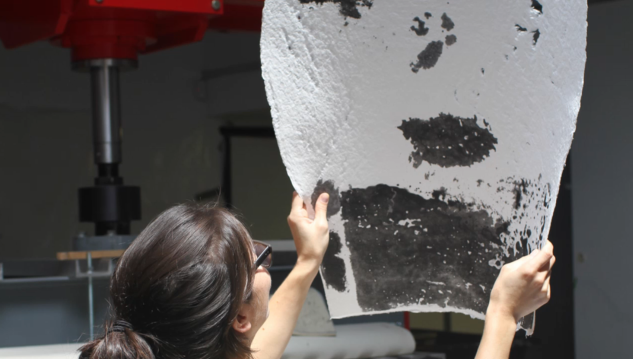
Young papermaker Akemi shows Fortnight the experimental value of mistakes. Shot in the mill, this is the second of a two-part documentation.
1 of 1


Akemi demonstrates mistakes in processing abacá (a.k.a. manila hemp), a versatile pulp made of banana leaf fibers native to the Philippines.
Just as the musk ox produces no musk, manila hemp is entirely unrelated to actual hemp. While the names "manila folder" and "manila envelope" now denote beige-paper document storage of any make, both items originally were made from this hearty fiber. Abacá is valued for its exceptional strength and flexibility. In papermaking, abacá is often processed into specialty paper for use in writing paper, cigarette filters, tea bags and currency. Abacá achieved importance as a source of cordage fiber in the 19th century: Its buoyancy and resistance to salt water made abacá highly desirable for marine use. In 1925, the Dutch (then colonizers of the Dutch East Indies) began cultivating abacá in Sumatra, western Indonesia. In 1929 the U.S. Department of Agriculture established plantings in Central America. The United States' trade cut-off from the Phillippines during World War II meant that abacá became a domestic cultivation effort until war's end. |



