




FORTNIGHT ISA MULTIMEDIA DOCUMENTARY PROJECT ON THE MILLENNIAL GENERATION: THE LAST GENERATION TO REMEMBER A TIME WITHOUT THE INTERNET. |

contributorsprofile
MISTAKE PAPER
IN HANDICRAFT, MISTAKES MAKE
SWIFT LESSONS. AKEMI NARRATES PAPER ART:
ITS WARPS, TEARS AND SCRAPES.
View the slideshow now >>
IN HANDICRAFT, MISTAKES MAKE
SWIFT LESSONS. AKEMI NARRATES PAPER ART:
ITS WARPS, TEARS AND SCRAPES.
View the slideshow now >>

|
MISTAKE PAPER


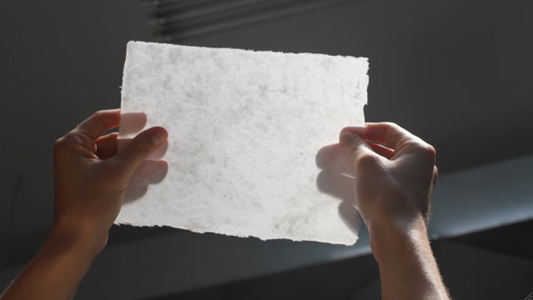
Young papermaker Akemi shows Fortnight the experimental value of mistakes. Shot in the mill, this is first of a two-part documentation.
1 of 1


Papermaking can be traced to approximately 105 AD. In that year, Ts'ai Lun, an official attached to the Imperial court of China, created a sheet of paper using mulberry, fishnets, old rags and hemp waste. The process of papermaking made slow progress westward. Paper reached Samarkand, Uzbekistan in 751 AD. In 793 AD, the first paper was made in Baghdad. The wide spread of the Islamic cultural world brought papermaking to the edges of Europe. Paper mills flowered in Spain, Italy, France and Germany in the 14th century. The invention of printing in the 1450s created a rising demand for paper. Through the 18th century, papermaking depended on processing linen and cotton rags for raw materials. In the early 19th century, a process using wood pulp and other vegetable pulps was developed, allowing papermaking to reach its modern process. The Fourdrinier Machine, which could produce a continuous roll of paper, heralded the end of individual sheet production process. Akemi Martin practices the papermaking techniques of the European papermills and masters. Her craft process is based upon the individual sheet method, and she regularly employs the use of modern cotton and linen rag, as well as more exotic fibers. Such a delicate process, as demonstrated in the photo essay, can be rife with mistakes. |



