


FORTNIGHT ISA MULTIMEDIA DOCUMENTARY PROJECT ON THE MILLENNIAL GENERATION: THE LAST GENERATION TO REMEMBER A TIME WITHOUT THE INTERNET. |

contributorsprofile
through present peten

through present peten
CONQUISTADORS, REVOLUTIONS AND NARCOS THROUGH TODAY.
NICHOLAS CONTINUES THE HISTORY OF THE PETEN.
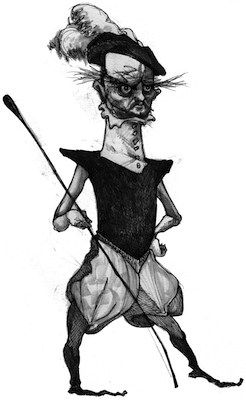
read the essay now >>
CONQUISTADORS, REVOLUTIONS AND NARCOS THROUGH TODAY.
NICHOLAS CONTINUES THE HISTORY OF THE PETEN.
read the essay now >>

|
The Postclassic period and the Spanish Conquest During the Postclassic period (A.D. 1000-1521), the landscape of Petén was transformed once again. Farmland was quickly reclaimed by the jungle, and within a few generations must have appeared much as it had centuries before. But Petén was not completely empty of human inhabitants: new kingdoms appeared around the Petén Lakes, south of the old political center of Tikal. Instead of being autochthonous, local developments, these new states were founded by migrants from the north. The settlers spoke Yucatecan Mayan languages, not the Ch’olan Mayan language of Petén’s Preclassic and Classic inhabitants. Unlike the holy lords of the Classic era, the Postclassic kings were not in the habit of recording their deeds on stone monuments for public display, relying instead on paper books. As a result, most of what is known about the political history of Petén during the Postclassic era comes from accounts written down during and after the Conquest. One group, the Itzaj Maya, traced their ancestry to the Yucatec city-state of Chichén Itzá, which had dominated the northern Yucatán Peninsula from the ninth century to about 1100. The Itzaj established their capital on an island called Noj Peten (“Great Island”) in the southwestern part of |
Lake Petén Itzá—nowadays the site of the departmental capital, Flores. The Itzaj state was the last indigenous kingdom to fall in the Spanish Conquest of Mesoamerica, a hard-fought, bitterly resisted process that took nearly two hundred years 1. Hernán Cortés and a few hundred Spanish soldiers, allied with much larger Tlaxcalan and Totonac armies, had brought down the Mexica-Tenochca empire of Central Mexico in 1521. Smallpox and influenza preceded the conquistadores, killing off the majority of the population in affected areas. Cortés also had help from Old World diseases like smallpox and influenza, to which native peoples had no immunological resistance. These diseases often preceded the conquistadores, killing off the majority of the population in affected areas. With Mexico incorporated into the Kingdom of New Spain, the Spanish turned their attentions south, to the rumored kingdom of the Inka; north, to the imaginary cities of gold supposed to exist in the American Southwest; and east, toward Maya country.One of Cortés’ lieutenants, Pedro de Alvarado, led a force of Spaniards, Cholulans, and Tlaxcalans |

1/9
|
into Highland Guatemala in 1523. Unlike Mexico, Guatemala—Cuauhtemallan, “where there are many trees,” in the Nahuatl language of Alvarado’s Tlaxcalan auxiliaries—was divided among several kingdoms of varying power. Seeking to duplicate Cortés’ alliance with the Tlaxcalan state against the Mexica, Alvarado convinced one of them, the Kaqchikel kingdom of Iximche’, to join him in conquering the others. Yet Alvarado’s cruelty and rapaciousness, exceptional even among the conquistadores, soon alienated the Kaqchikel, who rebelled against him in 1524. The conquest of Highland Guatemala was nominally completed only in 1530, although Spanish control over many parts of the Highlands remained tenuous for decades thereafter. The Yucatán Peninsula took even longer to subdue. Another member of Cortés’ expedition, Francisco de Montejo, received the nominal submission of several Yucatec leaders in 1527, but a protracted guerilla campaign forced the Spanish to withdraw in 1535. Montejo’s son, also named Francisco, invaded western Yucatán in 1540. In 1542, he formed an alliance with the Xiuj, a powerful noble house, and established a capital in the town of T’ho’—to which he assigned the more Spanish-friendly name of Mérida. Together with the Xiuj, Montejo el mozo (“the youth”) fought his way east |
across the peninsula, defeating the last independent Yucatec states in 1546. By the mid-sixteenth century, Petén was thus caught between two Spanish-controlled territories: Guatemala to the south and Yucatán to the north. The Itzaj were well aware of the conquerors’ intentions towards their kingdom: when Cortés himself had passed by Noj Peten on an expedition to Honduras in 1525, the Itzaj king had formally accepted Spanish rule and promised to convert to Christianity, but he either changed his mind or was unable to persuade the other Itzaj lords to go along with his plan. Itzaj resistance must have been strengthened by the experience of the Kowoj, their neighbors and enemies to the north, who had fled south from northern Yucatán during the 1530s to escape Spanish oppression. Their numbers augmented by refugees from Spanish-controlled territories, the Itzaj raided Spanish and conquered Maya settlements in what is now Belize, killing or driving off the few Catholic missionaries who attempted to convert them. In that way they preserved their independence until the end of the seventeenth century. In 1693, a young aristocrat named Martín Ursúa y Arizmendi, then living in Mérida and next in line |
2/9
|
to be the governor of Yucatán, received permission from the imperial Council of the Indies to construct a road connecting Yucatán with Guatemala. Ursúa’s expedition would proceed southward with laborers and soldiers, while other groups would start in Guatemala and head north. They were meant to meet in the middle, but in fact the leaders of the different entradas each wanted to be the first to reach the Itzaj, conquer them, and “reduce” them into colonial towns. They set out two years later, but the Yucatec expedition was turned back by hostile Kejach Maya somewhere near the present-day Campeche-Petén border. Two Guatemalan expeditions reached the area near Lake Petén Itzá, but encountering strong Itzaj resistance, they turned back as well. Nevertheless, the Itzaj ruler Kan Ek’ sent his nephew, Aj Chan, to Mérida to negotiate the kingdom’s eventual conversion to Christianity and annexation to the Spanish empire. On Ursúa’s instructions, two Franciscan friars, Antonio Pérez de San Román and Andrés de Avendaño, and a lay missionary, Alonso de Vargas, undertook their own, unarmed entrada that same year. They enjoyed some success evangelizing in Kowoj settlements, and spent time at Noj Peten, learning the writing system and prophecies of the Itzaj. |
There, Avendaño tried to use those prophecies to convince Kan Ek’ that the time to surrender was at hand. Yet other Itzaj leaders saw any talk of surrender as treason, and the missionaries were forced to flee in 1696. Enraged, Ursúa personally led an attack on the Itzaj capital, overcoming the defenders and occupying Noj Peten, which they renamed Nuestra Señora de los Remedios y San Pablo. The “conquest” quickly turned into a debacle: the Itzaj state was broken, but the Spanish troops were unable to effectively administer the region, and an influenza epidemic struck down Spaniards and Itzaj alike. Peten since the Conquest In the next decades, Franciscan friars did manage to missionize Kowoj and Itzaj refugees, despite an abortive rebellion in 1704. The conquered territory was administered from Los Remedios and governed, mainly in name, from Guatemala. Spanish authorities established new villages in the lake district and elsewhere in Petén, rounding up Maya living in the forests and compelling them to settle there. Resistance to such policies, and the demographic disaster of the conquest itself, motivated the Spanish to bring in settlers from elsewhere: Spanish colonists, mestizos and Maya from Belize and Yucatán, and African refugees fleeing slavery |
3/9
|
in English colonies in the Caribbean. Nevertheless, colonial Petén remained a sparsely populated backwater. Its economy was mainly oriented towards subsistence, not export, although limited ranching operations sold cattle to Yucatán and horses to highland Guatemala. In1821, the Mexican general Agustín de Itúrbide changed his allegiance and declared Mexico an independent state. In 1821, the Mexican general Agustín de Itúrbide , a leader in the royalist army that had been fighting pro-independence forces since 1810, changed his allegiance and declared Mexico an independent state. Later that year, the six provinces making up the Captaincy-General of Guatemala—Chiapas, Costa Rica, Guatemala, Honduras, and El Salvador—followed suit and joined Mexico, which was soon proclaimed an empire with Itúrbide as emperor. In 1823, when a young general named Antonio López de Santa Ana overthew Emperor Agustín de Itúrbide and declared Mexico a republic, all the provinces except Chiapas declared independence again and organized themselves into the Federal Republic of Central America 2.The federation was plagued from the beginning by infighting among the elite class. In Guatemala, the Liberal faction, which favored international |
investment and capitalist development, and the Conservatives, who supported the traditional power of the Catholic Church, took turns during the nineteenth and early twentieth centuries overthrowing one another’s dictators and installing their own. One Guatemalan Liberal politician, Cirilio Flores, was killed by a mob in 1826, and Los Remedios was renamed Flores in his honor. At last, the Federal Republic disintegrated in civil war between 1838 and 1841. In the 1870s and 1880s, the Liberal autocrat Justo Rufino Barrios oversaw major improvements to Guatemala’s transportation and communication infrastructure. Yet Petén remained undeveloped, in large part because the country’s emerging cash crop—coffee—grew better at higher elevations. Repressive labor conditions on coffee plantations in Alta Verapaz, just south of Petén, drove increasing numbers of Q’eqchi’ Maya north in search of freedom and opportunity 3. Other refugees came from the north, fleeing the violence of the Caste War, a conflict between the Yucatec Maya and non-Maya populations of eastern Yucatán that lasted from 1847 to 1901. Not long afterwards, the Mexican Revolution of 1910-1917 displaced another wave of migrants, many of them living in southern Campeche and northern Petén, who moved south to the central part of the department. |
4/9
|
In the 1890s, Petén found a “cash crop” of its own in the unlikely form of chicle, the latex resin of jungle trees in the genus Manilkara. Used as the base for chewing gum, chicle was soon in high demand by United States companies, which used new strategies of mass advertising to promote gum as a healthful alternative to chewing tobacco. The World Wars further increased demand, as chewing gum formed part of the rations issued to soldiers. But chicle trees can only be tapped for their latex once every five years, and they refuse to grow in monocultural orchards. As a result, the latex has to be collected by groups of contractors—chicleros—who range through the jungle in search of good trees. While chicle tapping made the forests of Petén economically important to the Guatemalan economy, it also changed the composition of those forests: even skilled chicleros run the risk of killing a tree every time they tap it, leading over time to vast areas of the jungle depleted of mature chicle trees. By the late 1970s, it was clear that chicle would no longer dominate Petén’s economy. United States interest in another crop, bananas, had catastrophic consequences for Guatemala. By the early 1950s, the United Fruit Company owned 42% of the country’s arable land, sold or given to it by the military dictatorships of the early twentieth |
century. Some of that land was used for banana plantations, but most of it was uncultivated and held as investments. In 1944, a group of students and military officers overthrew the dictator Jorge Ubico y Castañeda and held Guatemala’s first democratic elections. Juan José Arévalo Bermejo, the newly elected president, implemented some labor reforms and expanded the electoral franchise, earning the enmity of the United Fruit Company and the Guatemalan elite. The winner of the 1950 presidential election, Jacobo Árbenz Guzmán, tried to carry Arévalo’s reforms further. With the goal of changing Guatemala’s “predominantly feudal economy into a modern capitalist” one, he set up a program to expropriate unused agricultural land from large estates, distribute it to families who would farm it, and compensate the previous landholders. Eisenhower administration decided to overthrow Arbenz. Under pressure from United Fruit, the Eisenhower administration decided to overthrow Árbenz. In 1954, while the U. S. Navy blockaded Guatemala’s coasts, a small, CIA-backed army led by Colonel Carlos Castillo Armas invaded Guatemala from |
5/9
|
El Salvador and Honduras 4. Realizing that to defeat Castillo’s forces would only invite overt U. S. intervention, Árbenz resigned and went into exile in Mexico. Castillo was installed as president and ruled as a dictator until his assassination in 1957, reversing his predecessors’ reforms and establishing Latin America’s first twentieth-century death squad. Over the next four decades, a succession of military juntas and nominally civilian governments fought a civil war against left-wing rebel groups, who maintained bases in western Petén and derived much of their support from the indigenous poor. The whole war was characterized by large-scale human rights violations—overwhelmingly, though not exclusively, committed by the government against the Maya population—but some of the worst massacres occurred in the 1970s and 1980s under the regimes of Fernando Romeo Lucas García and General José Efraín Ríos Montt. To escape the violence, Q’eqchi’ Maya continued to move to Petén in increasing numbers during the latter part of the war. The Q’eqchi’ migration was assisted by a government policy, in place since the 1960s, whereby families could buy land in Petén cheaply if they were willing to cultivate it. Guatemala’s civil war ended in 1996 with an accord between the government and the rebels. |
Today, the country is a multiparty democracy with a growing economy and substantial protections—on paper, at least—for indigenous rights. Infrastructural development and sociopolitical changes have brought new economic opportunities and problems to Petén. Cattle ranching has become a major industry in the department, leading to the clearance of vast tracts of forest for pasture. Ecotourism and archaeological tourism focused on Maya sites like Tikal and El Mirador are themselves booming businesses, but significant tension exists among the tourism industry, ranching, and small farmers. It turns out that land in Petén is finite after all, and protecting its rain forests and archaeological sites means setting aside enormous areas of land where farming and ranching are off limits, even as the department’s population continues to grow. Ecotourism on Maya sites like Tikal and El Mirador are themselves booming businesses. The most serious problem facing Petén today, however, is narcotics trafficking. The Zetas cartel has established a major presence in the department, taking advantage of Petén’s remoteness and weak governmental institutions to move cocaine north from South America into Mexico and then the United States. |
6/9
|
Founded by Mexican Army anti-drug commandos who switched sides to work for the Gulf Cartel, then broke away to establish their own organization, the Zetas have recently begun recruiting former members of the Guatemalan special forces. They have openly challenged the state’s control over its territory, leaving severed heads on the steps of the Congress and, in a highly publicized incident, decapitating dozens of Petenero farmhands with a chainsaw when their employer offended the Zetas. The Zetas notoriously maintain airstrips, labs, and even paramilitary training camps in the jungles of Petén, often establishing quasi-feudal power over migrant farmers who settle illegally in restricted biospheres. Meanwhile, lower-level street gangs, or maras, have infested the suburbs of Flores. In the 2011 general elections, a right-wing former general, Otto Pérez Molina, won the presidency by promising to crack down on organized crime. (His rival, Dr. Manuel Baldizón Méndez, came in a close second in the runoff election, proposing to televise executions and lead Guatemala to victory in the World Cup.) Pérez is far from progressive—the former head of military intelligence, he has been implicated in the torture and secret murder of guerilleros during the early 1990s 5 —but since taking office he has seemed to reconsider his plans to take a “strong hand” against the cartel. |
He recently made waves by suggesting that Guatemala might do best to legalize drug possession and trafficking, a proposal met with interest by a few other Latin American leaders and with some irritation by the Obama administration.6 While legalization might be the best way to break the Zetas’ economic power without igniting a new civil war, it would require the United States to rethink its own drug policy: after all, the cartels make most of their money by selling to the U.S., not Guatemala. Yet a shift in U.S. policy is likely off the table for at least a generation, so Petén’s security and stability in the coming decades are increasingly uncertain. For all that, my experiences in Petén have been positive so far (except for the time my tent blew over in a late-night thunderstorm), and I plan to keep working there as long as I can. My first trip to the department was in 2009, when I started working with the El Zotz Archaeological Project . The site of El Zotz is in a remote part of a protected biotope, a four-hour truck ride from Flores when the roads are dry. Even so, camp life was downright luxurious by the standards of Maya archaeology. I worked first at an Early Classic pyramid, then, in 2010 and 2011, at a Late Classic palace. The history of the department is reflected in the lives of the local men and women who did most of the digging. Many of them identify |
7/9
themselves as Q’eqchi’ or are married to Q’eqchi’ spouses, and several had fought in the civil war. Many are expert excavators who prefer to work for archaeological projects when possible and take a keen interest in their country’s ancient history. All of them were welcoming and solicitous of the welfare of the pallid gringo who showed up at the site in 2009 sporting a cowboy hat and a broken command of Spanish. From them, I picked up Spanish with a Petenero accent, a taste for corn tortillas warmed up in campfire coals, and tremendous respect for the people of Petén.7 
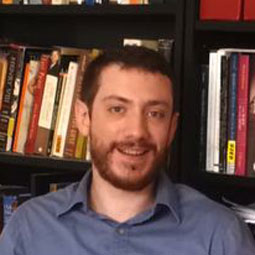
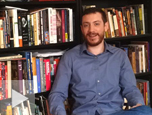
*** Nicholas Carter was born in Houston, Texas. He received his BA in philosophy from Our Lady of the Lake University in San Antonio. He then attended the University of Texas in Austin where he earned an MA in Latin American Studies, specializing in the study of the Mayan civilization. There he studied with Dr. David Stuart. Currently, he is a PhD candidate in archaeology at Brown University, where he studies under Dr. Stephen Houston. |
1. Jones, Grant D. The Conquest of the Last Maya Kingdom. Stanford University Press, Stanford. 2. Foster, Lynn V. A Brief History of Central America. Facts on File, New York. 3. Schwartz, Norman B. Forest Society: A Social History of Petén, Guatemala. University of Pennsylvania Press, Philadelphia. 4. Schlesinger, Stephen, Stephen Kinzer, John H. Coatsworth, and Richard A. Nuccio. Bitter Fruit: The Story of the American Coup in Guatemala, Revised and Expanded. David Rockefeller Center for Latin American Studies, Harvard University, Cambridge, MA. 5. Bird, Annie, Jennifer K. Harbury, and Kelsey Alford-Jones. Allegation letter to Juan Méndez, Office of the High Commissioner of Human Rights, United Nations. Retrieved from the Guatemala Human Rights Commission/USA. http://ghrc-usa.org/Resources/2011/War_Crimes/UN_letter_PerezMolina.htm 6. Archibold, Randal C. U.S. Remains Opposed to Drug Legalization, Biden Tells Region. The New York Times, March 5, 2012. http://www.nytimes.com/2012/03/06/world/americas/us-remains-against-drug-legalization-in-mexico-biden-says.html |
8/9
| 7. Grandia, Liza. 2012. Enclosed: Conservation, Cattle, and Commerce among the Q'eqchi' Maya Lowlanders. University of Washington Press. |
9/9




