


FORTNIGHT ISA MULTIMEDIA DOCUMENTARY PROJECT ON THE MILLENNIAL GENERATION: THE LAST GENERATION TO REMEMBER A TIME WITHOUT THE INTERNET. |

contributorsprofile
MUSK OX FARM INTERVIEWS

MUSK OX FARM INTERVIEWS
HERDERS MAKE DOMESTICATION A VOCATION.
GUNNAR'S COLLEAGUES RECOUNT
ANGRY BULLS & ALASKAN PASTURES.
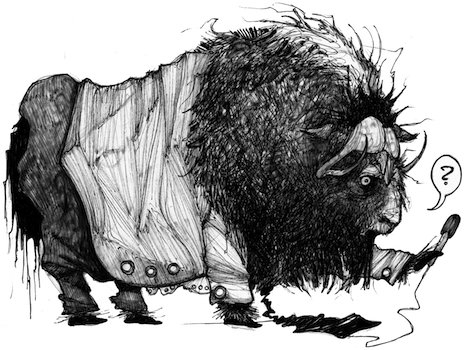
read the essay now >>
HERDERS MAKE DOMESTICATION A VOCATION.
GUNNAR'S COLLEAGUES RECOUNT
ANGRY BULLS & ALASKAN PASTURES.
read the essay now >>


|
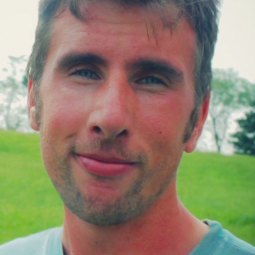
Gunnar Babcock, 26, is a young musk ox herder. He recently sat down to interview four individuals who work at the Musk Ox Farm in Palmer, Alaska: a young herder, an established farm manager, the nonprofit's director—and even the daughter of founding anthropologist, John Teal. Gunnar Babcock: What is your vocation? Nate Hamelink: I started about 13 years ago selling animals to the Hmong out in the Mat-Su valley. It’s just continued to grow. I sell to about 2000 to 4000 people in Alaska, mostly all to people from outside the US. I sell to about 20 different nationalities. I don’t raise everything, but I buy around the state. I go through 80-100 cattle, 50-70 goats, 1200-1800 pigs. All off about 5 acres. I have pigs, cows, goats, some chickens. I’ve had bison, yak, elk and bunch of different breeds of cattle. I’ll have them through part of the winter and then I start again in the spring. I do some of the butchering, but a lot of the people I sell to want to butcher themselves in accord with their culture, so I give ‘em the space to do it. Ptarmigan Teal: Landscaping, currently. I’ve done the white collar thing, the blue collar thing, now, the green collar thing. Krista Berthold: Herder. You know what my background is: I have a degree in biology, with |
intentions of being a vet, working with large animals. I’m from California. I’ve done a lot of volunteering with animals in a lot of different settings. I think I’ve fallen for Alaska though. I’m living up here full time now, even though I left the farm. Mark Austin: Executive Director, Musk Ox Development Corporation. GB: What is it like to be charged by a bull? NH: Ha... Well, it’s a rush, that’s for sure. You don’t need to do drugs when you’re workin’ with these guys. I’ve had some experiences. There’s nothing like a musk ox bull in rut. And, you can tell a lot about the people you work with when you get charged, you know; who’s gonna stick by your side. GB: What’s needed in the herd? NH: They need some new breeding stock. The ones that have always had weak calves, the ones with health problems, if they’re not gonna eat them, set out to pasture. They got moms throwing weak calves, continuing problems. If it’s a weak animal, it’s gotta go. Some new cows, really important, and some new bulls would be good. That’s where other farms are so important. And, a new location. They need more brush, more browse. Put the new |
1/6
|
breeding stock out there. They talked about it a couple times in the past, but nothing ever happened. GB: What has been your involvement with the project? NH: Herd Manager for the farm on and off for about the last ten years. Hired on back in, believe it was '92. Then, in time, worked up to the Farm Manager. Been involved in the herd health even when I wasn’t officially workin’ for the place. PT: Well, I was born into it. I was born the first year the musk oxen were brought to our Vermont farm. I spent years keeping people away; they would come down the dirt roads trying to find the place. There was a lot of press at the time. I went on the Nunivak expedition; all the Teal kids went. We all had jobs: cutting willows, rounding up calves, helping bottle-feed them. Then, I really didn’t have much to do with it until many, many years later when my brother Lans left, at which point I helped find a replacement. Then, again, I didn’t have much to do with it until I become re-involved as a friend, what it must have been about a year or two ago, but not in an official capacity. KB: I started off as an intern, six months I believe, which resulted in a job caring for the herd. I worked as a herder for about a year or two after that. I was seeing the animals prosper. |
MA: In 1995 I met the son of the founder and through that friendship and many, many hours on the farm doing everything from herding animals, fixing fence, combing and helping with events. Then, after Lansings’ departure, in about 2001, I opened the doors in spring. Then I took off and sailed around the world. Then, when did I come back up to the farm? Oh, last year, came back up found out that they didn’t have an ED and looked at where I was in my life, with my little daughter and wife, and decided to come up from where I was in New Mexico. The board opted to hire me on, Ptarmigan Teal put up some money to keep things going and I started around May of 2010 as ED and have been here since. GB: Was, or has the experience been meaningful to you? NH: Wouldn’t trade it for the world. The animals are incredible to work with. Enjoyed every bit of it. Good learning experience. Wouldn’t discourage anybody from working with the animals. They’re fun animals to work with. Some good people along the way, a lot of bad ones, but there just isn’t anything like a musk ox out there. PT: That’s an interesting question. Grew up with this crowd who had a vision of sustainable agriculture. Seriously, it’s part of who I am. I grew up around the animals. This doesn’t mean I can't |
2/6
|
look at it with critical eye. I think there is huge room from change. It has meaning just cause it’s been such a part of my life. It’s what led me to be a rural economist and teach, for my white collar trades. The whole idea of domestication from a biological process, I don’t really have a real understanding of it. KB: Yes and no. Yeah, it was meaningful being able to work with animals most people never get to see. It was also good working for a project that could do some good. Mostly, though I was there for the animals. Definitely not to meet people. When I’d go out every morning, Jet would come running when I’d call him. Seeing some of the behavior change in younger animals really shows what is possible. MA: I love the project, I love the mission, I love the animals and I love the potential. You know, the more you become involved, the more you love it. GB: How do you understand the goals of the project? NH: When I first started, they were trying to domesticate the animals to start satellite farms. This was for the villages, with the knitting and everything. Then things got mixed up at some point. They were never into selling any breeding stock or anything. But, making qiviut is the point. |
PT: I think that it's pretty well stated in the mission statement; I think I wrote it. If the current statement has a difference stance than it did fifty years ago; then it was fifty years ahead of its time. Some aspects of the project weren’t ever concepts in most people’s thinking back then, hence the contemporary language when we describe it today. As an aside, I am fascinated by biology; whether animals or plants. It has been a major focus of the project. KB: Well, I believe the original purpose was to provide an income in rural Alaska. Now, maybe, it's just to help the farm survive. When I started my internship, I thought it was to help communities in need. Now, I think it is just trying to stay alive. But, it’s about the people in the villages, ultimately. It’s easy to lose sight of that on the farm though. MA: Domesticate musk oxen to create positive, sustainable economic opportunity for rural Alaskans. GB: Has it achieved these goals? Can it achieve these goals? NH: They haven’t achieved them. It’s a possibility, but with new people—meaning the Board of Directors—they don’t have any goals in front of them. They don’t have any vision for the future. |
3/6
|
It’s become a day to day thing. I get the feeling they’ve pretty much given up. Some new blood with both the animals and the people. The animals are the top dog for livestock in Alaska; nothing can take the weather the way those guys can. Just need some new people to push the project along. They need to go with Teal original vision to drive it along. They need to turn it into a breeding farm, notch the price down a bit and get new farms goin’. KB: I think that it can, but it will have to rework its ways and methods of going about it. I don’t think it could be a non-profit and achieve its goals. It would have to reframe, well, its money issues. I think it could probably be done, but it would have to change a lot. The animals could be domesticated, but someone really, really devoted to the animals, to the project. I think it’s definitely possible with a lot of work, a lot of time, from many people over, many, many years. MA: It has not achieved its goals. Its been lost without a compass for a longtime. As with many non-profits, its been in survival mode for a long time. If it’s about domestication, I won’t be around to see domesticated musk oxen with my lifetime. I believe within five years, we could start creating some satellite farms on the road system that will get more people thinking about it. The amount of exposure we have makes a lot of good reasons to |
assure that good things happen; everything that happens is amplified. GB: Where would you like to see the project in ten years? NH: Ha. In my hands. No, just kidding. In ten years, I’d like to see it as a farm helping other farms. They’re gonna be a lot like the elk, they’re really hard to raise and people are gonna need support. If there were a farm to help people get set up around Alaska. If you get more farms out there, there’s gonna be a bigger network; everyone could work together. The farm should be encouraging other people to have the animals. That’s what I’d like to see. Right now it’s just a tourist trap. There’s nothing educational, really about it, it’s in a stalemate. It’s stuck. You don’t just go to a coffee shop and talk with the other musk ox farmers, but that’s what should be happening. KB: Supporting its original goals. Supporting itself at the same time, with employees who are there fulfilling the original goals and who are taken care of. I’d like to see some of the health issues that have been plaguing musk oxen for so long to have been resolved. MA: In ten years, I would like to see progress on an AI program, if not a program in place. I would like to have our first animals placed with good |
4/6
|
people exploring the possibility of what it’s like to farm these guys. See them in a more purely agricultural environment, alongside people living their lives with the musk ox producing qiviut. GB: What is the biggest change the project needs as it moves forward into the modern era? NH: Eliminate the board they have. It’s pretty plain, pretty blunt. They’re too closed-minded. They need new blood, new people. They gotta chance. They’re so closed-minded. They could hire a new board and they couldn’t do any worse. They gotta have new energy. The old board’s gotta step down. It’s too neat of a project to just let go. They’ve had some pretty rough roads the last couple years. I don’t mind seeing the people get run over, but I like the animals. PT: I’m the last person to ask about this. But, as far as community, communication through technology could facilitate that. Exploration into mini-mills. Stop shipping qiviut across the country. Value-added, to make ends meet. If there are ways with modern genetic technologies, that would be another interesting side of it, but I know nothing about that. Artificial insemination. Of course, it would take some of the fun away. Many, many years ago I helped with some hands-on AI in cattle. It’s not a fun process. |
KB: Fitting into the times and appealing to the current public. I don’t know, I really don’t have an answer. Consistent interaction with the animals. A group of people that were consistent—you can’t just rely on a few people—it’s too much for just a few. People just really need to understand what it’s trying to do, you know? It’s hard when most people don’t know farming anymore. I helped with some hands-on Artificial Insemination in cattle. It's not a fun process. MA: Two prongs. You can’t put more value on one than the other. We need to be financially viable. The current model has been effective historically; however it may not be sustainable. We need to create a more year round operation. Doing outreach with different groups, getting the infrastructure we need to support these activities through sound, sustainable building methods. Be more involved with local schools. As far as the farm, I would like to see very intension and active domestication; protocols working with them through their lifetimes, so that as they go out to other farms, they are animals that are able to be worked with. I would really like to see the AI program. Having the ability to breed who we want with who we want would be an amazing advance. Then we could breed with animals throughout the world, breeding more animals throughout the farm. I think bringing that to it, while filling in the gaps |
5/6
|
gaps in science. We need to be pursuing science on a much higher level so that these animals are able to thrive in captivity. We have to great a resource in the size of our herd for them not to be utilized in the scientific community. GB: What is your opinion on domestication generally? KB: I would say I’m less for it than for it. However, when it’s for a worthy purpose, it can be worthwhile. You either have to accept it or not participate. I cared about the animals, and the best thing to do getting the circumstance was to domesticate; they can’t go back into the wild and they can’t live well on a farm when they’re too rangy. It’s the most humane thing to do. MA: I think that, not in general, but in this circumstance, there is an opportunity for musk ox to be beneficial to man and possibility for man to benefit musk oxen. They thrive in the climate they are accustomed to, but in a changing climate, it’s not so clear. What we are doing could be supportive of their ability to be supported going into the future. We’re not creating feed lots. We’re trying to be as sustainable as possible, with a very high quality of life that is low-stress and gentle, as John Teal wanted. I think for musk oxen, what we trying to do is something worth pursuing. GB: How does the project relate to Alaska? |
MA: If successful, our mission could be an amazing player. Fifty years from now, if you could imagine people in rural Alaska, the resources that have supported Alaskans might not be there, this could give them to opportunity to remain in rural Alaska utilizing a musk ox in a way nothing else stands to do right now, short of using every last tree we have, every last fish we have and every last mineral. GB: Has John Teal’s vision been achieved? How would the project be different if he were still heading it up? PT: Wow, I’m not even sure if I can answer that, given what happened with the project in the last several decades. He would be pleased that there is a small qiviut industry, even if most is processed by Peruvians. He died about the time it was coming to light that the villages weren’t really ready to adopt an agricultural stance. It’s such a different time now. He was a pretty persuasive man and he would have found support and a voice over the years. I don’t know if he would like where it is at. He would have liked that people are still smitten with the animals. But if he had had another thirty years, would he have been moving onto his other long list of arctic projects? The lists of other animals he wanted to domesticate in South America? Or would he have been bellydancing on a table, which was part of his personality too? I don’t know.  |
6/6




