



FORTNIGHT ISA MULTIMEDIA DOCUMENTARY PROJECT ON THE MILLENNIAL GENERATION: THE LAST GENERATION TO REMEMBER A TIME WITHOUT THE INTERNET. |

contributorsprofile
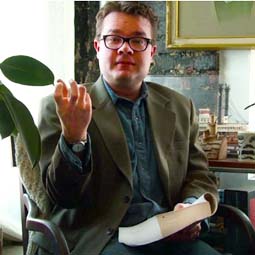
A BOURGEOIS WRITER IN AMERICA

A BOURGEOIS WRITER IN AMERICA
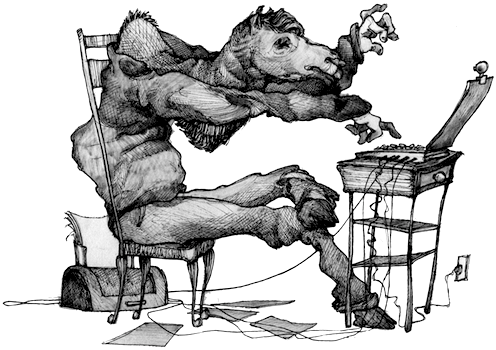
EVEN MIDDLE CLASS GUYS NEED TO WRITE.
BENJAMIN EXPLORES THE MFA & AUTHORIAL DIVERSITY.
read the essay now >>
EVEN MIDDLE CLASS GUYS NEED TO WRITE.
BENJAMIN EXPLORES THE MFA & AUTHORIAL DIVERSITY.
read the essay now >>


|
“Hatred of the bourgeois,” Gustave Flaubert once told George Sand, “is the beginning of virtue.” Hating the poor, obviously, is small and callous; hating the rich is bitter and predictable. But the bourgeoisie, or middle class, has long been a favorite target of artists’ contempt. Hating the poor, obviously, is small and callous; hating the rich is I once heard the sociolinguist William Labov assert that middle class people can’t tell good stories because they are embarrassed to admit fear. Fear is the most important emotion for narrative, because fear is the switch that drives a story forward. That, and desire—but fear and desire are only the poles of the same continuum, on which the bourgeoisie sit at a perfect flat-line. They are the net-force zero between equally pressing fronts.bitter and predictable. In Roberto Bolaño’s 2666, fictional novelist Benno von Archimboldi realizes that great novelists come “from either the under-classes, or the aristocracy.” While William Labov might agree, Labov’s implication that working class people are the best storytellers is warmly egalitarian; Bolaño’s haughtier line has a nasty bite to it that I quite like. But such quips aren’t going to stop bookish kids from middle-class American families from becoming writers. |
I’ll tell you how I (and many of my friends) went about it. First, you go to college, obviously, because you’re middle class. In college, you major in English or one of the humanities while reading as much as you can (ideally), staying up all night in your dorm room smoking weed and rambling about what you’ve read with your creative writing workshop friends. Much of the work you read in the undergraduate workshop is awful, and some, surprisingly good; a lot of it, both the good and bad, shares a reckless energy and naïvely gung-ho willingness to experiment. These qualities are characteristic of writers who have nothing to prove, and haven’t read enough yet. At some point in the future—perhaps not long after graduating from college and finding out how much you hate working, or having fallen out of love with the person you thought you would marry—you might apply to MFA programs in creative writing. If you’re lucky, you get into one. If you’re really lucky, you get into a good one. There, you’ll have two or three years of precious time to write (by far, the biggest advantage) and workshop fiction with much better writers. You will gain some respect, a degree, a buoy to float you to the top of the slush piles at magazines and literary agencies, a few classes on your CV—and, if you’ve worked hard, a decent body of work. |
1/6
|
If you’re like me, you will probably also drink an absolutely insane amount of beer. The conversations about literature you have with your writer friends while drinking said beer will get much smarter than ever, and when you shake off your hangover and get to work the next day, you will find those conversations shaping your writing more than what your teachers say in said workshops. After all this—eventually, maybe, hopefully—success. Congratulations, you’re no longer someone who wants to be a writer. You’re a writer. You gradually grow less and less embarrassed about saying this sentence to someone you’ve just met: “I’m a writer.” *** I have conflicted opinions about writing workshops. Like most writers I know, I’ve spent years attending them and years teaching them. I happened to have attended the granddaddy of them all; the workshop program that makes MFA students at other programs groan and roll their eyes. But my discontents about writing workshops aren’t the usual ones. All the stuff you hear about threats of stylistic homogenization, and literature-by-committee? For the most part, nonsense. Any writer so lacking in confidence as to let a workshop commandeer her work wasn’t going anywhere. |
I once heard a fellow student say that workshop is “gang rape.” I disagree slightly: “Rape” implies it’s not consensual. It’s more like a gang bang: The writer sits in passive, perfunctory silence while everyone else does things to him or her—like that Marina Abramović performance piece. Everybody talks about the writing, while the writer—a conspicuous void at the center of attention—just sits there and takes it. For centuries back there have been movements, scenes, societies, soirees, salons and symposia where groups of writers sat around a table, using each other’s work to discuss both the minute particulars of craft and the practice of literature in general. All the workshop does is institutionalize this process. Writing workshops, still comparatively rare in the rest of the world, took root in the 1960s all across America, carried by the winds from Iowa City. It makes sense that the writing workshop would particularly appeal to the American psychology: Simultaneously democratic and individualistic, while placing great faith in the potential for self-improvement; it tickles the most dearly-held optimisms of the American middle class. If I wanted to be viciously self-deprecating, I would say this makes perfect sense: because they don’t have the skill by nature, the middle class must go to school to learn the craft of storytelling. |
2/6
|
When you’re a boring, middle-class white guy writer from suburban Colorado (a culture as oppressed as a cloud, as sexy and exotic as a box of Kleenex—c’est moi), one of your many unearned privileges is this: that blank piece of paper on your desk is truly a tabula rasa. You may approach it unburdened of anyone’s expectations. However, there is an underlying frustration for the middle-class, heterosexual white dude writer that is usually too queasily felt to even openly articulate. This is the anxiety that anything you create—because you are a white, middle-class man—will be inauthentic. Zadie Smith’s essay in the New York Review of Books, Two Paths for the Novel, juxtaposes the works of two white male British novelists: Joseph O’Neill’s Netherland and Tom McCarthy’s Remainder. She writes: A flashback-inclined Freudian might conjure up the image of two brilliant young men, straight out of college, both eager to write the Novel of the Future, who discover, to their great dismay, that the authenticity baton (which is, of course, entirely phony) has been passed on. Passed to women, to those of color, to people of different sexualities, to people from far-off, war-torn places. The frustrated sense of having come to the authenticity party exactly a century late! |
The phony “authenticity baton,” however, can be a burdensome thing. The unfortunate flipside of getting to hold the authenticity baton is that a writer touched in any way by identity politics—by dint of not being straight, male and white—has been shoved into a box of presumed subject matter before she even begins to write. She will have to consciously deal with this prejudice in some way. Even if she deliberately chooses not to address it at all, her refusal will still be perceived as a statement—and therefore, like it or not, become one. There’s the rub at the root of a lot of this race and class business in contemporary literature: the reader’s perception perverts the writer’s intention. In my opinion, the only way to go about salving that sore at all is to do what I firmly, firmly, in my guts, in my bones, believe (except in rare cases when I don’t) to be good advice on how to write well: IGNORE THE “READERSHIP”—WRITE ONLY FOR THE READER. That is to say, do not imagine any “ideal reader” except yourself. Don’t write something you think people expect you to write; don’t write for the approval of your peers; don’t write for the imagined praise of the critic. Write something that you personally, honestly, would want to read. That is all. |
3/6
|
The subject reminds me of a Jorge Luis Borges essay, The Argentine Writer and Tradition. Borges discusses his irritation at Argentine writers who felt pulled toward self-exoticism for the titillation of curious foreign readerships. Paraphrasing Edward Gibbon, Borges mentions that there is apparently not a single mention of any camels in “the Arab book par excellence,” the Koran. Borges discusses his irritation at Argentine writers who felt pulled toward “I believe,” he writes, “that if there were ever any doubt as to the authenticity of the Koran, this lack of camels would suffice to prove that it is Arab. It was written by Mohammed, and Mohammed, as an Arab, had no reason to know that camels were particularly Arab; they were, for him, a part of reality, and he had no reason to single them out, while the first thing a forger, a tourist, or an Arab nationalist would do is bring on the camels, whole caravans of camels on every page!”self-exoticism for the titillation of curious foreign readerships. An abundance of “local color” in fiction makes it feel as if it’s the place (or the class, ethnicity, sexuality or other category of identification), and not the story, that’s being presented. A sense of place ought to grow out of the story, rather than the other way around. A writer seldom needs to focus |
too much energy on the setting of a story—it risks becoming distracting, disingenuous, forced, overly eager to please. Inauthentic. A literary tourist trap. James Joyce understood to write his nation’s modern epic through the human particulars—from the inside out, not the outside in, as any non-Irish writer would have approached Ireland. Hence, Joyce made Leopold Bloom half-Jewish. A forger, a tourist or an Irish nationalist would never have made that choice. Rage at the bourgeois is inevitably a bourgeois pursuit... Local color is “soft bigotry”—a creeping, backdoor other-ism that seems almost more insidious because of how disingenuous it is. It smacks of the smug good intentions of a privileged college student who comes back from his summer picking peppers in Nepal, all aglow with romantic talk of being “a traveler, not a tourist.” This is to tastefully distance himself from the big fat jackasses snapping pictures of themselves holding up the Tower of Pisa, or loudly asking in English to be directed to the nearest McDonald’s. Those “tourists” are middle class, too—but they’re his parents’ middle class, representing the cringingly unhip middle class vulgarity from which he is vainly trying to distance himself. Rage at the bourgeois is inevitably a bourgeois pursuit; those who practice it the most do it out of self-loathing. Take Flaubert. |
4/6
|
You want to be a traveler! An explorer! A student of the world! Bitch, please. At least the “tourist” is honest with himself. Don’t cloak yourself in a tepid euphemism: If you’re there in any part because of the otherness of the place, then you are a tourist. And anyway, is your soul such an empty vessel that you have to go backpacking in Thailand to “find yourself?” Anybody with a good book and a sharp mind can "find herself" just fine in suburban Wisconsin. Anybody with a good book and a sharp mind can 'find herself' just fine And middle-class writers should quit advising non-middle-class writers, especially those of color, to write for their benefit. “Write about your people—about what foods you eat!” That’s advising someone to treat her fiction like a restaurant that serves some exotic cuisine. Why? So that middle class people can choose to patronize it? And bravely eat Ethiopian food with their hands? And tell other middle class people glib, self-congratulatory anecdotes about eating there that imply that their souls were somehow improved by eating Ethiopian food? Eat, Pray, Love. Soul tourism is a phrase I sincerely wish had the same negative sting to it as “sex tourism.”in suburban Wisconsin. |
Now, say it so happens that this same smugly well-intentioned bourgeois college student wants to be a writer. What will he write about? He may write about his summer picking peppers in Nepal or backpacking through Thailand. Bad move. The writing won’t be any good. The disingenuousness will be hideous. He will be writing as the person he wants to be, not the person he is. Or, maybe worse: writing as the person he wants the reader to think he is. That’s always a recipe for a fallen cake. The impulse to want appear to be what he is not stems from his very bourgeois fear that, ceteris paribus, he’s not interesting. He’s not authentic. Find these, catch them and torture them; I would like say to this guy (speaking from experience, honestly): Relax. Just because you’re middle class, doesn’t mean you have to be embarrassed about who you are (you obviously can’t help that). Surely, there must be some terrifying things thrashing around in your mind; things you would never tell your parents, things you would probably be hesitant even to tell to a therapist—the monsters that scratch and howl at your door, keeping you awake at night. Find these, catch them and torture them; in ink, on paper. Find the deepest shit in your soul, get on the floor and grind your nose in it.in ink, on paper. |
5/6
|
Oh: And there’s absolutely nothing therapeutic about this process. Art won’t make you a better person. It isn’t “good” for you, like yoga and fresh organic vegetables and other bourgeois interests. Making art out of your fears won’t help you overcome your fears—it will probably just make them worse. But it might make for a good story.  |
6/6




