



FORTNIGHT ISA MULTIMEDIA DOCUMENTARY PROJECT ON THE MILLENNIAL GENERATION: THE LAST GENERATION TO REMEMBER A TIME WITHOUT THE INTERNET. |

contributorsprofile
STREET ANATOMY

STREET ANATOMY
BONES & BLOOD MAKE BLOG POP ART.
MEDICAL ILLUSTRATOR JARED INTERVIEWS
VANESSA RUIZ, CURATOR OF STREET ANATOMY.

Read the interview now >>
BONES & BLOOD MAKE BLOG POP ART.
MEDICAL ILLUSTRATOR JARED INTERVIEWS
VANESSA RUIZ, CURATOR OF STREET ANATOMY.
Read the interview now >>


|
Vanessa Ruiz is the curator of Street Anatomy, a blog devoted to all things anatomy in art and pop culture. Her content ranges from the anatomy of toys and anatomical sculptures, to anatomically themed fine art and graphic design. Vanessa’s website not only gives medical art some much needed visibility—it also provides well-curated access to some of the best selections of anatomical art on the web.
(click to enlarge)
I met up with Vanessa at her apartment in the Near West Side neighborhood of Chicago to chat with her about Street Anatomy. |
Jared Travnicek: Hi Vanessa. Tell me about yourself and where you grew up. Vanessa Ruiz: I was raised by a wonderful single mom up in Highland Park, a northern suburb of Chicago. As an only child I spent most of my time entertaining myself, drawing, meticulously putting Legos together, doing little science experiments, etc. Looking back on it now, everything I did as a child pretty much shaped the strange combination of art and science that is my life today. JT: When did you start becoming interested in anatomy? VR: I taught myself how to draw when I was young by copying the muscular superheroes in my comic books. I was always fascinated by the musculature and the lines, which later on turned into an appreciation of the human form in general. And of course, once I started taking biology classes in high school and beyond, it really solidified my interest and curiosity into the human body. JT: How did Street Anatomy come about? VR: Street Anatomy was born out of a need to showcase to the world what medical illustrators do and how valuable we can be, not only as artists, |
1/8
|
but as high level scientific visualization solvers. Information on medical illustrators was seriously lacking four years ago on the Internet. Blogging was gaining a lot of momentum back then and while you could find blogs on almost any subject, there was not one good blog on medical illustration. I thought, How could that be? Why aren't any medical illustrators sharing what we do with the public? It's no wonder we all get the deafening cricket sound whenever we tell people that we're medical illustrators. A medical what? Oh, like anatomy in textbooks? Sooo, you draw body parts?  (click to enlarge) I wanted to find a way to make medical illustration |
accessible to everyone—to bring it to the streets, so to speak. I had this grand vision of doing anatomical street art to teach people about their anatomy. I imagined huge medical illustrations put up on the sides of buildings. Not wanting to risk my career and be arrested for vandalism, I chose to start my own blog. I didn't think many people would read it anyway. I started by writing lengthy posts on the different aspects of medical illustration; the history, the specializations, etcetera. In between, I posted interesting anatomical art I would stumble upon across the Internet. After a while, I noticed that people began responding more strongly to the interesting uses of anatomy in art than my preachy articles about medical illustration. So I ran with it! The focus of Street Anatomy shifted towards the representation of anatomy in art, and eventually to its use in pop culture. It's grown bigger and bigger over the past four years and the community around it is so strong. I receive emails almost daily about how inspired people are after looking through the site. And the best part is that Street Anatomy has exposed people to medical illustration and anatomical art who may never have known about it before. It's truly rewarding and something that I hope I can do full time in the future! |
2/8
|
JT: How did you find out about and get involved in medical illustration? VR: In my sophomore year at the University of San Diego I worked as a laboratory assistant in the marine science building. One of the graduate students in the lab noticed me drawing all the time, when I probably should have been working, and asked if I'd be interested in doing scientific illustrations of crabs for her thesis paper. As exciting as crabs sounded, I decided to give it a try. I spent the next 3 years in front of a camera lucida microscope drawing each articulation and fine hair of the pacific tuna crab. I guess I really enjoyed it! Towards the end of my senior year, wondering what I was going to do with myself, my advisor asked me if I ever gave thought to the people that draw the illustrations in textbooks. Starting to do some research, I found out about the field of medical illustration. There was no question after that about what I was going to do with my life. JT: Tell me a little bit about the kind of work you do at your day job? VR: I am a senior digital art director at AbelsonTaylor, a pharmaceutical advertising company here in Chicago. My days are spent designing iPad apps and websites for healthcare professionals and patients. I spend time coming up with cool ways to represent clinical data and make |
it interactive in order to engage doctors and also to make the information digestible for patients. It's a challenging industry for a designer to work in, because of the strict regulatory environment of the FDA. Your beautiful design can fall apart once the regulatory team gets ahold of it, and you need to fit in paragraphs of fair balance everywhere. The challenge becomes a good fuel for creativity, though. While I don't get to do my own medical illustration work anymore, I do get to hire the top medical illustrators/animators in our industry for projects. It's an advantage having a science and art background, as I can speak their language. JT: I don’t think I could go a day without drawing something. Do you miss creating medical illustrations? Are you able to find time to work in traditional media such as graphite, ink, or oils—if even just to mindlessly doodle in a sketchbook? VR: Yes, I miss it so much! Sometimes I'll draw a heart, or a kidney, or a certain bone, just to prove to myself that I can still do it. It's sad really. I will doodle in meetings at work though, usually of my coworkers. It's funny how self conscious people get when they notice that you're drawing them. Others get offended that you're NOT drawing them. |
3/8
|
JT: Who is your favorite contemporary artist, and what is it that draws you into their work? VR: I have to say Damien Hirst. When I came upon his work for the first time at the Saatchi Gallery in London back in 2003, I was stunned. This man plucked biology, pharmaceuticals, anatomy, and put it straight into the gallery space. Seeing The Physical Impossibility of Death in the Mind of Someone Living (the shark in the large vitrine) in person was so conflicting. Here I was, walking around staring at a huge tiger shark preserved in formaldehyde thinking, I've seen countless animals preserved in formaldehyde before. Why is this any more interesting? Because it's in a gallery? Because it has a title? Well, the answer is that it’s because I'm being forced to look at it—not simply as a specimen that is used when needed, and then put back into a cabinet, but as a piece of art, carefully assembled, mounted, posed and lit by human hands. That's when I started really seeing the overlap between science and art. JT: What is your most viewed/commented post? Do you find that specific themes incite more of a reaction than others? VR: There was one post that actually crashed the blog because of an overload in traffic. It was an x-ray of a boy who had a firework exploded in his |
 (click to enlarge) hand. It was horrific to look at, and the hand was so misshapen that it took on an almost abstract art feel. That was a crazy instance, though. Overall, it's the anatomical tattoos that have drawn the most attention over time. JT: Is there a style or era of art that you particularly enjoy? VR: 1940-1970s graphic design, specifically the pharmaceutical advertising of the Swiss chemical company, Geigy, and its amazing designers. The shapes, the colors, the structure—I can never get enough of it and hope to do some anatomical prints inspired by this period soon. |
4/8
|
Working in pharmaceutical advertising, I wish we would return to the simplistic artistry of straightforward design. Instead, we continue to have stock photography of happy couples running through fields, or a sad face looking off into the distance to sell drugs. But I have hope. It's only a matter of time until it comes back around to simplicity. JT: Finding and posting new art daily seems time-consuming. Do you find most of your content on your own? How frequently do others contribute to the site? VR: It's only time-consuming if you think of it that way. I've been doing it almost every day for the past four years. It's part of my routine. Over the years, I've built a team of five beautiful ladies to help find and post content. It's helped tremendously in terms of allowing me to focus my energies on pushing Street Anatomy forward, as in gallery shows and the store. I also get emails daily from fans of the site with links to the latest and greatest anatomical content. What surprises me most is that there is never a shortage of content to post. When I first started Street Anatomy, I had to search endlessly to find content and had periods where I couldn't find anything to post. Now I struggle to keep up with all of it! |
 (click to enlarge) JT: Death and mortality seem to be the most ubiquitous themes in fine art involving anatomical elements. Do you find this to be true? What other themes do you see recurring in the art you curate? VR: The whole momento mori aspect of anatomically themed art can't be ignored. But I see many artists who use anatomy in their work without really thinking about death per se. Take Jason Freeny, who "dissects" the popular childhood toys we all grew up with, like the Stay Puff Marshallow Man, Legos and Hello Kitty. It's as if he's giving these toys life, making our childhood dreams that our toys could be alive, true. |
5/8
|
Then there are artists who take anatomy into abstraction and use it as a design element. What better medium to use in design than the organic lines and shapes of our own anatomy? We can take anatomy out of the realm of fine art and into other fields, like interior design, and suddenly we find that the body is being honored for its incredible structure and function. Does a staircase mimicking the spine and ribs remind you of your own mortality, or a finely-tuned support? And don't even ask me the meaning behind anatomically themed food! JT: Is there any content you won’t put up on your site? Themes that are too provocative, or submissions that are too grotesque? VR: I won't post art simply because it has a skull in it. And sorry, I won't post your skull and crossbones or flaming heart tattoo. I have to feel that the artist had a purpose using anatomy in their work. I don't mind posting nudity, but I usually stay away from posting full male nudity. No one wants to see that early in the morning while they're sipping coffee at work. JT: Last year you had a very successful gallery show. How did that come about? Do you have any plans to do another show? |
 (click to enlarge) VR: The first Street Anatomy show came about because I wanted to bring Street Anatomy out of the online world and into the gallery space. I wanted to see how interested people would be in coming to see an anatomically themed show. The response was incredible. We broke the record for attendance at a gallery opening at the International Museum of Surgical Science here in Chicago. We sold a quarter of the pieces on opening night, and the show received an extended stay at the museum |
6/8
beyond the usual three months. Being my first time curating a show, I learned many things the hard way. But it was a fantastic experience coordinating artists, hanging the work and organizing the opening night. I have another show currently in the works that I'm extremely excited about. It will focus on female anatomy, and that's all I can say for now! (click to enlarge) JT: Do you have any plans for future artist collaborations or any projects in the works that you are excited about? VR: I have quite a few projects in the works for future store products. Right now, I'm working with artists from the US and internationally to feature their anatomical prints in the store. We're going to have t-shirts, street art, vinyl toys and more. We're |
planning on dipping our feet into the craft fair markets this summer. And of course, the future gallery show! So much work! JT: What do you do with your free time—if you have any!? VR: Ha! I do Street Anatomy in my free time. Now that I opened the online store, more of my not-so-free time is taken up packaging and mailing products. But I can honestly say that the highlight of my day is when I can package up a print and send it off to someone halfway across the world. I love making this anatomical artwork accessible to people everywhere. With that said, I do make sure and take breaks, go out with friends, see my mom. I'm huge into watching documentaries, have you seen Wasteland? Incredible art that can effect people's lives positively is something I want to strive towards. Oh, and I do indulge in reality TV: anything with the title "The Real Housewives of…" and I'm sucked in. JT: What inspires you? VR: People who are doing what they love because they made their passion their full-time job. I recently met a medical illustrator in London, Emily Evans, who lives and breathes medical illustration and anatomical art. I spent a week |
7/8
with her and it was not only incredible to meet someone else with the same interests and passions, but also to see them actively and happily doing their work. I came back from London hitting the ground running with Street Anatomy. Sometimes you need that spark when you're in the weeds. Thank you, Emily!
(click to enlarge)
VR: As I mentioned before, my vision for Street Anatomy changed pretty early on and continues to shrink and grow, bud arms, sprout heads, and suck in other entities. I want to continue to help other artists expose their work to an audience who will love it and embrace it. Street Anatomy is a being that will continue to grow. I just happen to be strapped happily into the drivers seat! |
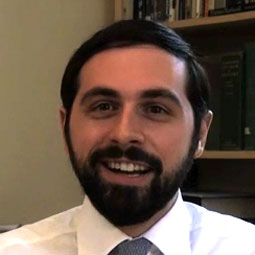
*** Jared Travnicek is a medical illustrator based in Indianapolis, Indiana. He holds a Master of Arts in Medical and Biological Illustration from the Johns Hopkins University School of Medicine, and a BA from Iowa State University in Biological and Pre-Medical Illustration. Jared is an award-winning member of the Association of Medical Illustrators. He currently works as a neurosurgical illustrator at Goodman Campbell Brain and Spine.His previous pieces for Fortnight are biographical sketches of Max Brödel and Dorcas Paget, two pioneers of the field of Medical Illustration, as well as The Future, an interview about the change in his field. To view more of Jared's original illustrations, visit jtsciencevisuals.com. |
8/8




