


FORTNIGHT ISA MULTIMEDIA DOCUMENTARY PROJECT ON THE MILLENNIAL GENERATION: THE LAST GENERATION TO REMEMBER A TIME WITHOUT THE INTERNET. |

contributorsprofile
POST-TRAUMATIC
POST-TRAUMATIC
COMBAT SCARS THE PSYCHE. RAJIV
REVEALS HIS HARD TRANSITION FROM
BATTLEFIELD PLATOON LEADER TO CIVILIAN.
Listen to the podcast now >>
COMBAT SCARS THE PSYCHE. RAJIV
REVEALS HIS HARD TRANSITION FROM
BATTLEFIELD PLATOON LEADER TO CIVILIAN.
Listen to the podcast now >>


|
|
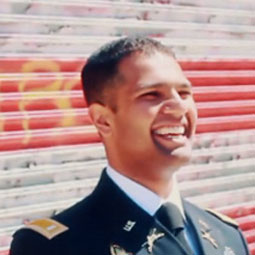
In this podcast, 25-year-old veteran Rajiv Srinivasan (Captain, U.S. Army) talks to Fortnight Editor Samantha Hinds about readjusting to civilian life after serving as a platoon leader in Afghanistan. Rajiv also reads aloud a personal essay, Taking Off the Armor, that addresses his struggle with Post-Traumatic Stress Disorder (PTSD). Accounts of PTSD can be traced back as far as Herodotus' accounts of the Battle of Thermopylae (480 BC)—and Homer’s 8th c. BC Odyssey, in which Odysseus struggles to readjust to home after a ten-year trek fighting the Trojan War.  |
1/1

Some Historical Names for Combat-Induced PTSD
Name: Nostalgia; Dr. Johannes Hofer (1669–1752), Swiss physician
Context: First coined in 1688 by Dr. Hofer to describe the homesickness of Swiss mercenaries, this term was still used in reference to combat trauma by the American Civil War (1861–1865). Dr. William Hammond (1828-1900), Surgeon General of the Union Army, reported 3 cases of "nostalgia" in every 1,000 troops.
Name: Soldier's Heart, Da Costa's Syndrome; Dr. Jacob Mendez Da Costa (1833-1900), American physician
Context: Dr. Da Costa observed anxiety in American Civil War soldiers c. 1871 that expressed itself as "neurocirculatory asthenia," or heart palpitations and dizziness following a veterans' slight exertion.
Name: Traumatic Neuroses; Dr. Hermann Oppenheim (1858-1919), German neurologist
Context: Primarily an observer of railway crash survivors, Dr. Oppenheim's 1894 Lehrbuch der Nervenkrankheiten für Ärzte und Studierende ("Instructional Manual of Nervous Illnesses for Doctors and Students") insisted that "the psychic"—and not injury to the spine or nervous system—caused PTSD.
Name: Shell Shock; Dr. Lewis R. Yealland (1884-1954), Canadian therapist
Context: Dr. Yealand treated World War I soldiers in Britain. Believing combat trauma to represent a simple (and unpatriotic) failure of willpower, he advocated for electric shock treatment in his 1918 report, Hysterical Disorders of Warfare.
Name: Post-Vietnam Syndrome; Dr. Robert Jay Lifton (b. 1926), American psychiatrist & Dr. Chaim Shatan (1924-2001), Canadian psychiatrist
Context: Korean War veteran Dr. Lifton used his field work, and previous studies of Hiroshima and Holocaust survivors, to inform his antiwar activism; Dr. Shatan's 1972 op-ed in the New York Times exposed a "delayed massive trauma" characterized by guilt, rage, numbness and alienation.
Name: Nostalgia; Dr. Johannes Hofer (1669–1752), Swiss physician
Context: First coined in 1688 by Dr. Hofer to describe the homesickness of Swiss mercenaries, this term was still used in reference to combat trauma by the American Civil War (1861–1865). Dr. William Hammond (1828-1900), Surgeon General of the Union Army, reported 3 cases of "nostalgia" in every 1,000 troops.
Name: Soldier's Heart, Da Costa's Syndrome; Dr. Jacob Mendez Da Costa (1833-1900), American physician
Context: Dr. Da Costa observed anxiety in American Civil War soldiers c. 1871 that expressed itself as "neurocirculatory asthenia," or heart palpitations and dizziness following a veterans' slight exertion.
Name: Traumatic Neuroses; Dr. Hermann Oppenheim (1858-1919), German neurologist
Context: Primarily an observer of railway crash survivors, Dr. Oppenheim's 1894 Lehrbuch der Nervenkrankheiten für Ärzte und Studierende ("Instructional Manual of Nervous Illnesses for Doctors and Students") insisted that "the psychic"—and not injury to the spine or nervous system—caused PTSD.
Name: Shell Shock; Dr. Lewis R. Yealland (1884-1954), Canadian therapist
Context: Dr. Yealand treated World War I soldiers in Britain. Believing combat trauma to represent a simple (and unpatriotic) failure of willpower, he advocated for electric shock treatment in his 1918 report, Hysterical Disorders of Warfare.
Name: Post-Vietnam Syndrome; Dr. Robert Jay Lifton (b. 1926), American psychiatrist & Dr. Chaim Shatan (1924-2001), Canadian psychiatrist
Context: Korean War veteran Dr. Lifton used his field work, and previous studies of Hiroshima and Holocaust survivors, to inform his antiwar activism; Dr. Shatan's 1972 op-ed in the New York Times exposed a "delayed massive trauma" characterized by guilt, rage, numbness and alienation.




