



FORTNIGHT ISA MULTIMEDIA DOCUMENTARY PROJECT ON THE MILLENNIAL GENERATION: THE LAST GENERATION TO REMEMBER A TIME WITHOUT THE INTERNET. |

contributorsprofile
MAGIC & THE NARRATIVE ART
WRITERS ENSORCEL; MAGICIANS EXPOUND.
MATT & PRAKASH TRADE TRICKS & TALES WITH BENJAMIN.
WRITERS ENSORCEL; MAGICIANS EXPOUND.
MATT & PRAKASH TRADE TRICKS & TALES WITH BENJAMIN.


|
MAGIC & THE NARRATIVE ART


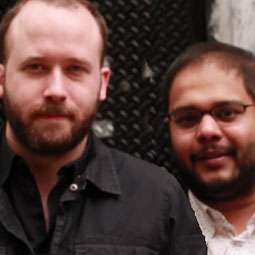
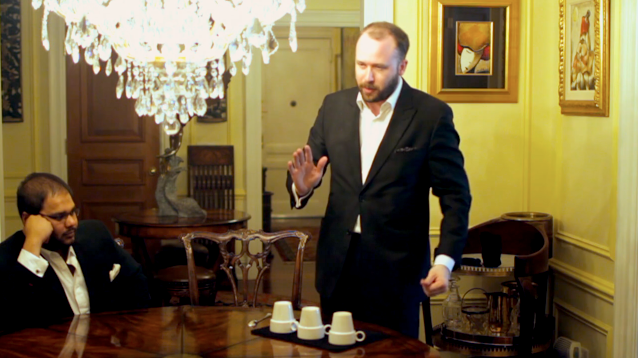
Magicians Matt Holtzclaw and Prakash Puru explore the links between magic & the narrative art with young novelist (and fellow Fortnight contributor) Benjamin Hale.
1 of 1


Benjamin references Jorge Luis Borges (1899-1986), an Argentine writer often associated with the 20th century Latin American literary movement of magical realism. Borges establishes the lack of distinction between superstitious beliefs and literary plots in his essay “Narrative Art and Magic” (1932). He describes two “causal processes: the natural, which is the incessant result of uncontrollable or infinite operations [and] magic, where details are prophesied, lucid and limited.” “In the novel”, Borges explains, “the only possible integrity lies in the latter.” Borges rejects realism because of its narrative singularity, which results in the inclusion of only one permutation of plot and experience at the expense of infinite others. His influences therefore encompass diverse geographical and historical sources.
Borges’ belief in the inability of the human mind to know the entire structure and order of the cosmos led him to accept the premise that human perception of causality played a similar role in the world of the scientist, as in that of the superstitious person. Borges’ fascination with Kabbalah—the intellectual tradition of Jewish mysticism—greatly influenced his writings, which make use of intricate logic puzzles as well as multiple dimensions of meaning. “Death and the Compass” (1944) and “The South” (1944) are two short stories that reflect Borges’ attentiveness to mathematical detail, as well as fantasy. |



