



FORTNIGHT ISA MULTIMEDIA DOCUMENTARY PROJECT ON THE MILLENNIAL GENERATION: THE LAST GENERATION TO REMEMBER A TIME WITHOUT THE INTERNET. |

contributorsprofile
AN IMPROVISATION
AN IMPROVISATION
BAROQUE HAS ROOM TO BREATHE: ELIZABETH OFFERS
AN ORIGINAL VIOL PERFORMANCE.

Listen to the podcast now >>
BAROQUE HAS ROOM TO BREATHE: ELIZABETH OFFERS
AN ORIGINAL VIOL PERFORMANCE.
Listen to the podcast now >>


|
|
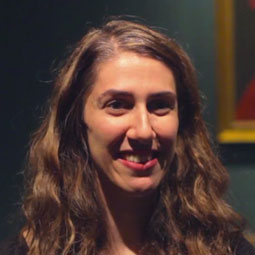
In today's Fortnight podcast, historical musicologist Elizabeth Weinfield plays an improvisation on her viola da gamba. Both as scholar and performer, Elizabeth is a young steward of Renaissance and Baroque-era music. In the Western musical tradition, "improvisation" generally qualifies a departure from noted composition in the form of melodic or notational embellishment. By the 14th century, a complex system of musical notation was developed to guide live performance. In the middle of the 16th century, guides began appearing that advised players to improvise over a cantus firmus, or fixed melody designed for multiple voices. Two such tomes include Portuguese composer Vicente Lusitano's Introdutione facilissima (1553) and Italian theorist and composer Nicola Vicentino's L’antica musica ridotta alla moderna practica (1555). While much performance improvisation during the Baroque period was left to vocalists; French players of the lute, the harpsichord, and viol were often expected to improvise a large portion of preludes. In the 16th century, an improvisational technique specific to the viol emerged: The viola bustard was a solo viol, not tied to any one "voice" of the musical arrangement. Orazio Bassani (1570-1615) was a viol player famed in Italy for his "bastardized" embellishment of madrigals. |
1/1




