



FORTNIGHT ISA MULTIMEDIA DOCUMENTARY PROJECT ON THE MILLENNIAL GENERATION: THE LAST GENERATION TO REMEMBER A TIME WITHOUT THE INTERNET. |

contributorsprofile
REHEARSAL
BAROQUE MUSIC CLUSTERS IN SONIC CONVERSATION.
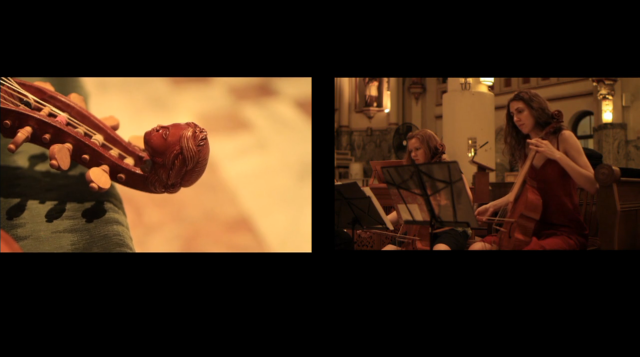
ELIZABETH REHEARSES IN A SEPTET OF VIOLS.
Watch the video now >>
BAROQUE MUSIC CLUSTERS IN SONIC CONVERSATION.
ELIZABETH REHEARSES IN A SEPTET OF VIOLS.
Watch the video now >>

|
REHEARSAL


We document preparation and mistakes in a rehearsal by Sonnambula, the viol consort Elizabeth founded that performs Renaissance and Baroque repertoire. Shot on location at the Church of the Most Holy Redeemer, New York.
1 of 1


The Baroque period had its earliest manifestations in 16th century Italy. Styles in the arts during this period generally evoked emotional states by appealing to the senses. But tastes and tendencies soon changed with the emergence of the Counter-Reformation, consolidation of absolute monarchies, crystallization of a powerful middle class and broadening of human intellectual horizons in science and exploration. The Baroque period in music was one of stylistic diversity. The opera, oratorio and cantata were the important new vocal forms. The sonata, concerto and overture were created for instrumental music. There are many well-known composers from the Baroque era; Claudio Monteverdi, the first great composer of the new style and a developer of early opera; George Frideric Handel, the German-Born, English composer of operas, oratorios and instrumental compositions during the Stuart era in England; and Johann Sebastian Bach, who developed the sacred counterpoint to the secular side of the Baroque movement. Sonnambula (sonnambula.org), the septet captured rehearsing here, was founded in 2011 by Elizabeth as period ensemble that performs Renaissance and Baroque repertoire for large and diverse consorts of viols. The viol, also known as the viola da gamba (viol of the legs), is a six-stringed instrument used principally in chamber music of the 16th to 18th century. |



