


FORTNIGHT ISA MULTIMEDIA DOCUMENTARY PROJECT ON THE MILLENNIAL GENERATION: THE LAST GENERATION TO REMEMBER A TIME WITHOUT THE INTERNET. |

contributorsprofile
SOME ANALOG LINES

SOME ANALOG LINES
WHERE DOES THE FOCUS BELONG?
FILMMAKER DAVID INTERVIEWS ANOTHER DIRECTOR
ON SOLIPSISM IN THEIR CRAFT.
Read the interview now >>
WHERE DOES THE FOCUS BELONG?
FILMMAKER DAVID INTERVIEWS ANOTHER DIRECTOR
ON SOLIPSISM IN THEIR CRAFT.
Read the interview now >>


|
A CONVERSATION WITH On a recent winter day, I met a filmmaker friend at Intelligentsia Coffee on Sunset Boulevard. Neither of us live here, but both of us find ourselves visiting for increasingly long periods of time. On this day, we’re both exhausted and miss our wives, which is what we talk about while I fumble to get the audio recording on my tape recorder. Which isn’t a tape recorder at all, but rather my phone. David Lowery: Okay. I think this is working. Unnamed: What happens if you get a call? I put it on airplane mode, so it should be fine. Or if not, we can just work whoever’s calling into the interview. (laughter) How are you? Pretty good. And yourself? I’ve been well. I don’t quite know where I am these days. You’ve been what, traveling? Yeah, just bouncing back and forth... |
Me too. Me too. So I know we’ve got plenty to talk about off the record, but what I wanted to chat about in particular before our coffee gets cold here is essentially the perils of autobiography. (laughing) Jumping straight to perils? Right past hubris. Ouch. Which is why I wanted to talk to you in particular about this. I look at your work and recognize a filmmaker who’s growing increasingly termitic. What’s that mean? Termite Art: I think it was Manny Farber who came up with the term, to describe filmmakers who were able to burrow into a topic. Oh, right, right. White Elephant Art versus... Right, right right. And you definitely burrow, very specifically. There are artists who expand outward, which is what I’ve always aspired to do. You burrow into yourself. Everything you do is about you. |
1/5
|
You want to be a white elephant? No, but let me get to that in a moment. I see you dig in and push further and further into the same ideas—all of which have to do with the creative process. It reminds me of that old Powers Of Ten video that zooms out from the universe into the microcosmos and beyond. You keep digging into the miniaturesque and exploding these little moments. When you say miniature, you mean the personal material? I mean the way in which you explore it. Let’s take hubris, for example. You take an idea like hubris and explore it in a film by dramatizing your creative process. In your case, you make a movie about a filmmaker or a writer or whatever—you make a movie about yourself. Then, rather than considering that stone turned, you make another film about the same idea, but distend the points of dramatization. Whereas the first film might have let that idea play out dramatically over the temporal framework of a week, the second would dig into the specifics of the same conflict within the space of a day. Two 90-minute hypothetical films. Well, not really hypothetical. |
Right, but two films, of equal length, dealing with exactly the same topic, but one with its context exploded. Right. It’s increasingly self-reflexive. Well, I mean, it’s what I’m interested in. Yourself. You’re not? That’s why I’ve been thinking about this. I made this little film a few months ago about my daily routine. It was a spontaneous thing, a project to get myself going. Which it did. But there were two things I got out of it. The first is that it was really satisfying. The second is that people really responded to it. Right. It was purely autobiographical, and as such it dealt with my creative process. There’s that old rule about filmmaking, which is that you never make a film about filmmaking. But I am intrinsically drawn towards that. |
2/5
|
Are you? Or is it like this: because you’re a filmmaker you are drawn towards yourself, and filmmaking is incidental to that? But I like your films too. Granted. But here’s how I think it breaks down. If I were to put down my little Canon 7D and pick up a 35mm Panavision camera and go out and film, say, a war epic in the fashion of David Lean, I am doing that because it interests me. And maybe it interests me partially because I get to blow shit up, maybe, or make pretty pictures, or get paid. Hopefully get paid. Probably not getting paid. But even if you are, it doesn’t matter. None of those trappings matter. In an ideal sense, at least. Idealistically, you sign on to do this movie in the first place because you connect with some idea at the core of the material. So it becomes something you believe in. And then you take the next step, which is trusting that because you believe in it it, other people will too. You know on an utterly intrinsic level that what you have to say will matter to other individuals. Take self doubt, take fear, throw it all right out the window. Deep down, you’re making the movie because you have this conviction. And that conviction is a fire which is fueled by one thing: your ego. We are all egomaniacs. |
Idealistically. Literally. We believe what matters to us matters just as much to some stranger we’ve never met and never will meet. We do this hoping that people all over the world who we have no concept of will be taking a little bit of us into them. Is this making sense? Sure. Is it correct? Yeah. Okay, so let’s reverse engineer this. This connection I’m talking about, I don’t personally find it with a big epic 35mm movie about war, because that’s not what interests me. What does interest me is what I’m doing on a day-to-day basis, and how that affects both myself and those in my periphery. It’s something you understand. I mean, yeah, but also I don’t, which is why I explore it. I don’t understand it. I do things all the time that I don’t quite understand. It’s why people go to therapy. So you’re inviting people to your therapy sessions. |
3/5
|
But so are you, even if you’re making the big David Lean epic. You’re tricking them a bit more, maybe. But it’s still your ego screaming to people on the street and asking them to pay attention to you. And they are. People like your movies. They liked the ones that weren’t about you and it sounds like they like the one that was about you. What was that little documentary you made called, way back when?
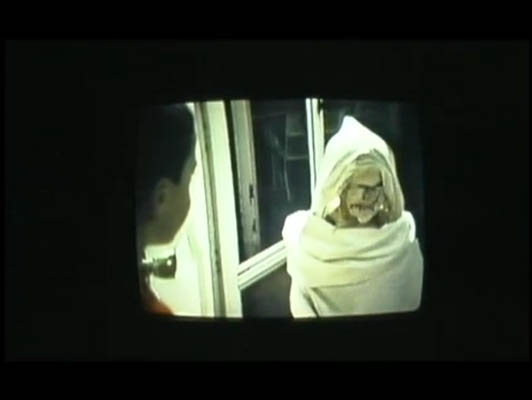
David Lowery's short film, Some Analog Lines
Some Analog Lines? Yeah. When did you make that? In 2006. Back when I had hair. |
People liked that, right? Yeah. I remember an interview with you where you said it was the first time you’d figured out how to combine what you wanted to say as a filmmaker and how you wanted to say it. Yeah. It was a breakthrough. And it was about you. And people like this new one you made too. Definitely. So there you go. Your ego is justified. Make whatever you want. Which I’m doing. I’ve been making films that have been personal but haven’t been literally autobiographical. But having made this film, about my routine, and feeling the very visceral pleasure of sharing myself with others and receiving such positive reactions, I’m interested in the legitimacy of exploring this avenue further. (laughter) Wait a minute. So you think what I do might not be legit? |
4/5
|
Let me rephrase that. Here’s what I worry about: what about artistic growth? Define artistic growth. Refinement. A refinement of one’s craft and one’s understanding of form. But isn’t that basically what you said I was doing earlier when you were talking about termites and exploding contexts? I don’t see how subject matter can limit refinement. The more I deal with the same subject—the more I deal with autobiography—the more precise my knife gets. At least I hope so. Okay, but like you say, it’s a knife. It’s incisive. How deep can you cut before you’ve got nothing left to get surgical on? I don’t know. Maybe I’ll hit a wall. Maybe I’ll come out the other side and see something that needs to be filmed in another way. I’m still exploring. Do you think solipsism is a bad thing? You’re really worried about this, aren’t you? (phone rings) I thought you had airplane mode on. |
So did I. Hold on, it’s Toby. (answers) Hello? Hey. I’m in the middle of a conversation, can I call you back? Okay. I’ll call you in a sec. (hangs up) Sorry about that. No problem. Where were we?  *** David Lowery is a filmmaker based in Dallas, Texas. He is an alumni of the Berlinale Talent Campus, and in 2010 was named an Independent Icon by IFC Films. His short Pioneer premiered at Sundance 2011 and won Best Short at SXSW, the Indie Grits Festival and the Ashland Independent Film Festival.His previous pieces for Fortnight are My Daily Routine, Meanwhile, The First Twenty Pages, and Downtime. |
5/5




