
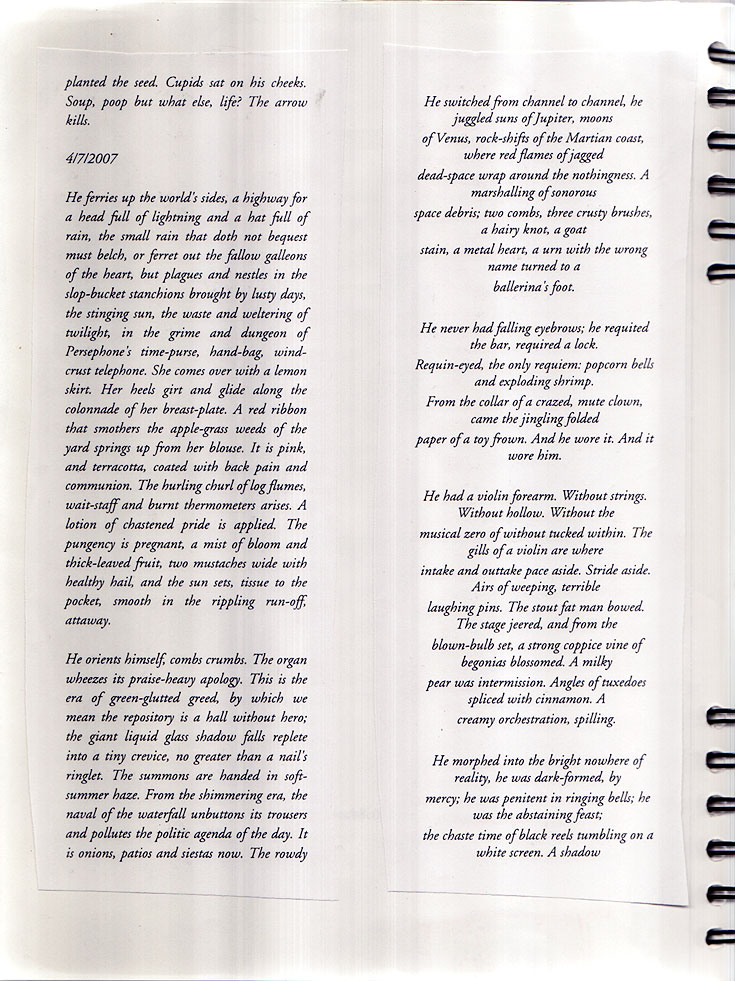
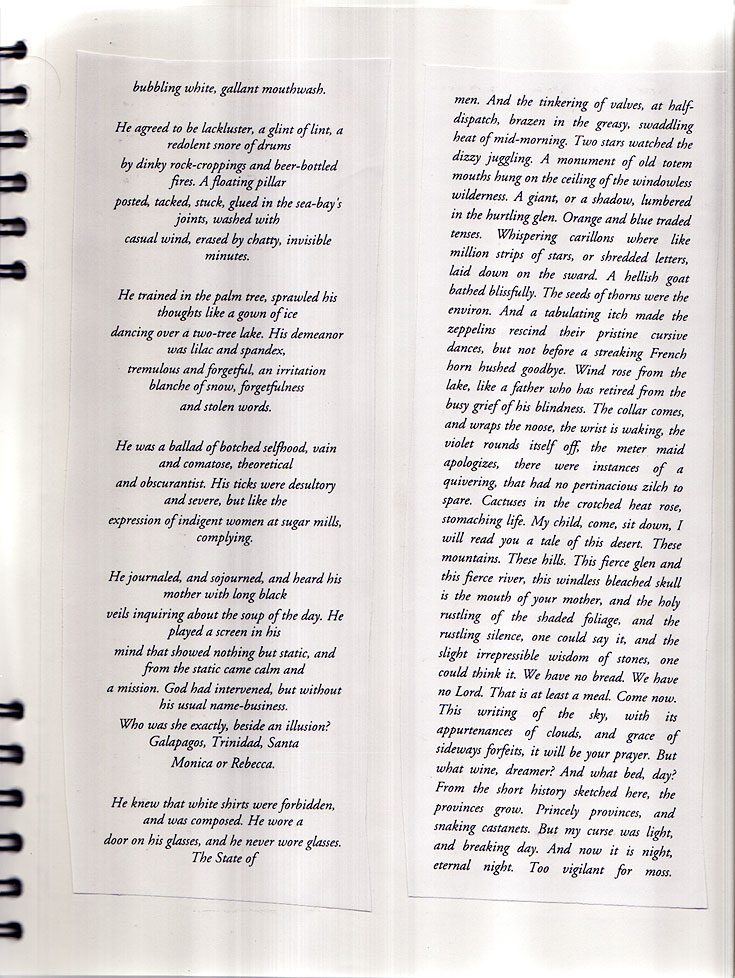
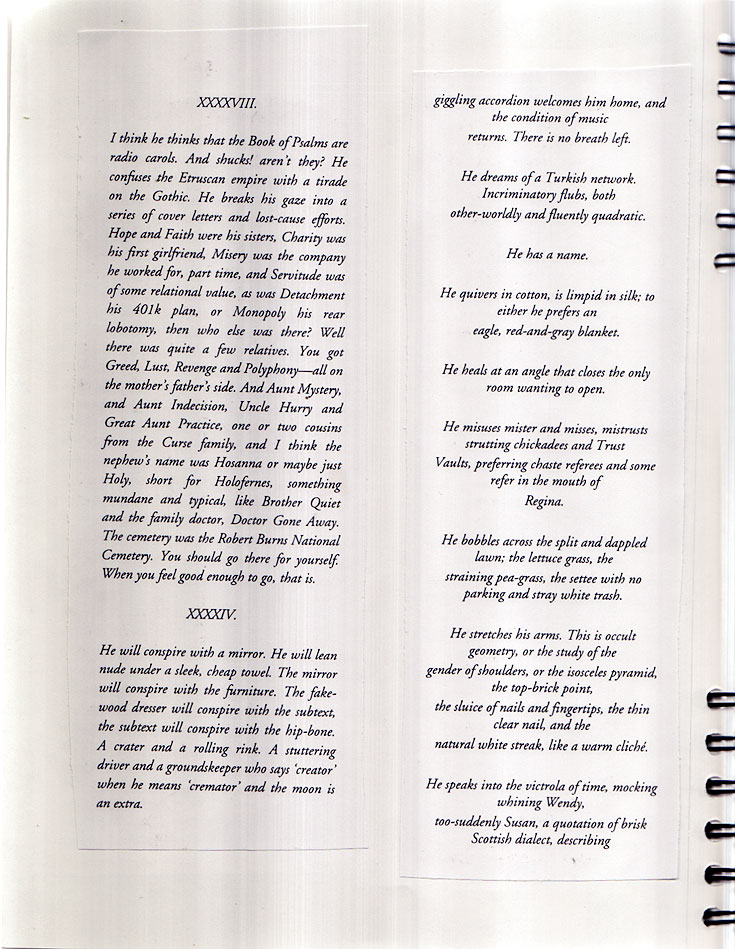
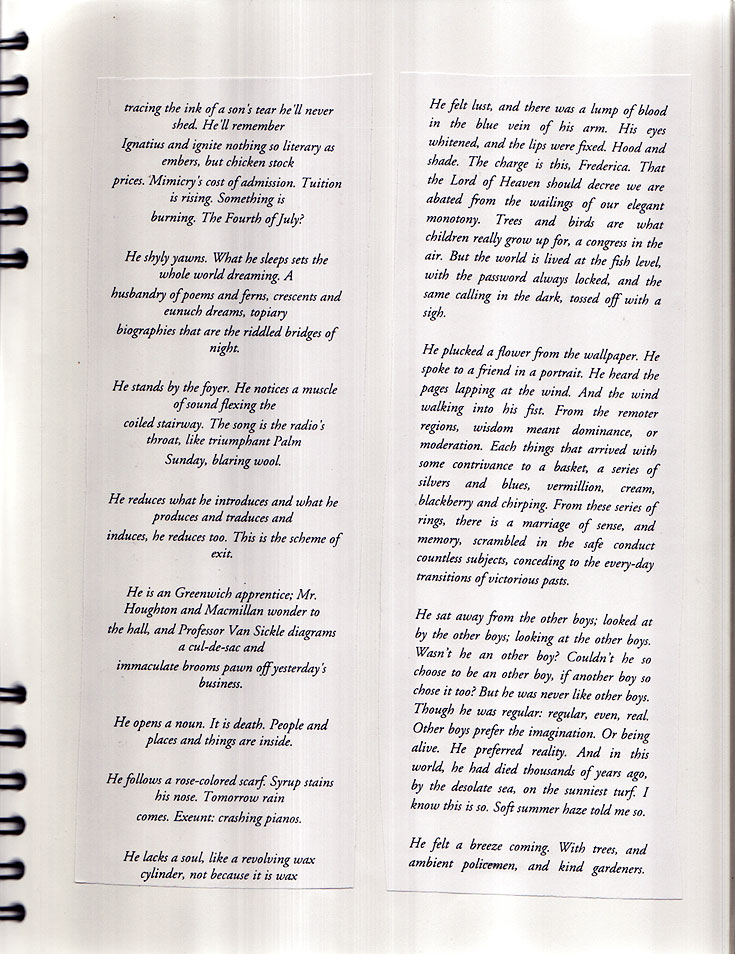
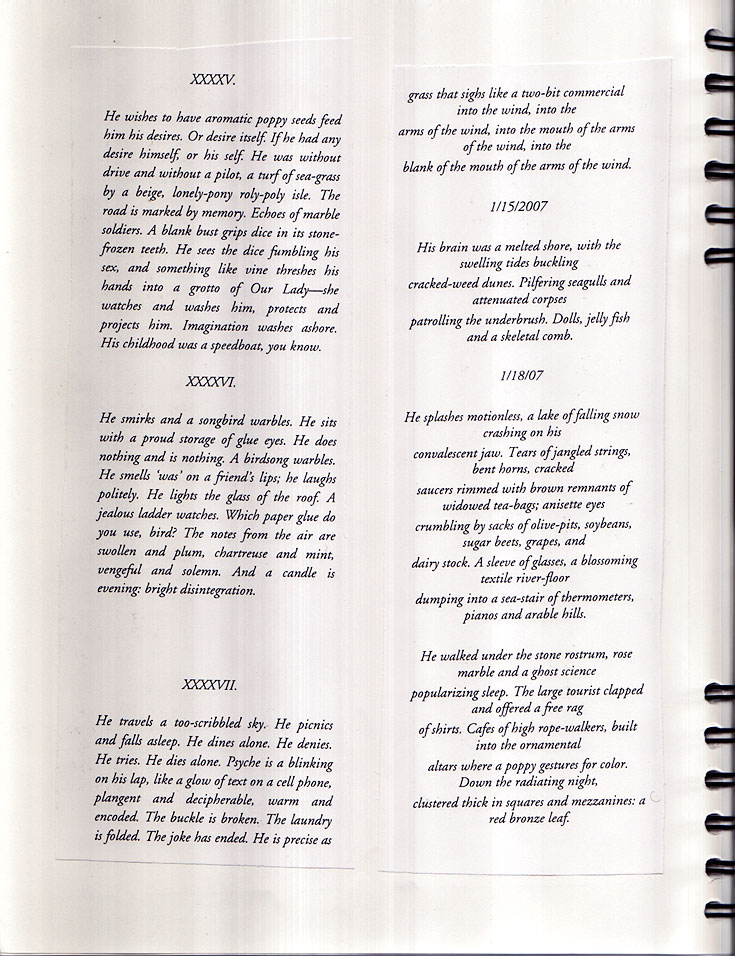
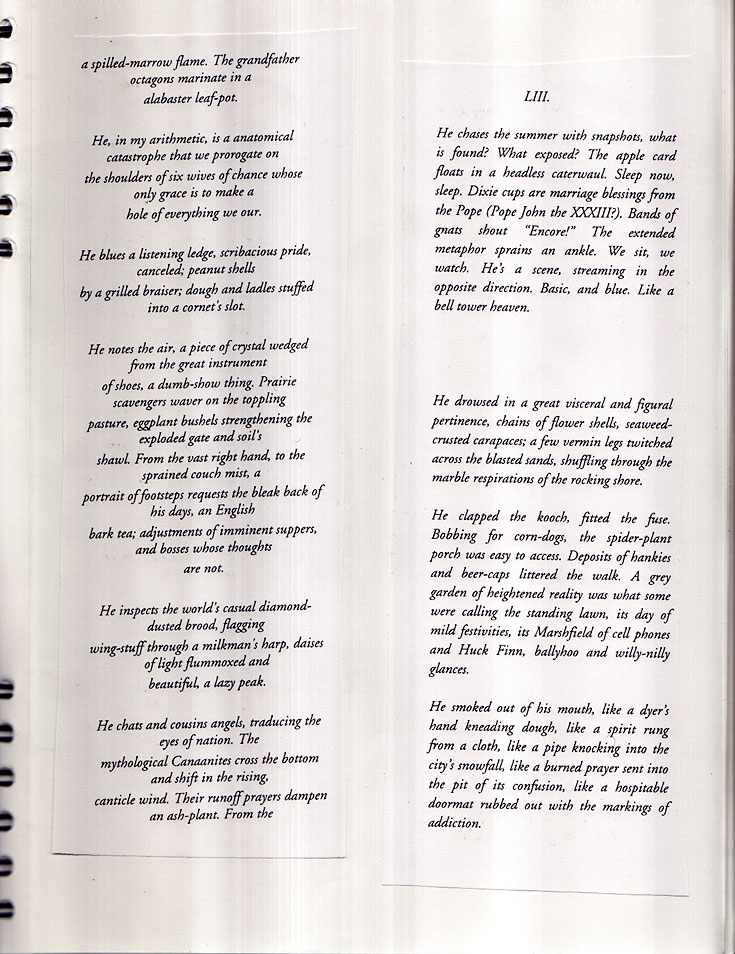
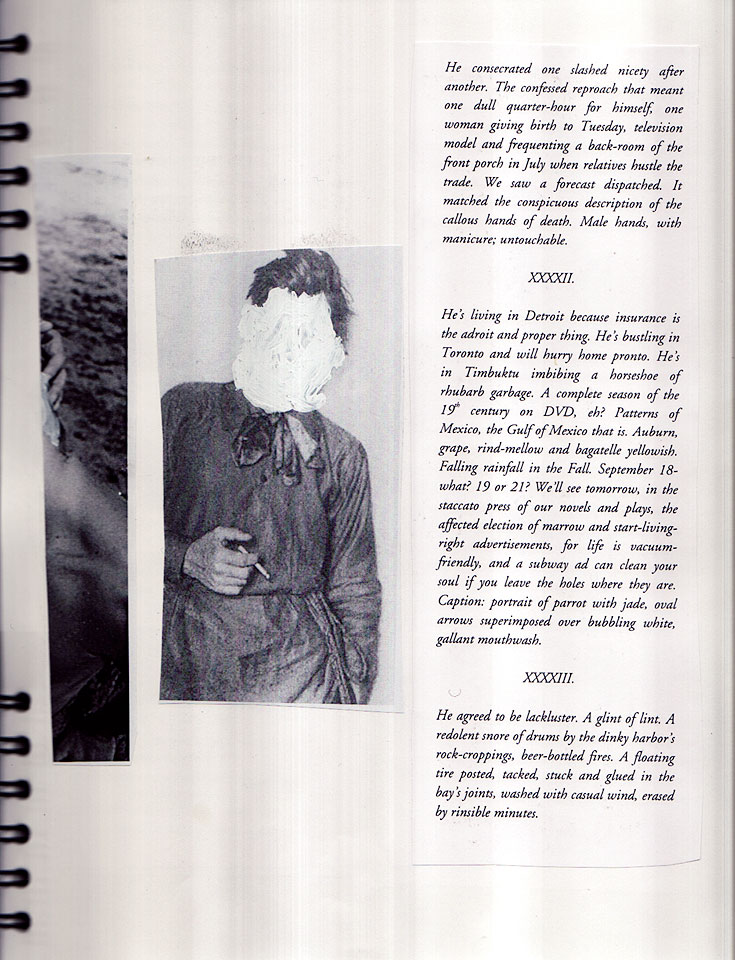
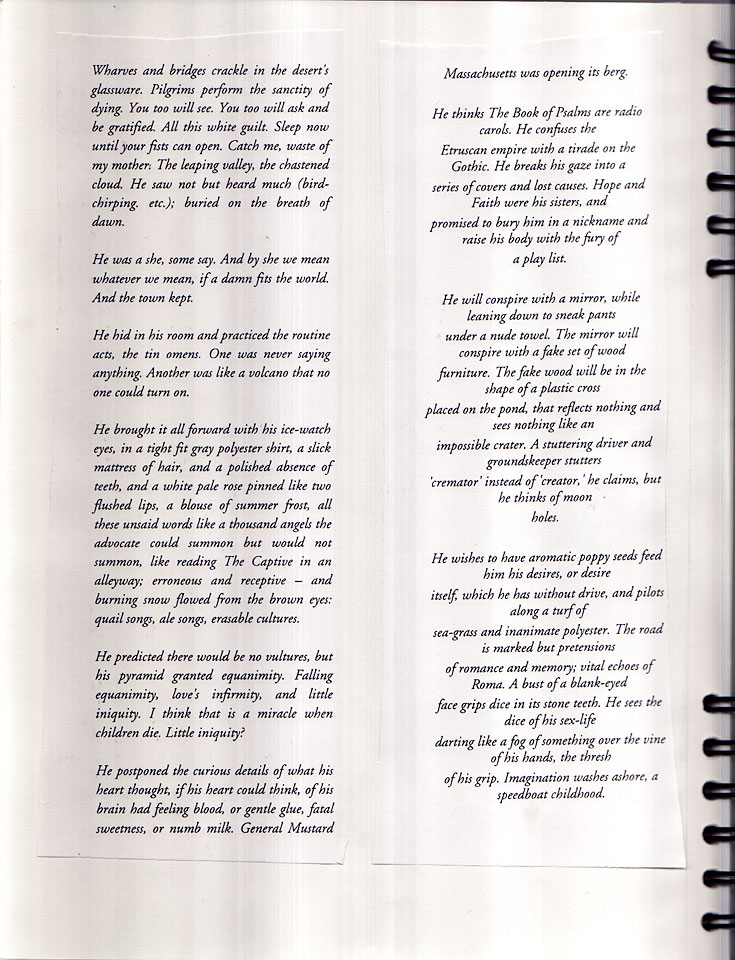
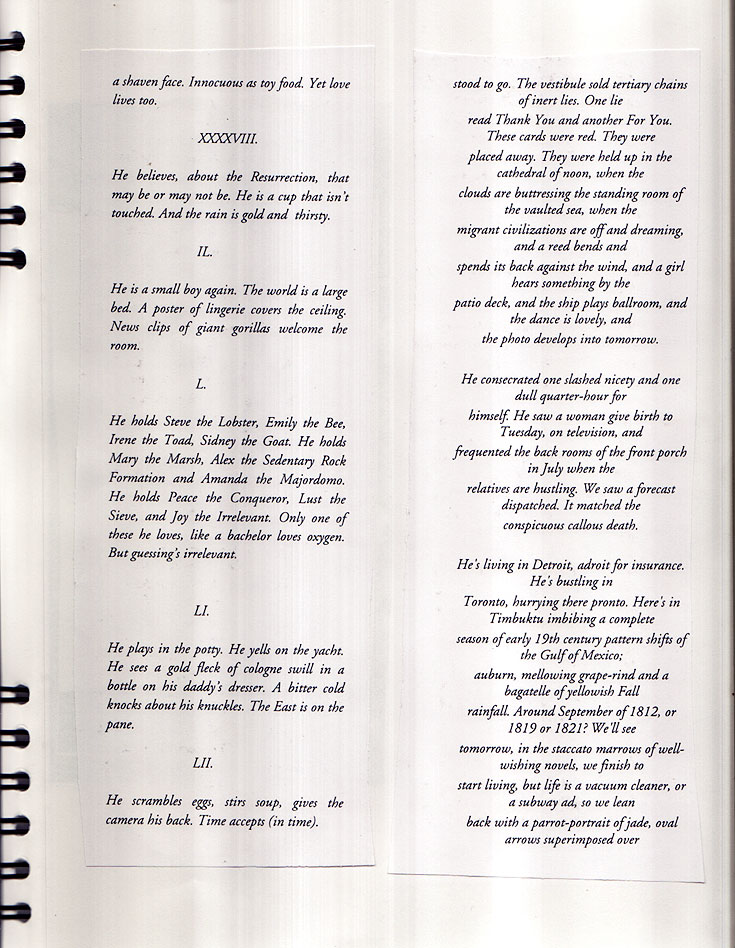
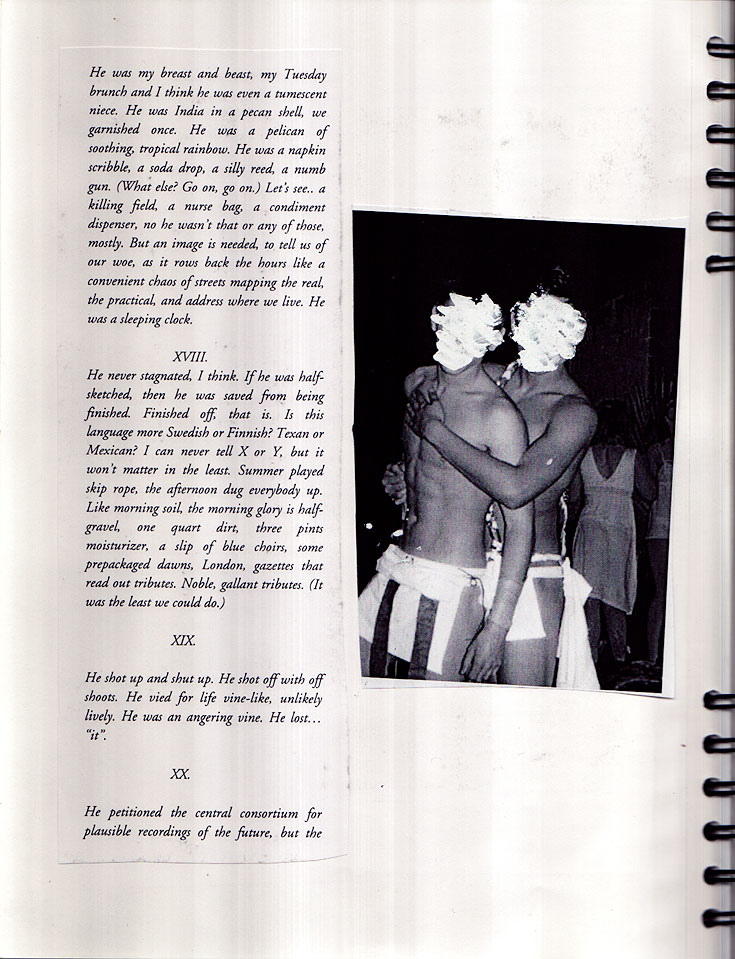
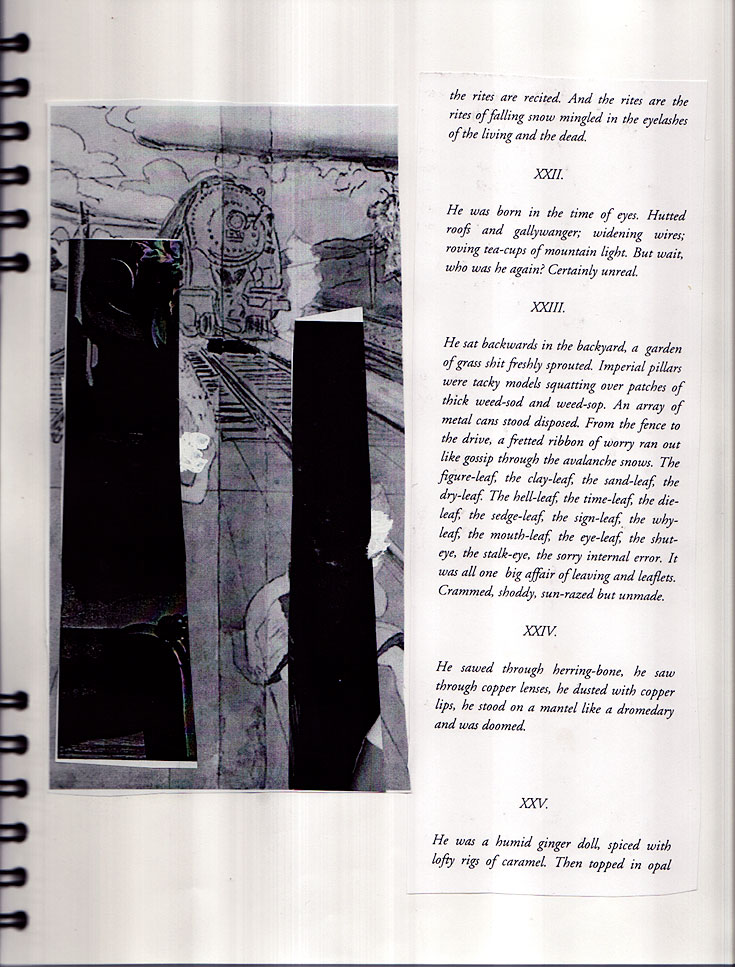
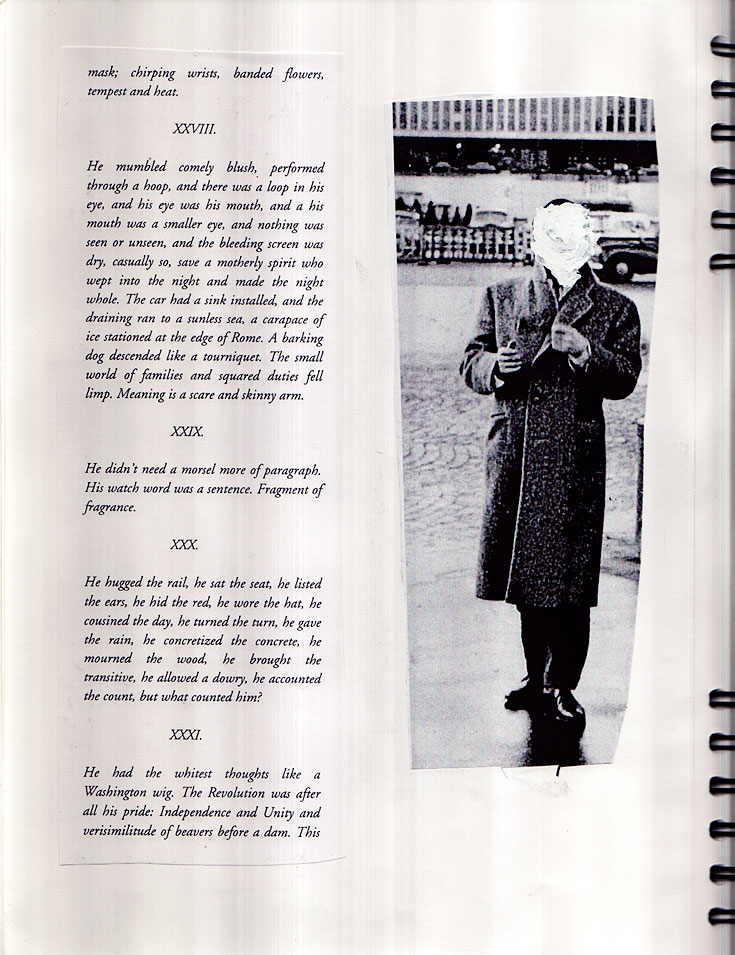
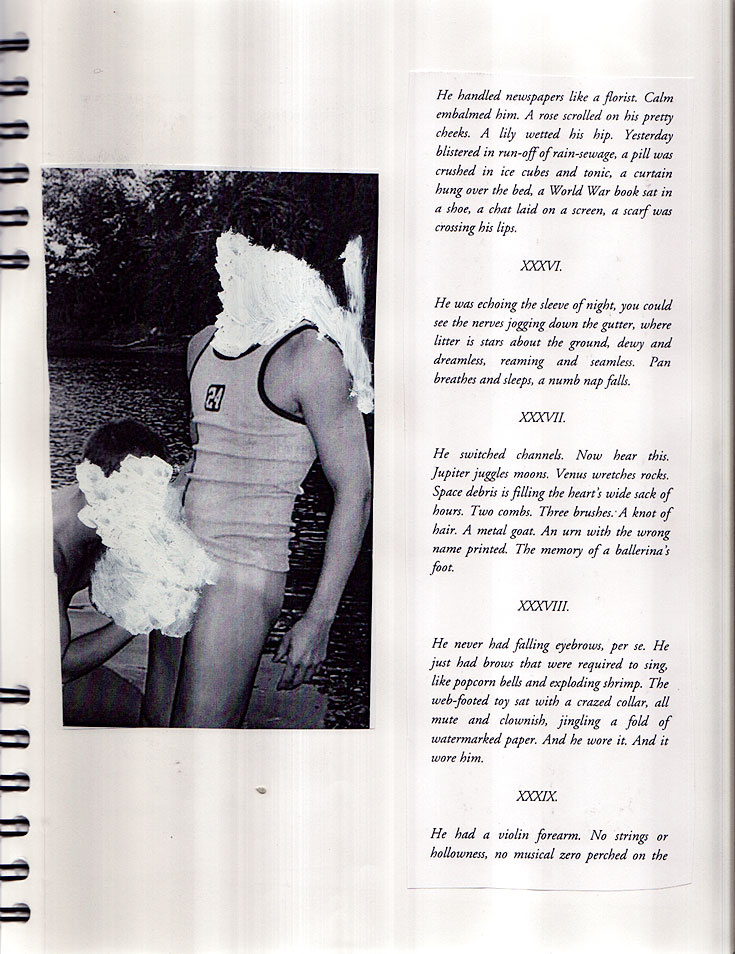
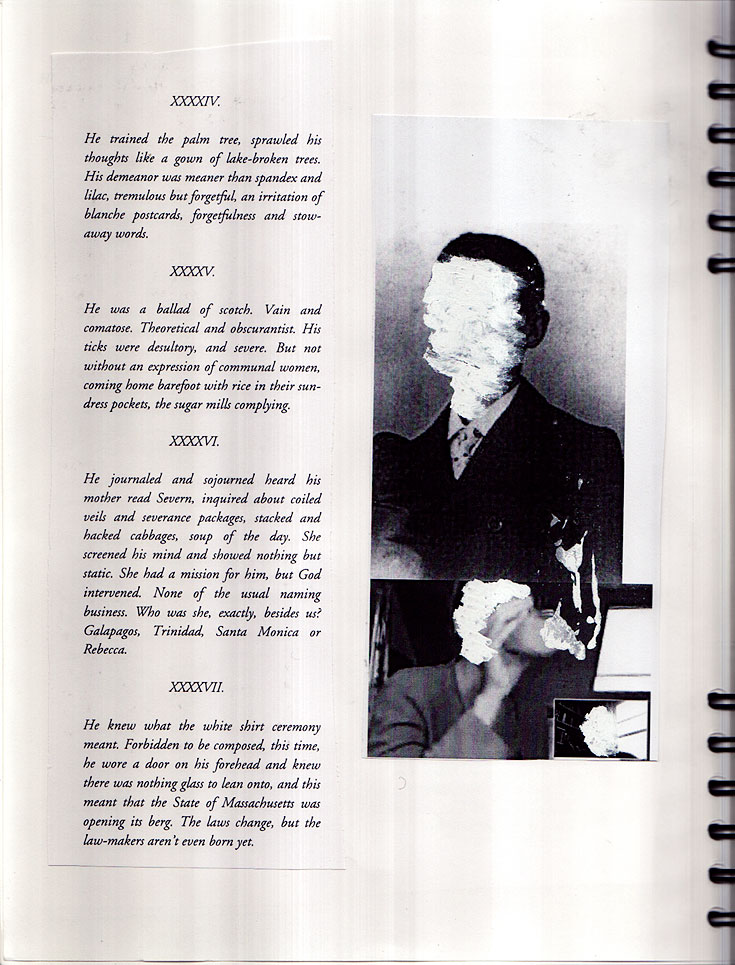
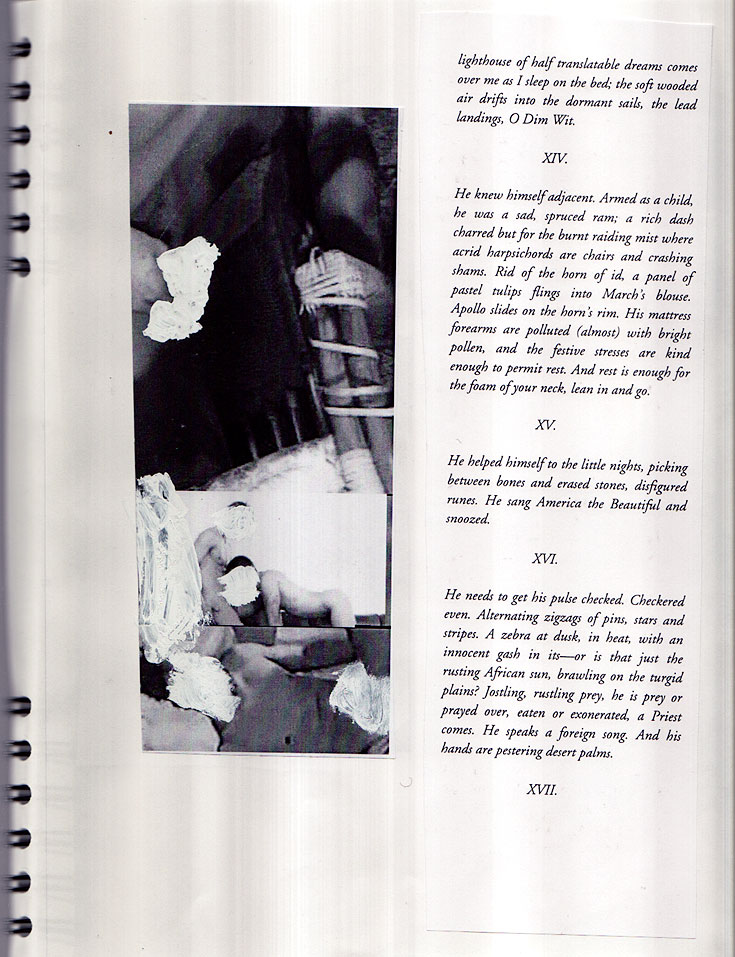
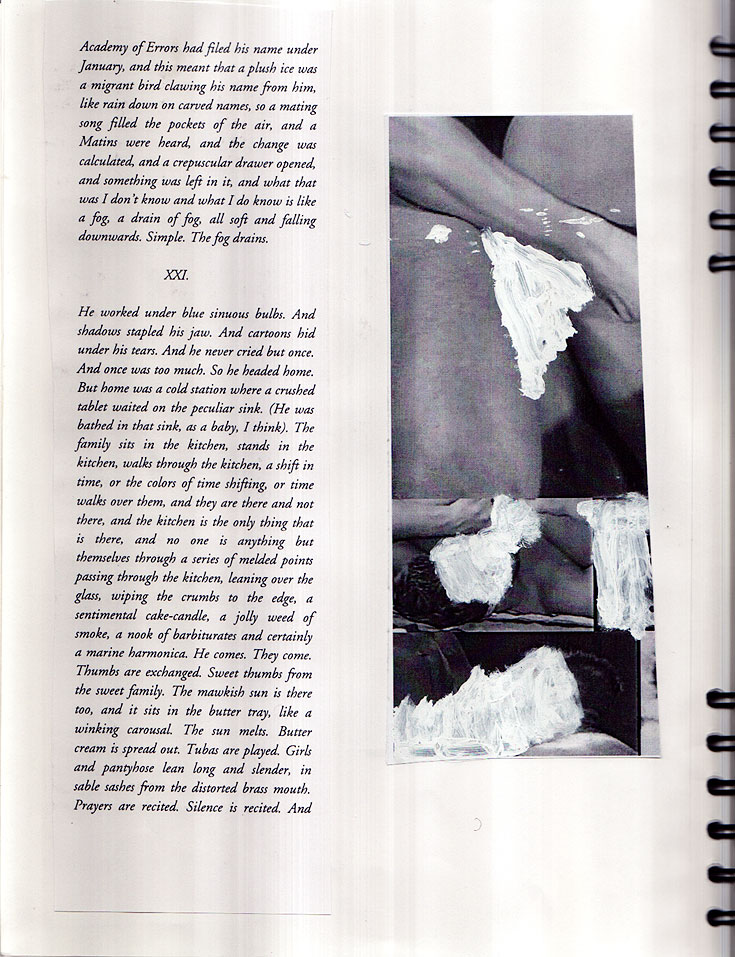
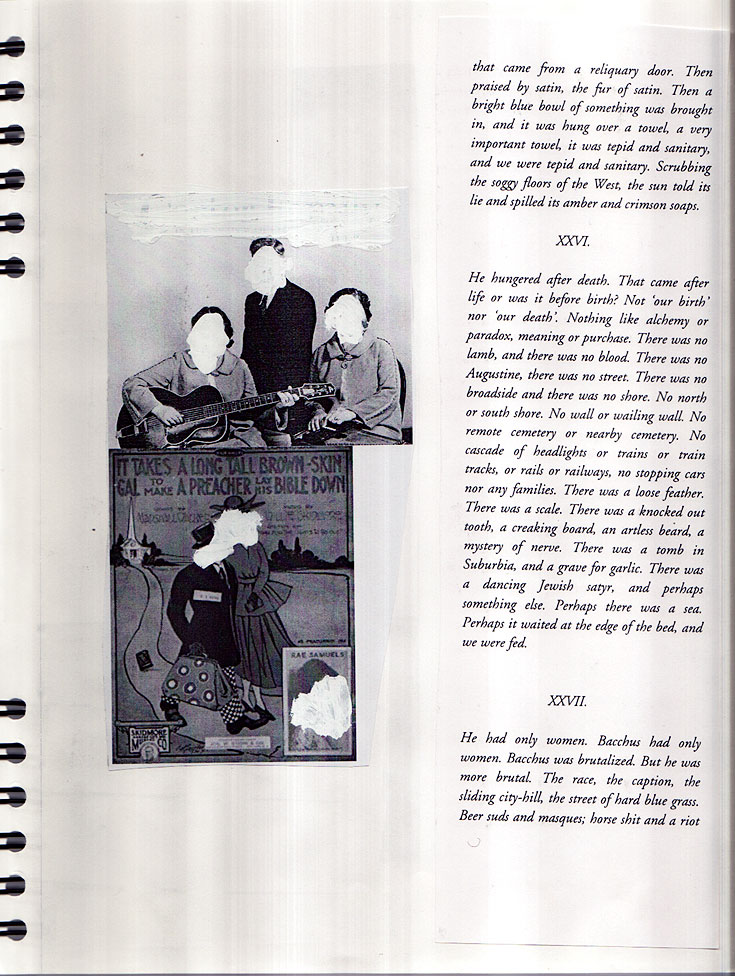
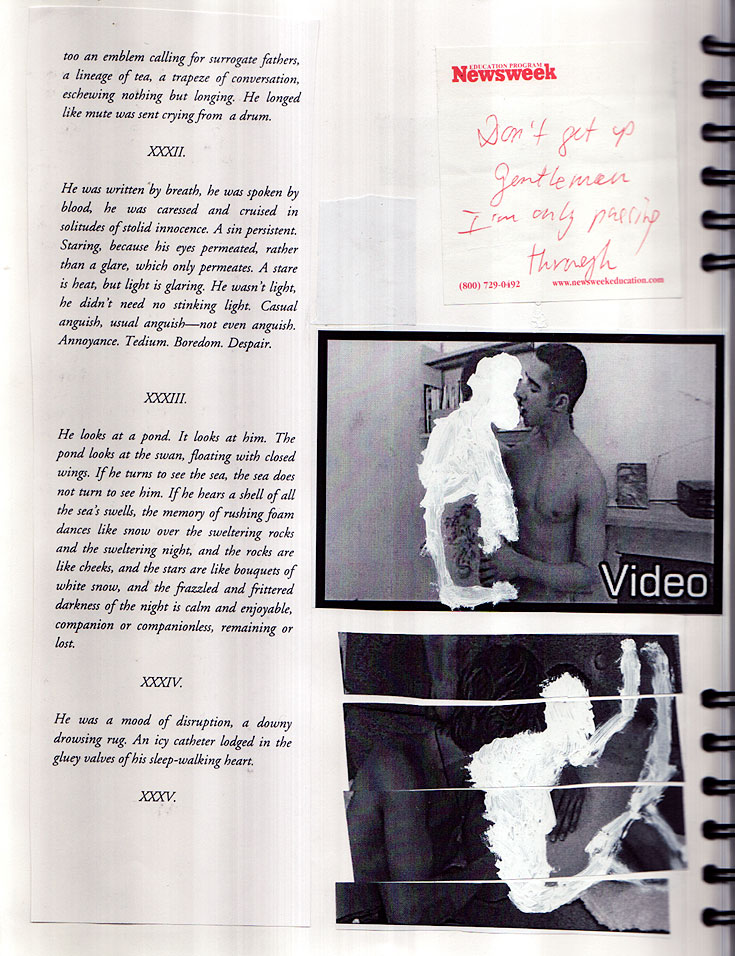
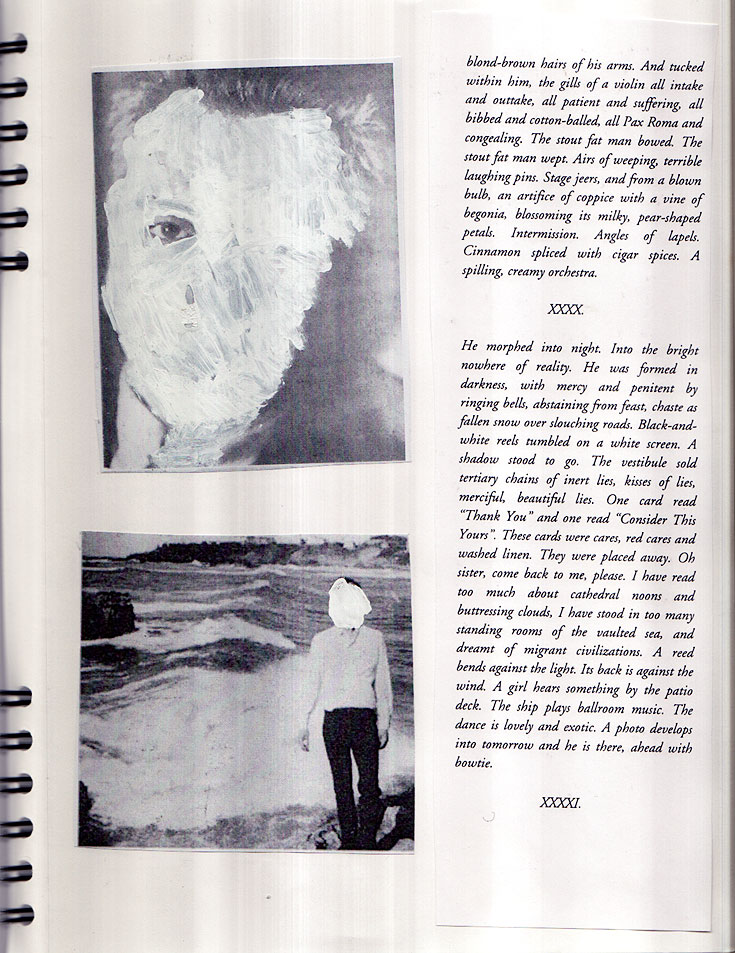
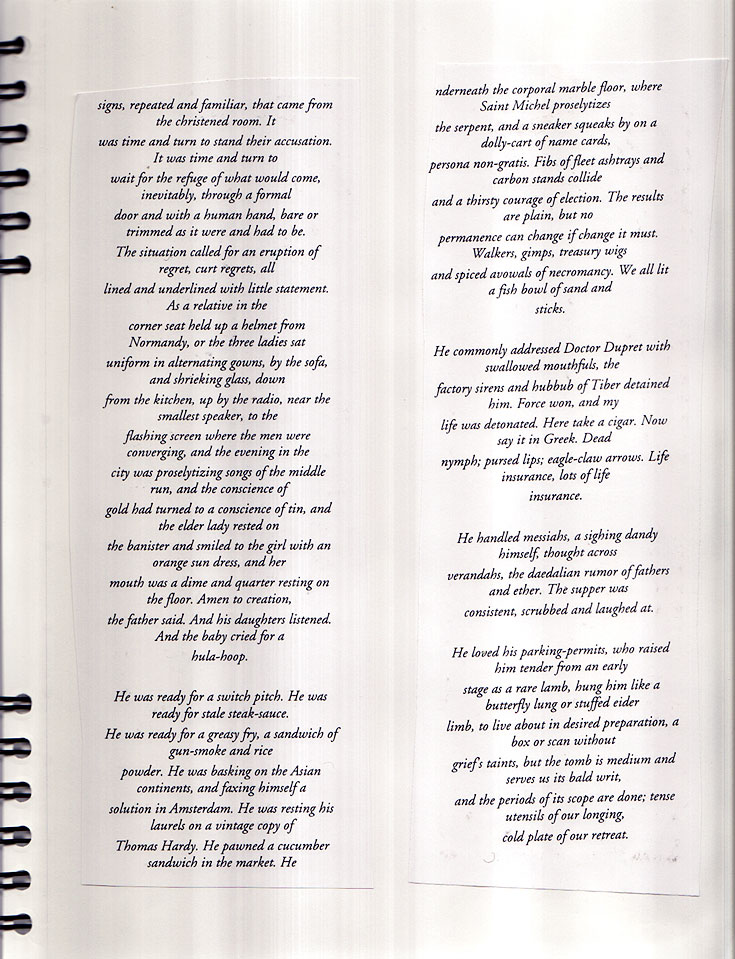
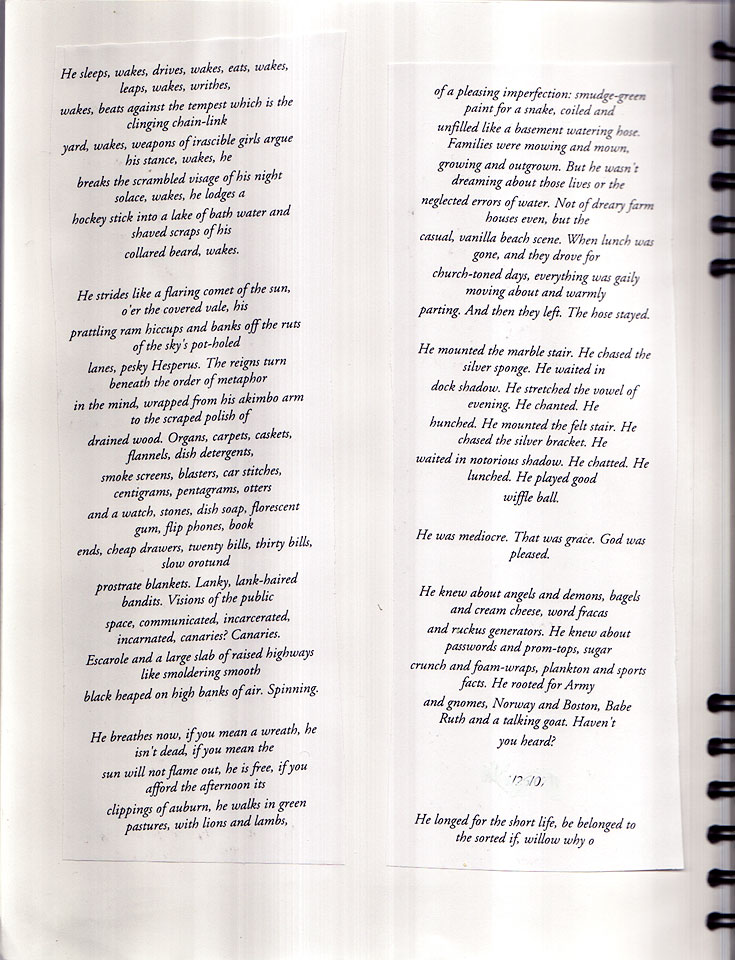
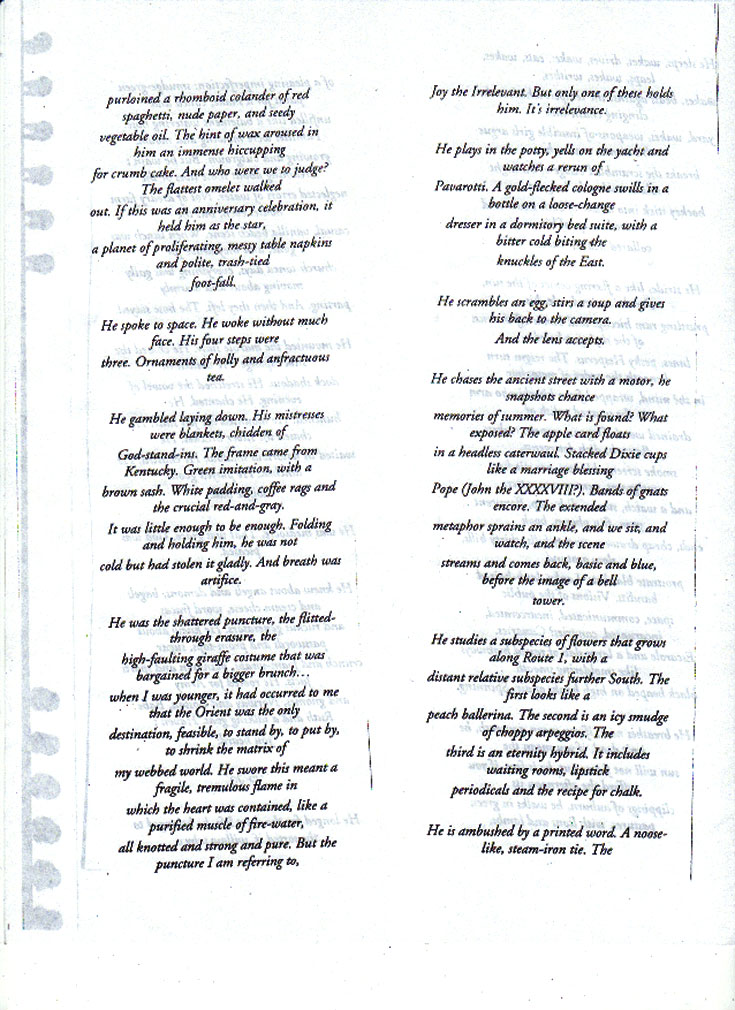
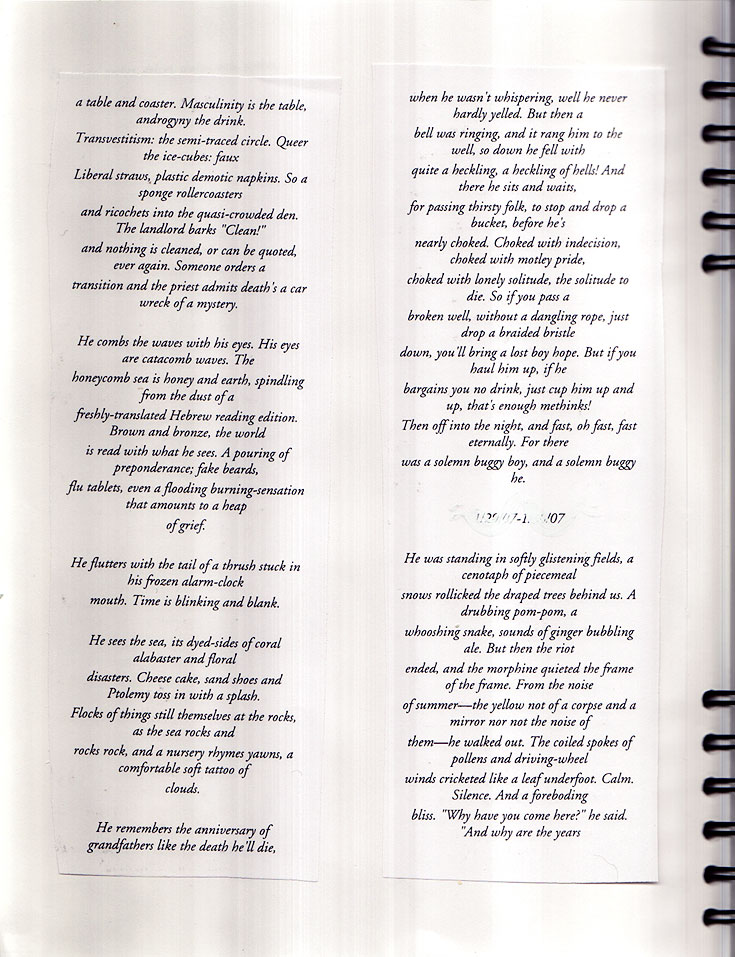
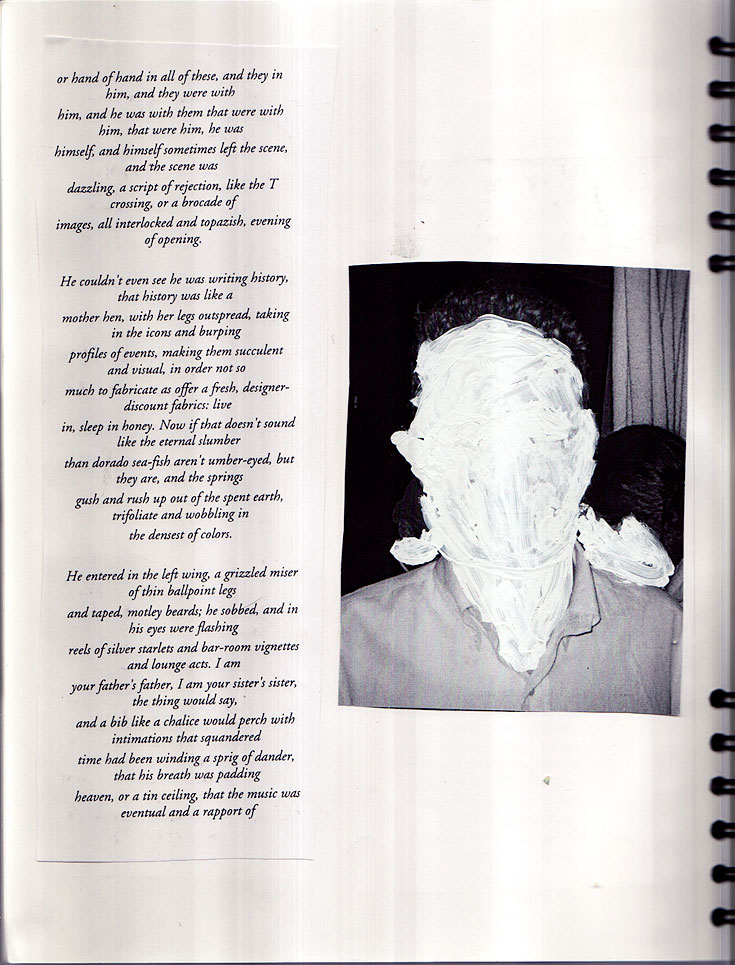
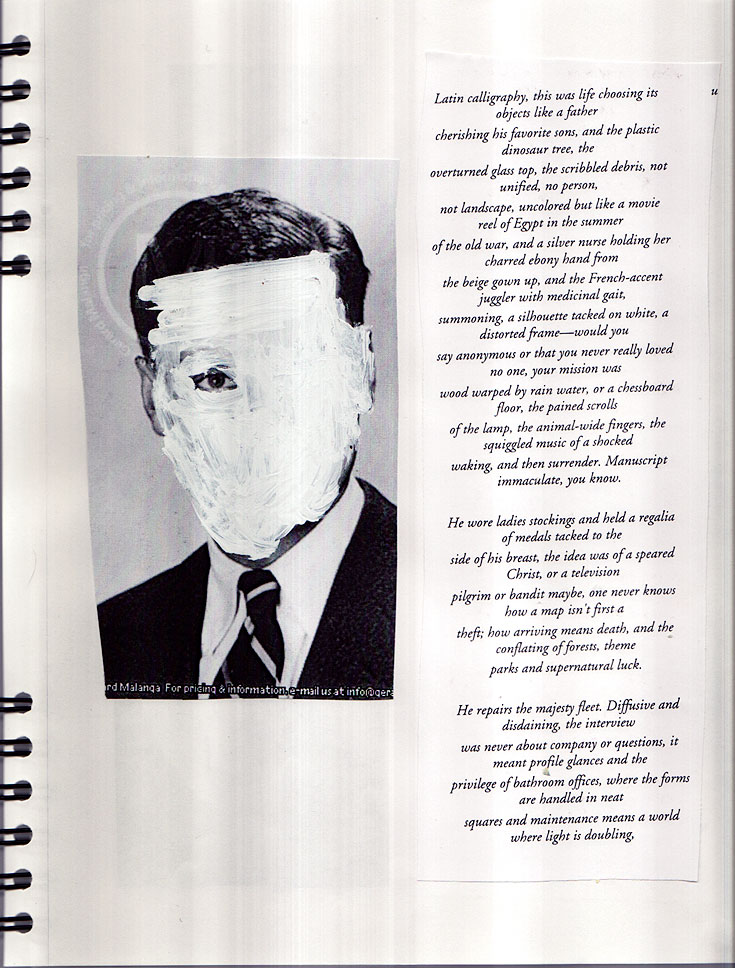
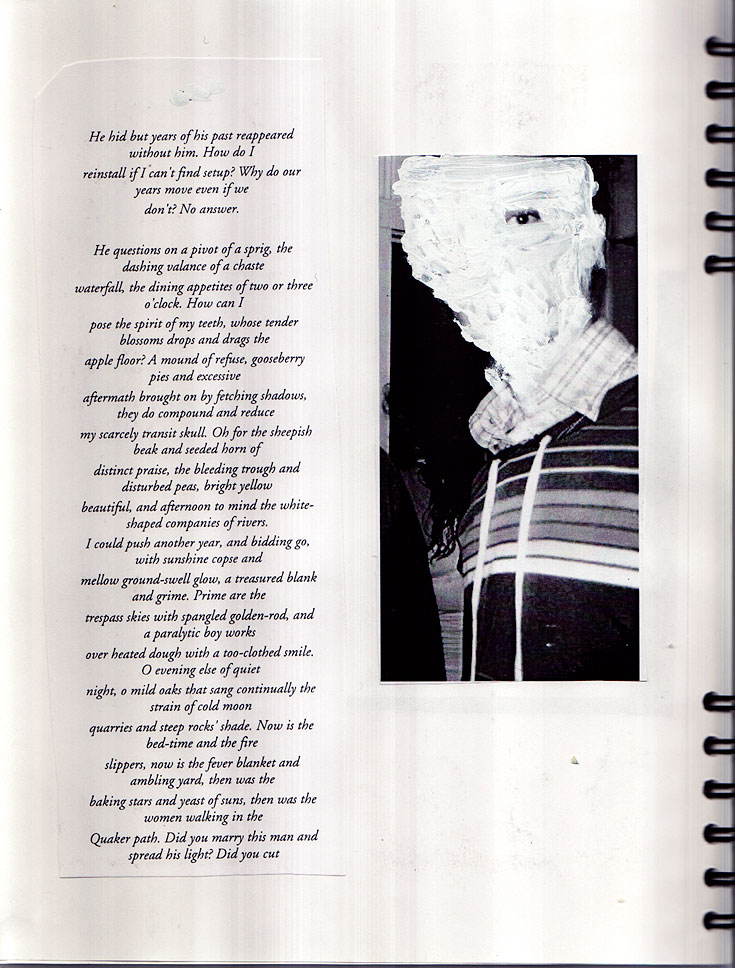
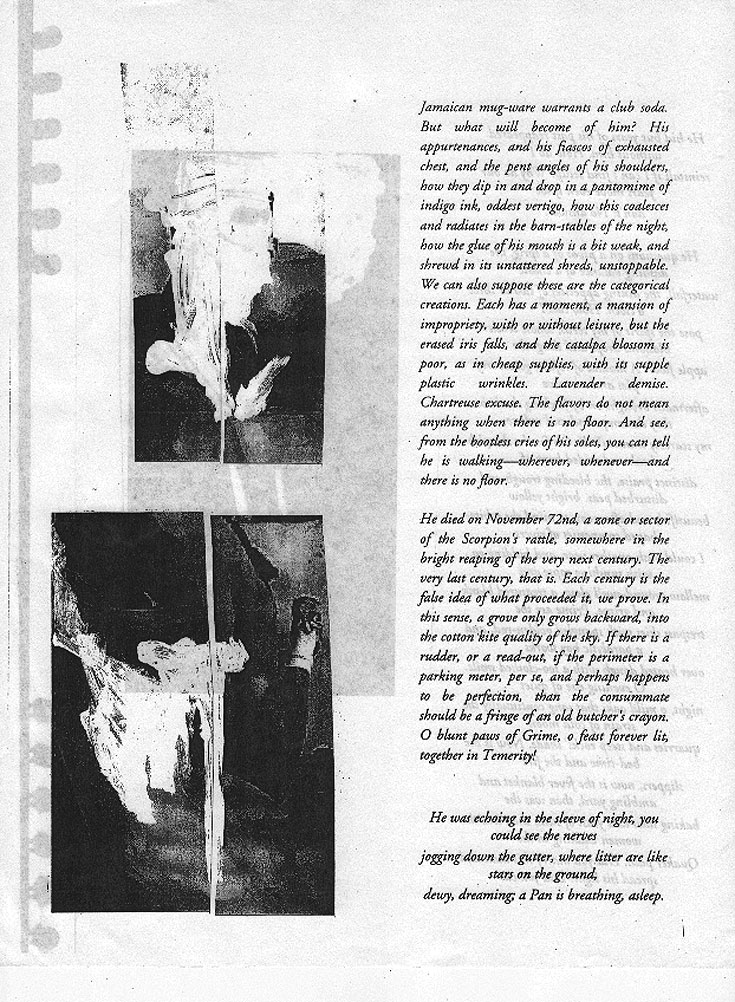
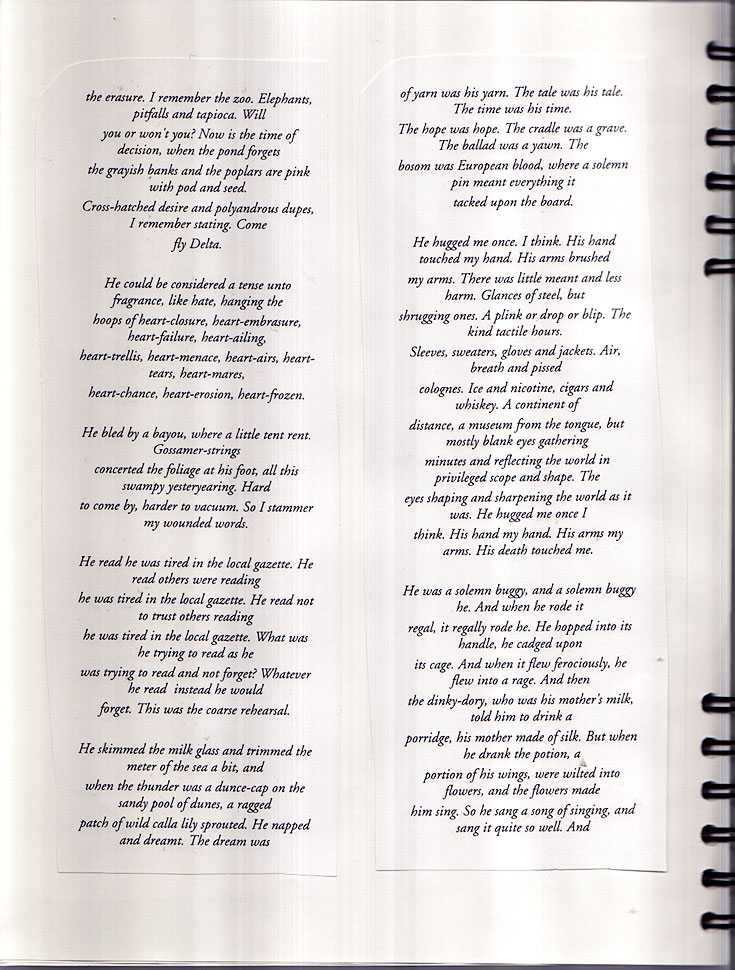
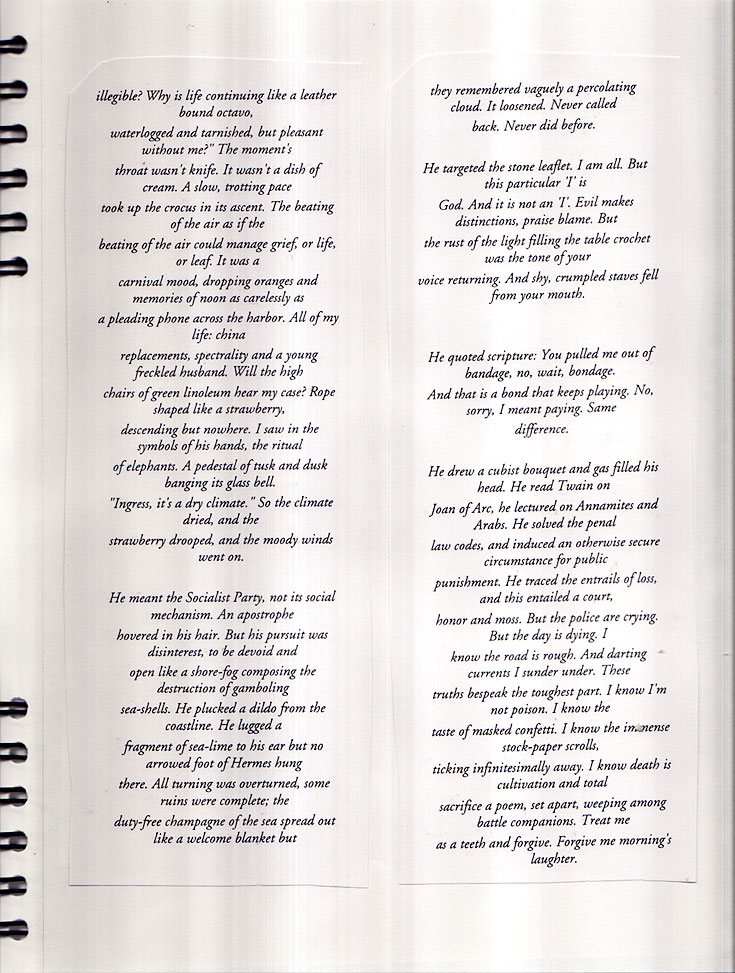
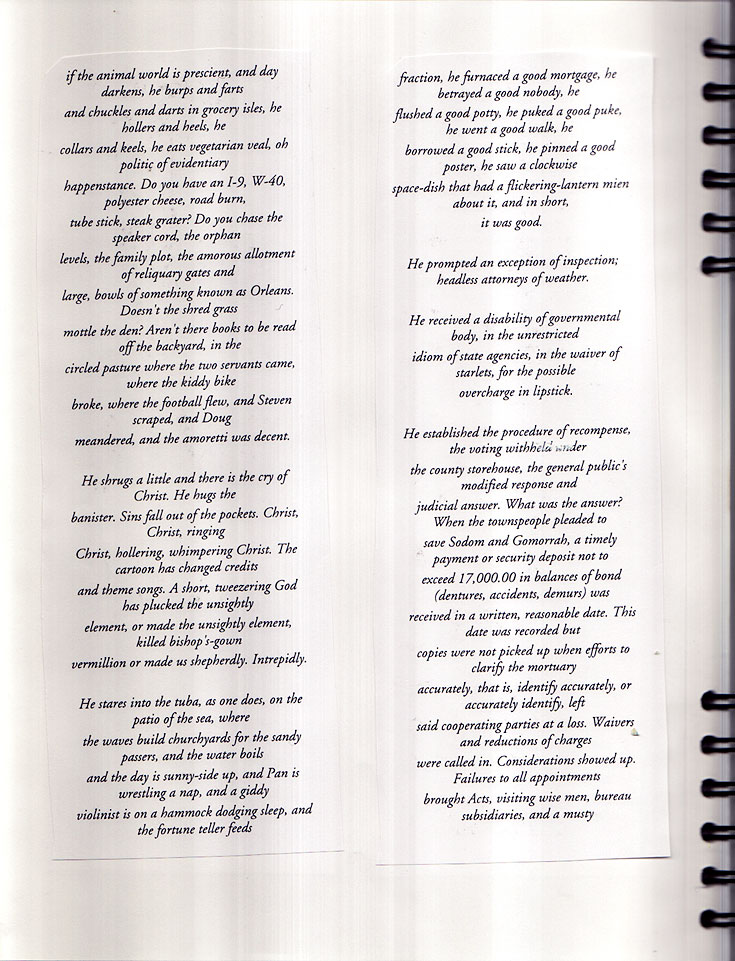
"The Gorgias" is a book in six parts, which includes fragments of poetry, collage, and documents. In part 1, "The Life of Gorgias," the book opens with an image of the Paris Arcades, an allusion to both 19th century French popular culture and the strong influence it has had on poets and writers since. (See Walter Benjamin's discussion on the flaneur and Baudelaire, among other topics, in "The Arcades Project," one of the main inspirations behind "The Gorgias.") And so in part 1, from the author's life comes a mixture of curiosities and collections: snippets of Google chats and emails, bodega and Amazon.com receipts, YouTube links and abandoned poems, texts from poems and typewritten essays that mention, by turns, Samuel Johnson, Proust, or John Ashbery. In this stage, the possibility for literature is only latent, and shares an uncomfortable space with the banal (and interesting) minutiae of daily life. In part 2, "On What is Not" (an allusion to Gorgias's lost existential track on the impossibility of knowing anything), a long fragmentary prose poem emerges—it begins to sandwich together and unify lived experience toward a decidedly literary space. Along the way, eruptions of the contemporary, from images to postage stamps and immolated pornography remain. What are the differences and borders between life and art? "The Gorgias," as a whole—and increasingly in these parts—moves away from answering these questions with a theory or concept in favor of a performance: poetic and visual. A rhetorical demonstration where leaving out and putting in (a text, a life) are equally frustrated.
.jpg)