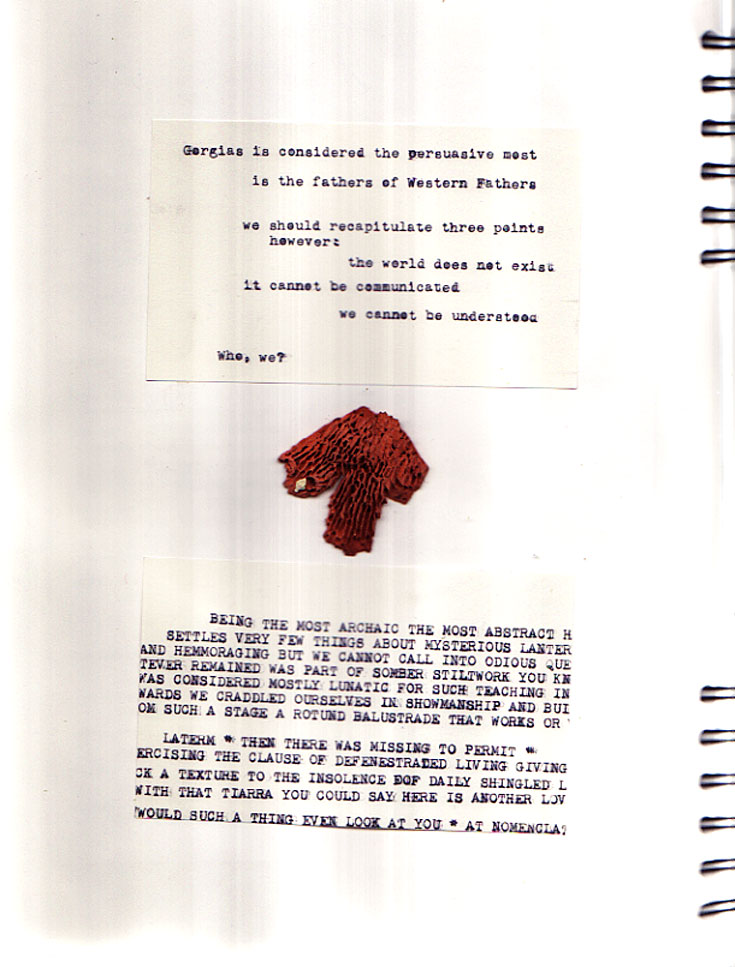
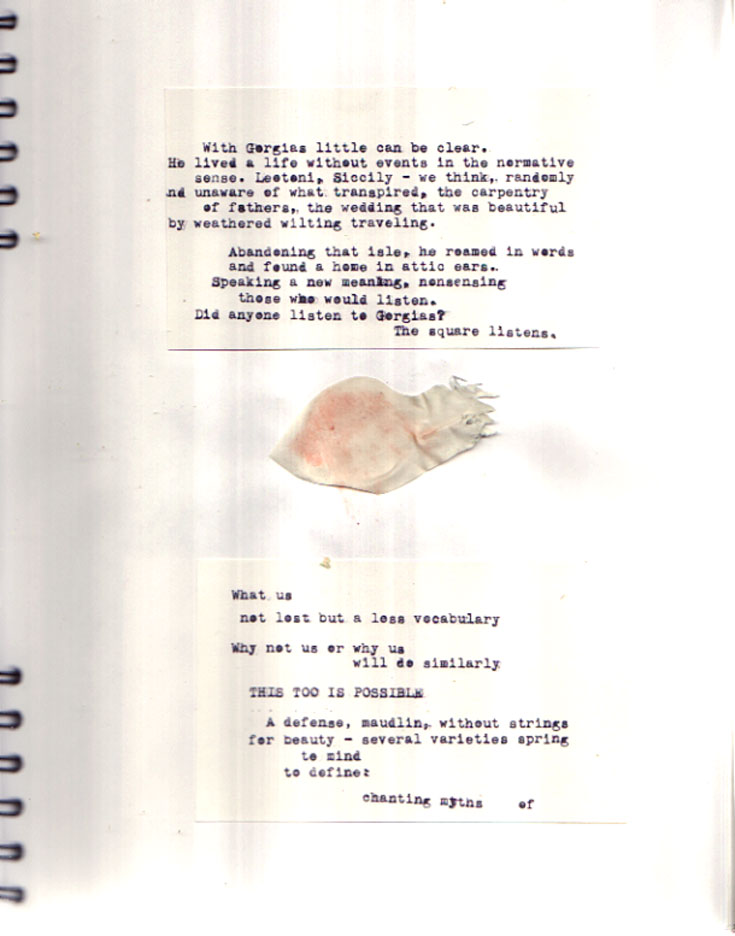
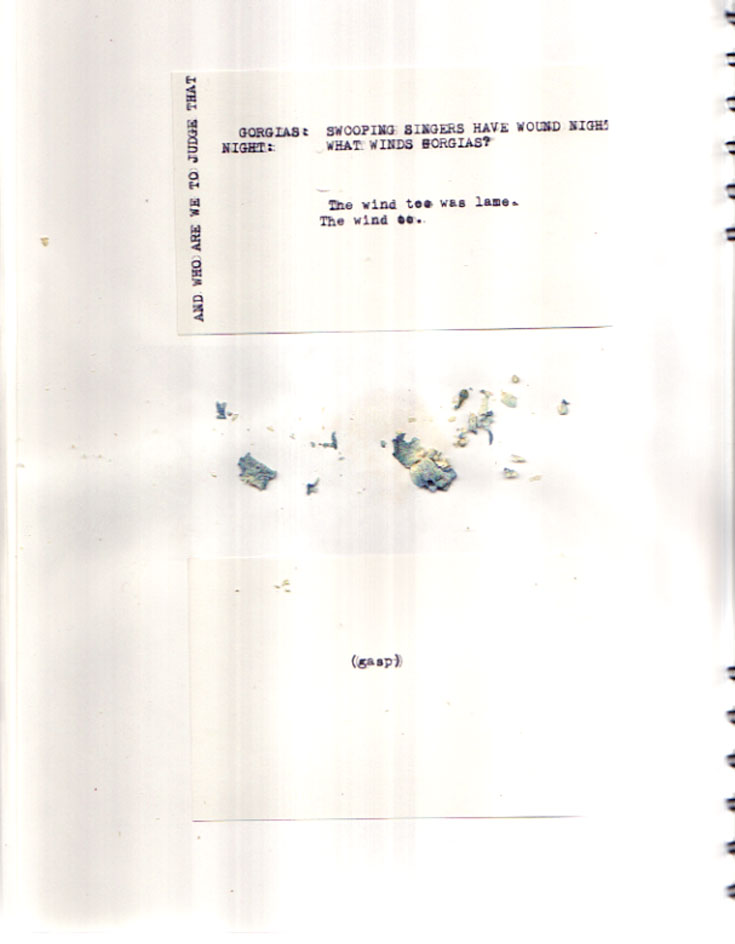
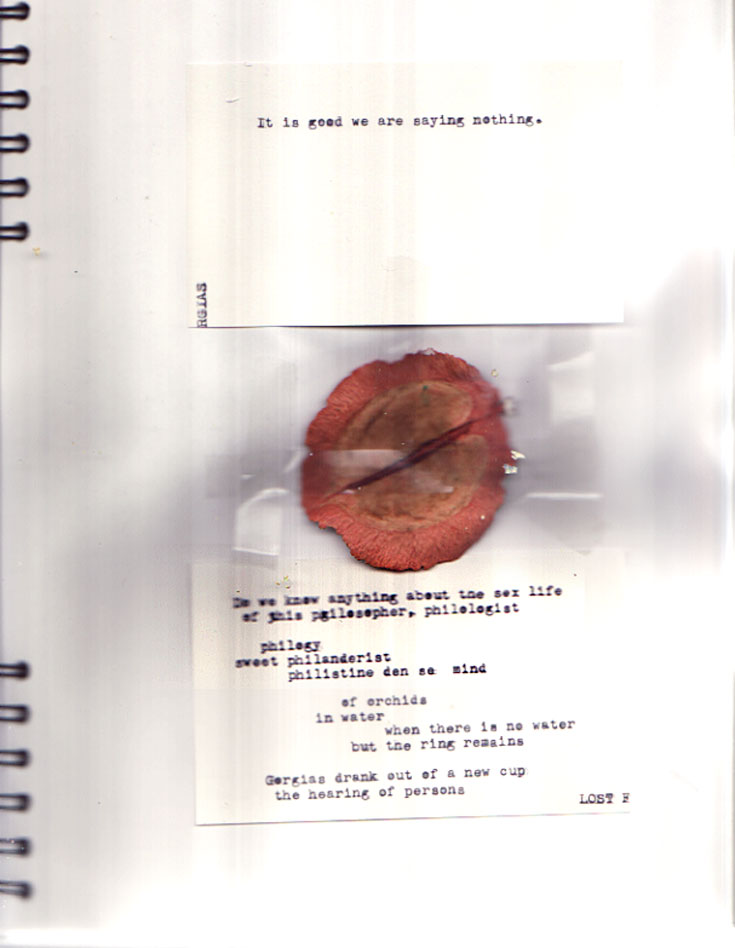
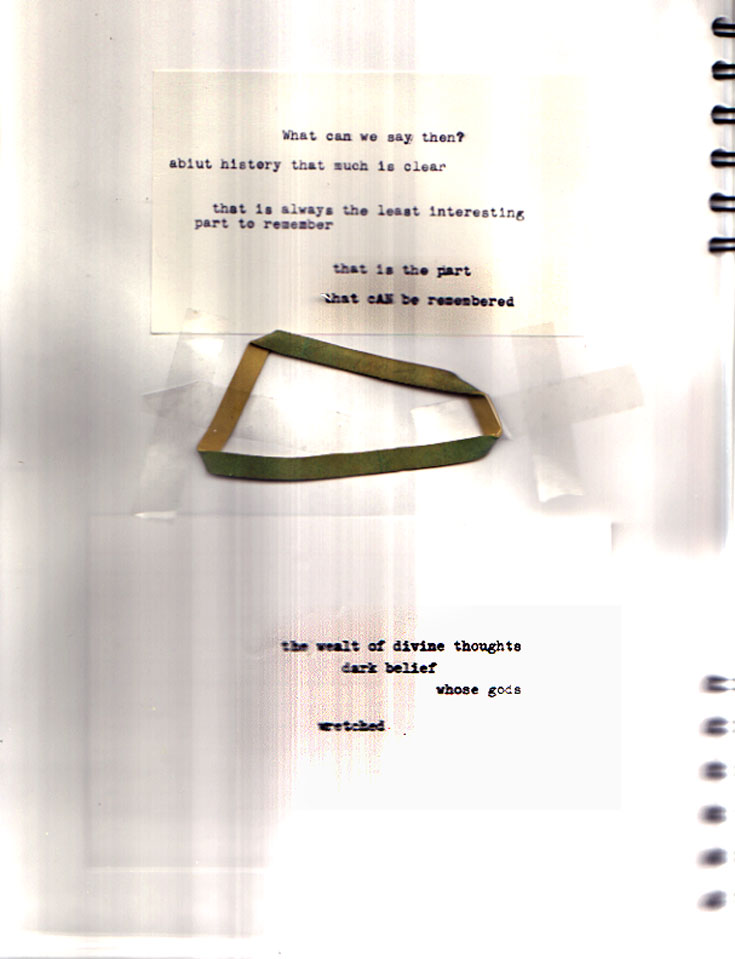
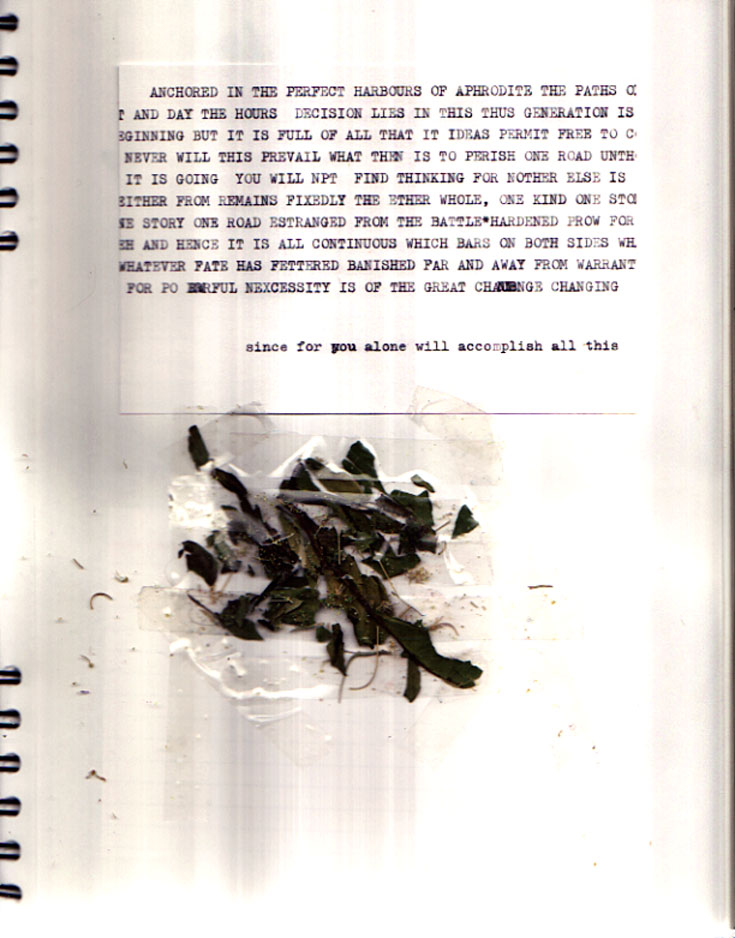
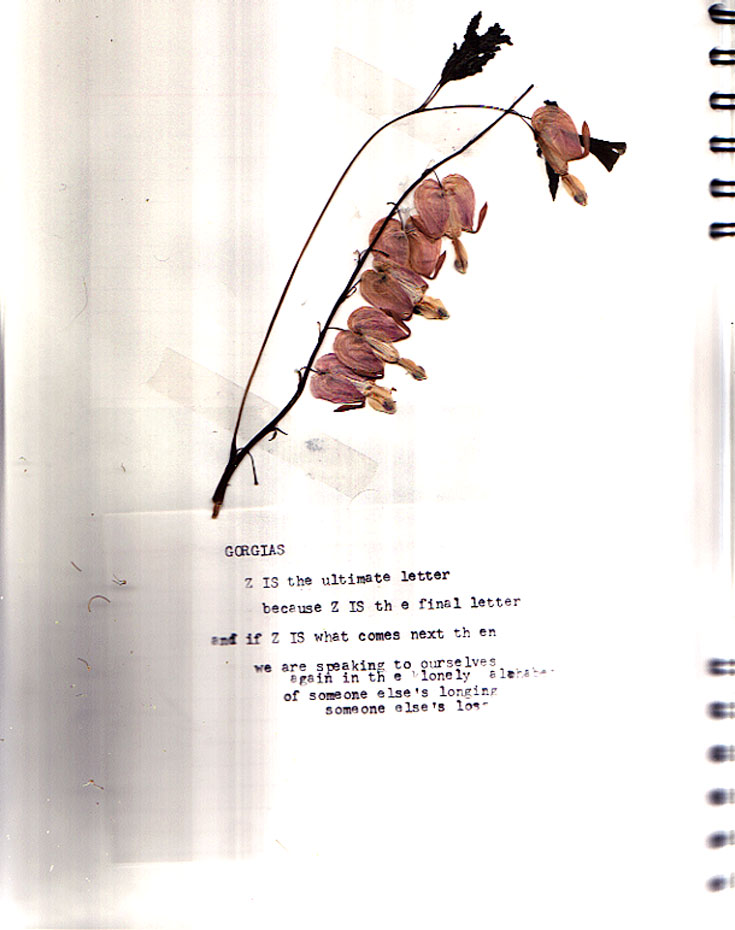
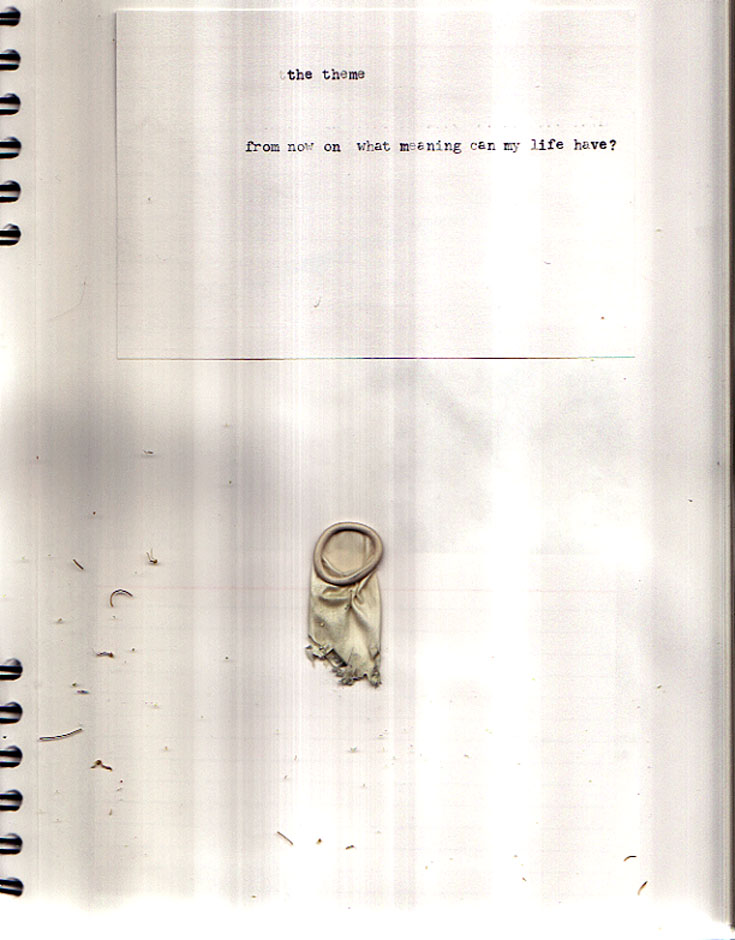
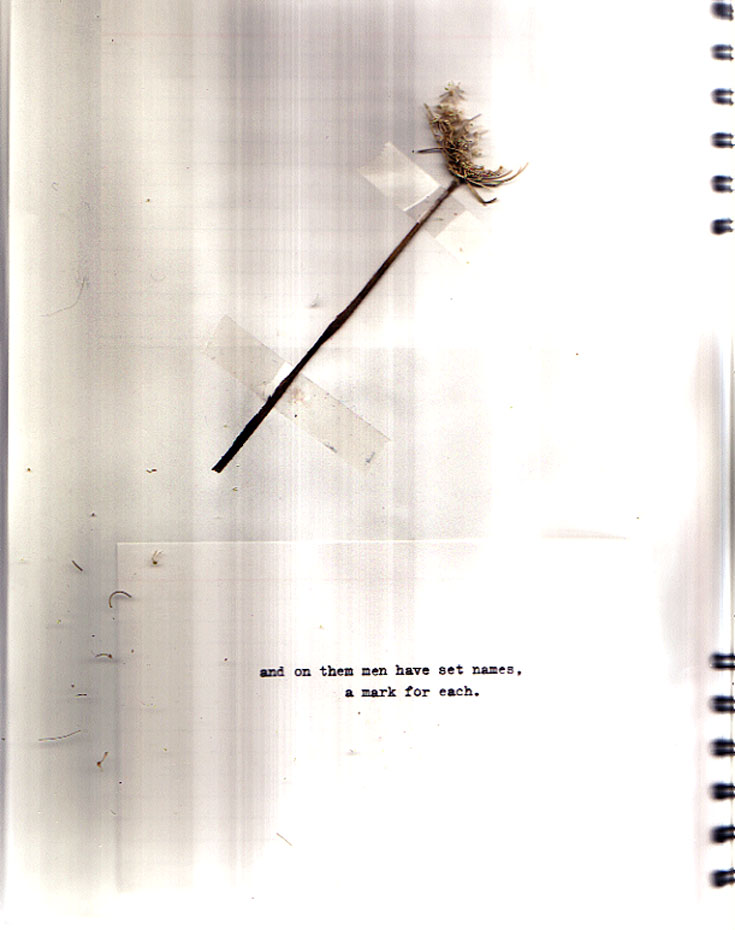
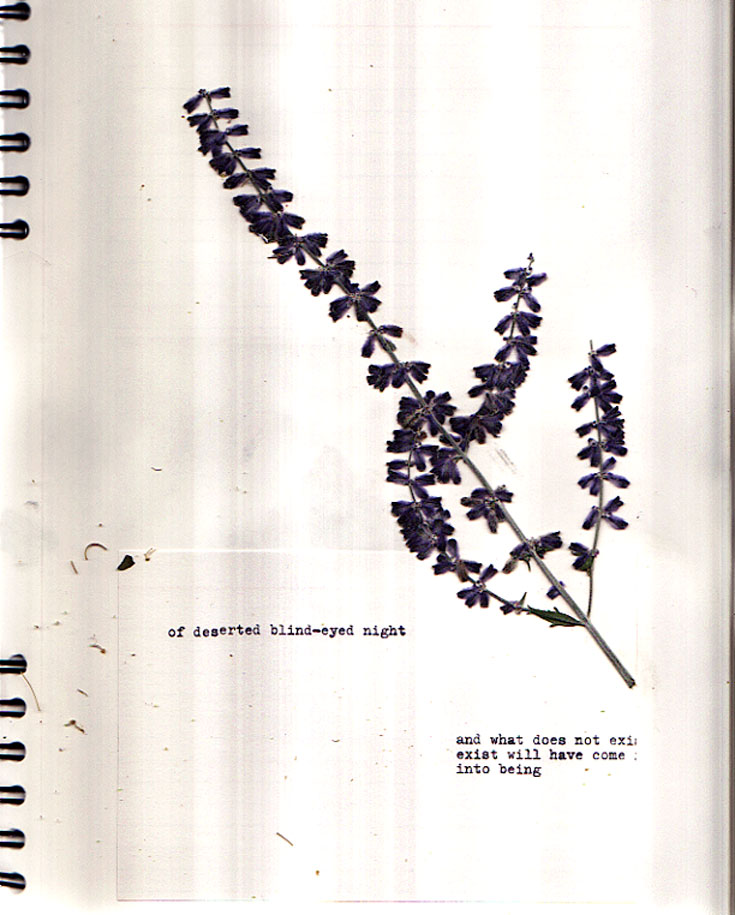
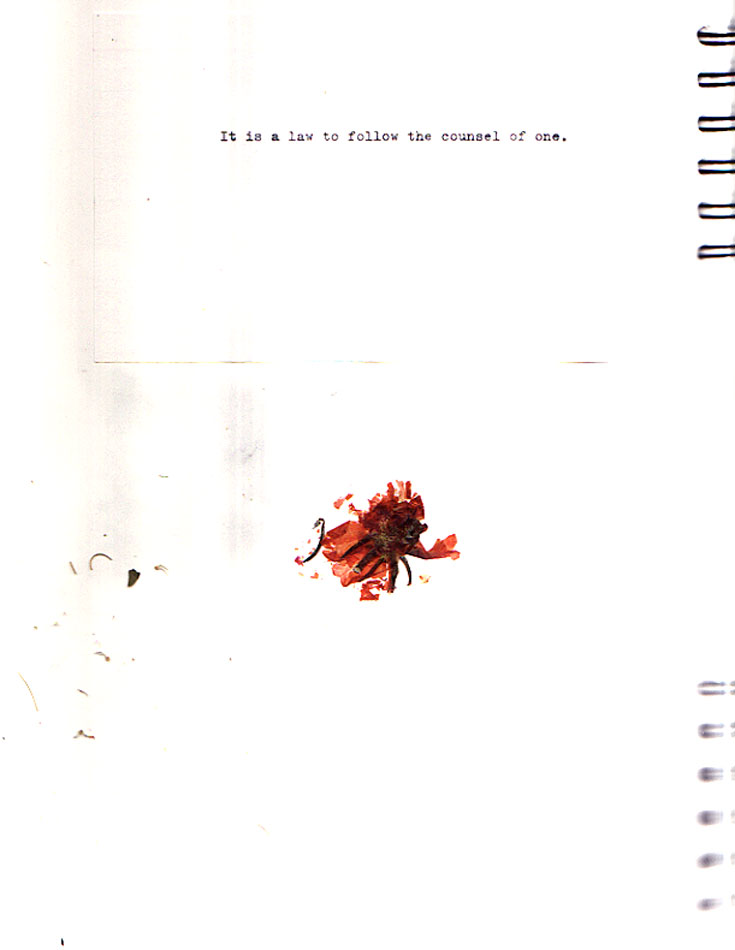
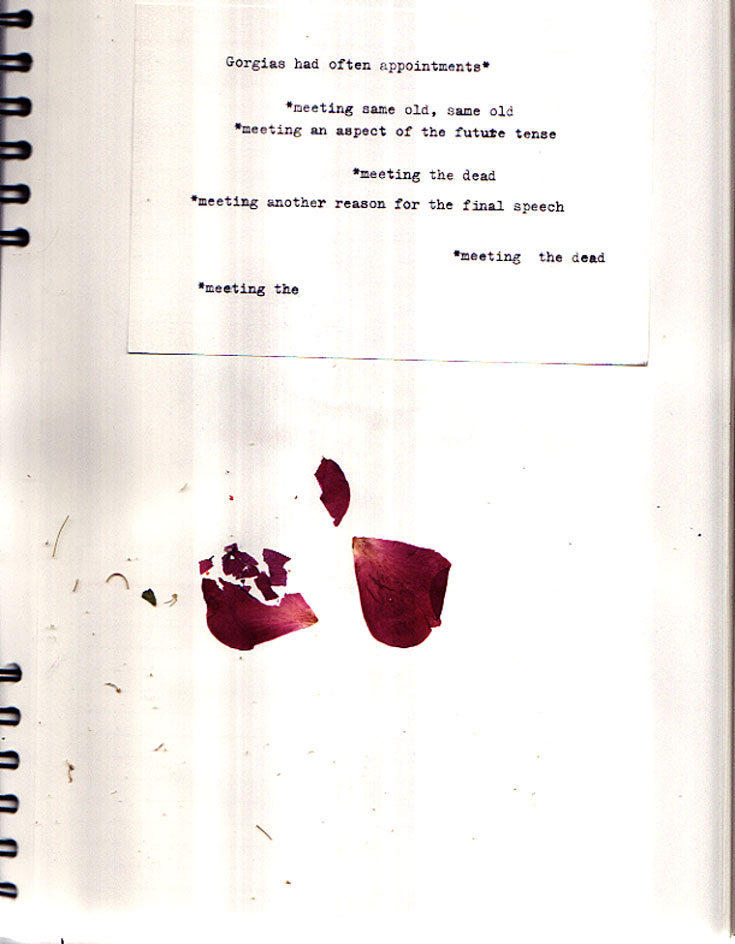
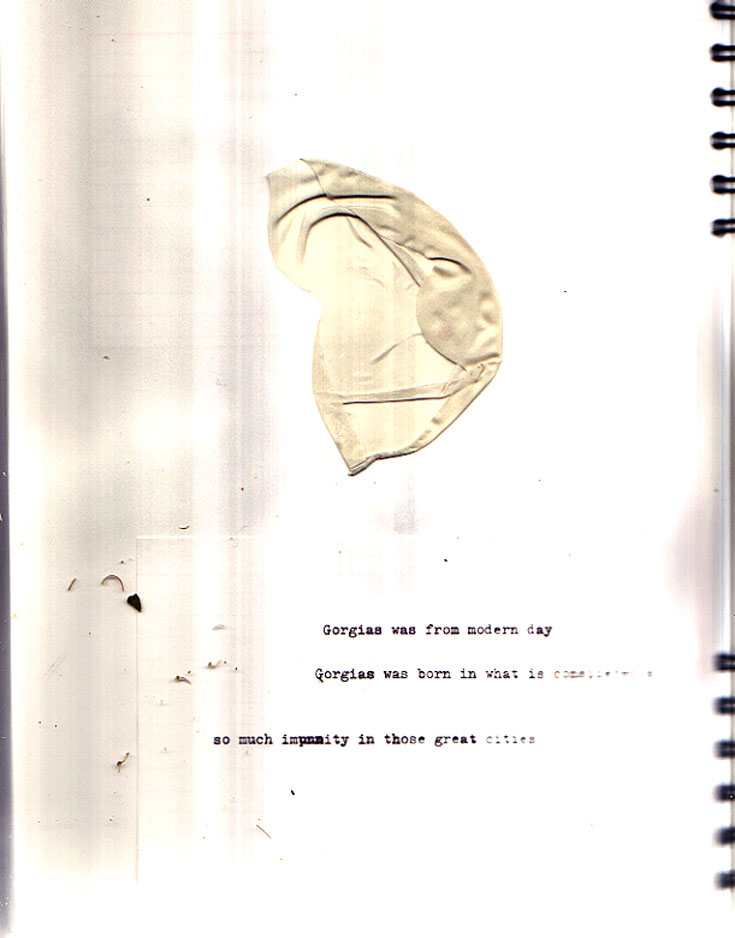
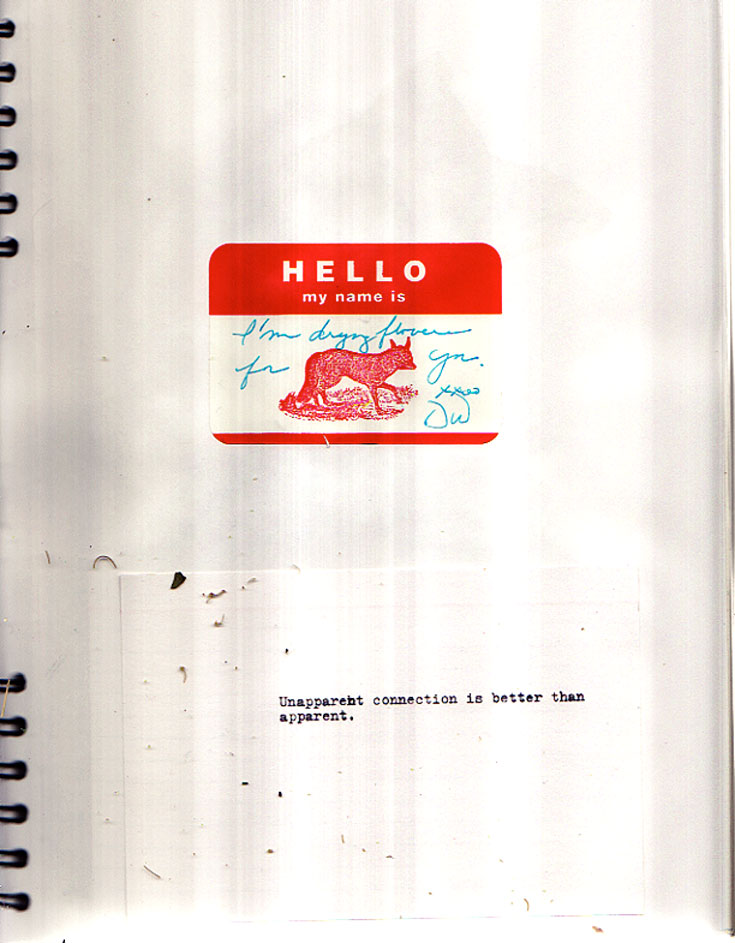
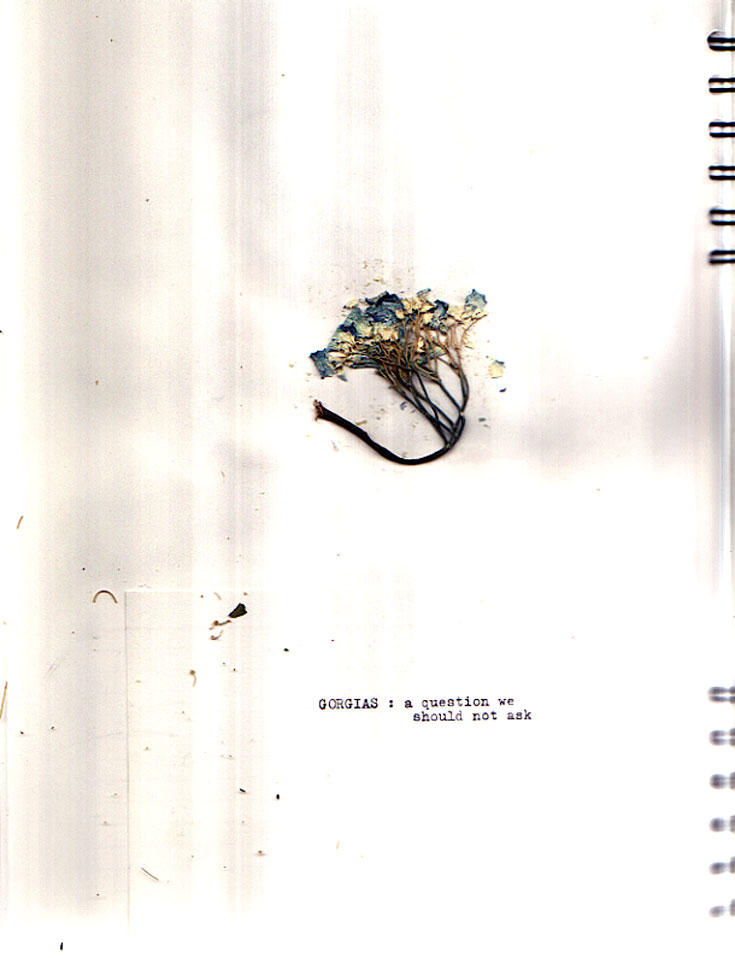
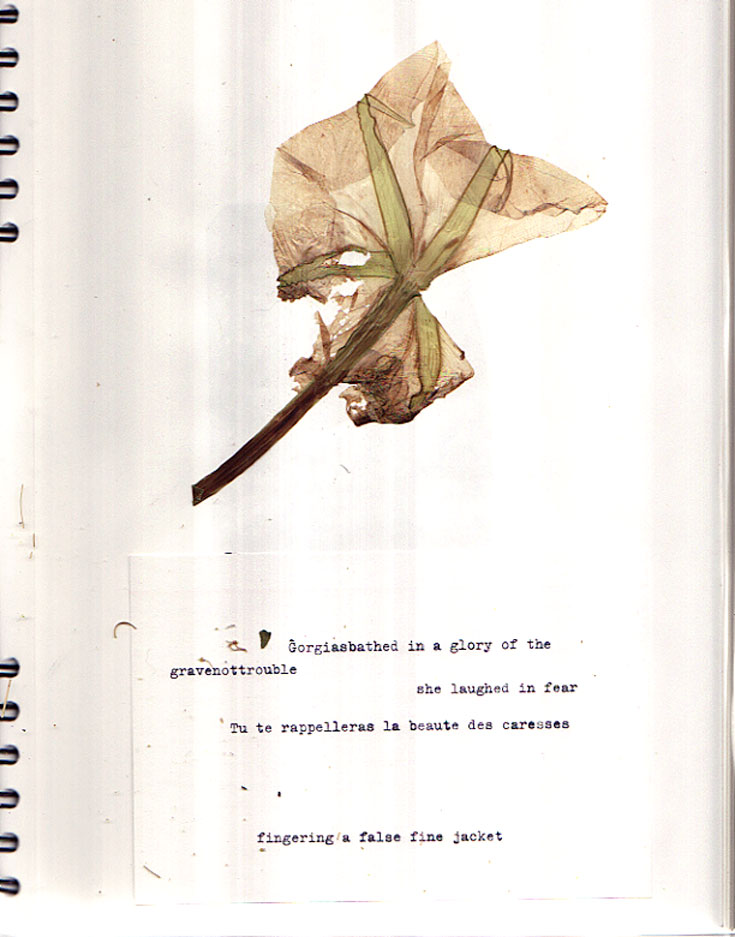
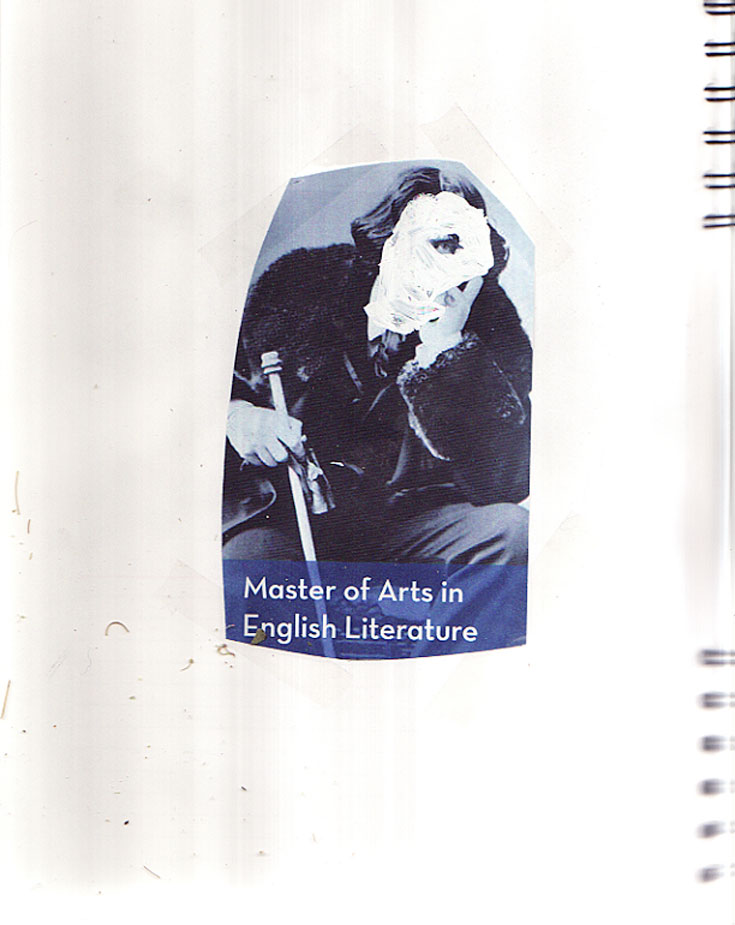
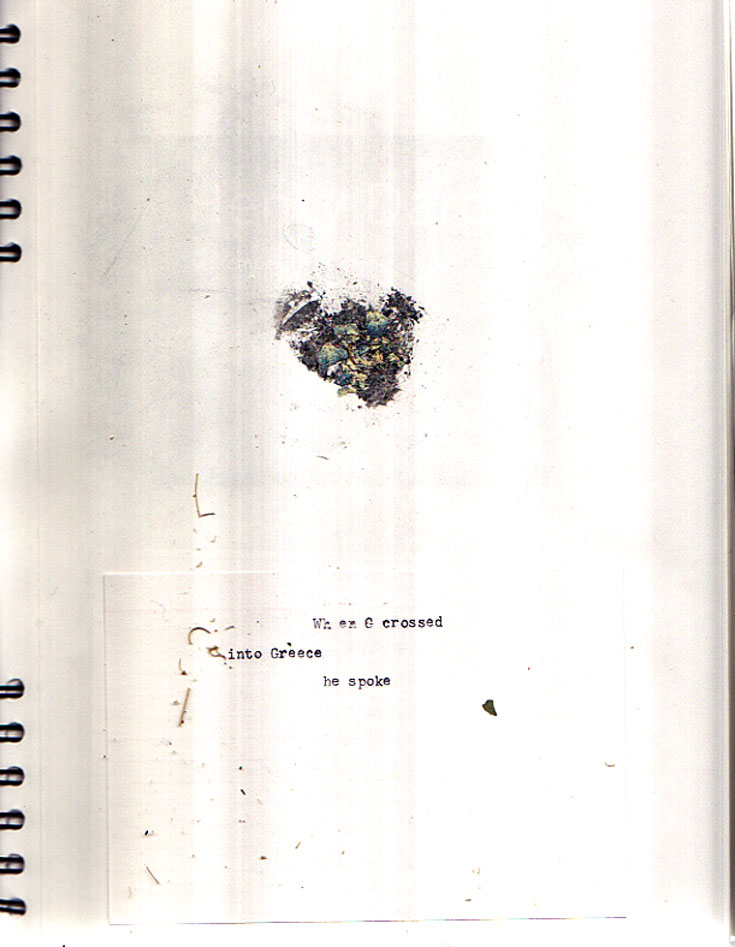
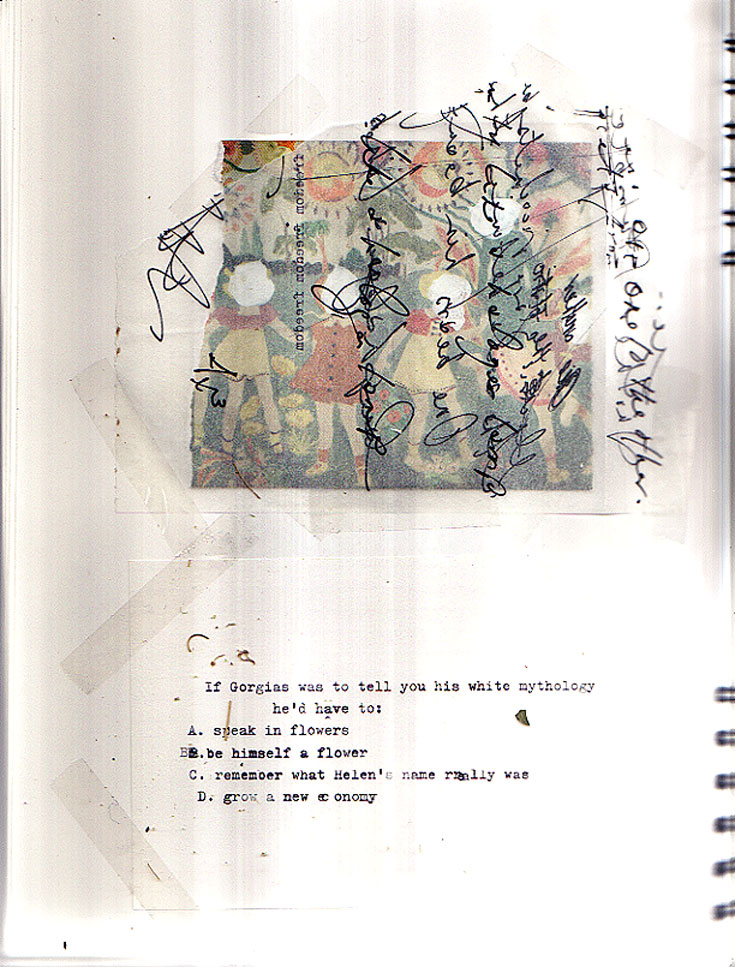
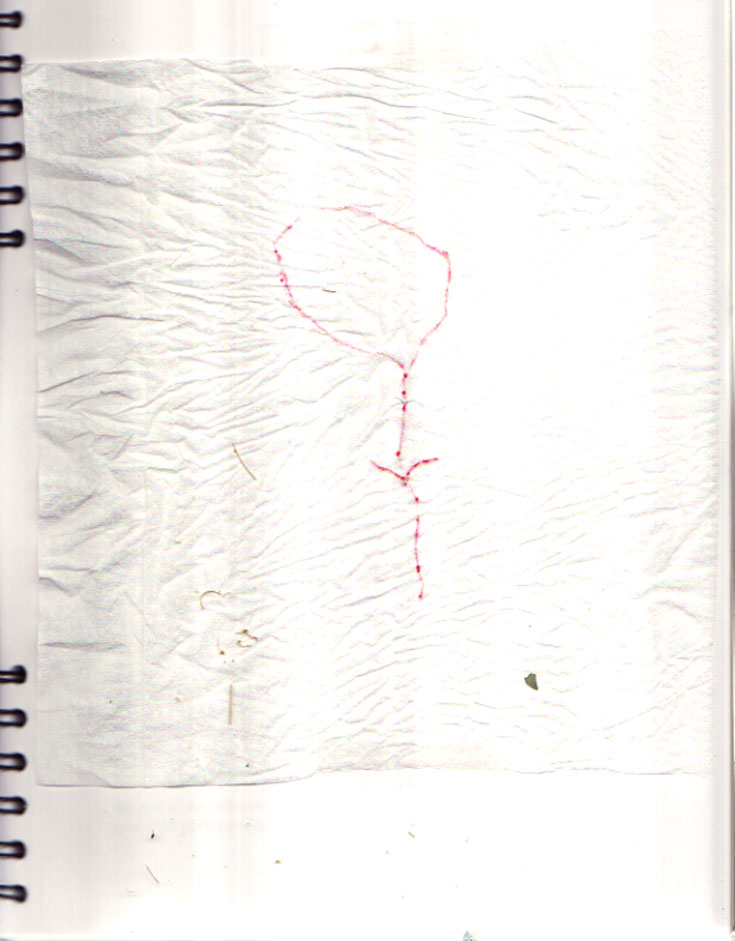
In part 3, "The Economy of Helen," the fragments of flowers and text twine together. The piece includes textual bits of phrases and lines from PreSocratic philosophers as well as a visual homage to Emily Dickinson's herbarium. It also marks the entrance of Gorgias as a character—both historically and symbolically—into the working of the entire 'poellage' (part poem, part collage). Materials in this section have been taken from the streets of New York City, the gardens of Amherst, as well as from elsewhere (c.f. balloon-parts from a recent book party). Maurice Blanchot wrote: "The fragmentary: writing belongs to the fragmentary when all has been said." Against this—or rather amidst this situation of remnants—the beauty of construction waits to be spoken.